When Parents Leave, Only Silence Remains: Was It Worth the Stubbornness?

The church bells echoed through the crisp October air, but all I could hear was the silence where Gabriel’s parents should have been. My hands trembled as I adjusted my veil, glancing at Gabriel’s tense profile. He stared straight ahead, jaw clenched, eyes fixed on the altar. I leaned in, whispering, “Are you sure you don’t want to call them? There’s still time.”
He shook his head, voice flat. “No, Emily. They made their choice.”
I swallowed hard, feeling the weight of his words settle between us like a stone. The pews were filled with my family, friends, laughter, and warmth—but the empty seats in the second row felt like a wound that refused to close.
—
Gabriel and I met in college in Boston. He was quiet, intense, the kind of guy who read poetry in coffee shops and never raised his voice. I was drawn to his depth, his kindness. But I learned early on that his family was a sore subject.
He grew up in a small town in Vermont, the only child of strict, conservative parents. They ran a hardware store and went to church every Sunday. Gabriel, though, was different. He wanted to study art, move to the city, live a life they couldn’t understand.
The first time I met them, I felt the chill. His mother, Linda, offered me lemonade but never smiled. His father, Bill, shook my hand with a grip that lingered too long. At dinner, conversation was stiff, every word weighed. When Gabriel mentioned his art show, Bill’s face darkened. “That’s not a real job, son.”
Gabriel’s jaw tightened. “It’s my life, Dad.”
Linda looked at me, her eyes pleading. “Emily, maybe you can talk some sense into him.”
I tried to bridge the gap, but the rift only widened. When we got engaged, Gabriel didn’t tell them for weeks. When he finally did, Bill hung up the phone. Linda sent a card that said, “We hope you know what you’re doing.”
—
The months before the wedding were a blur of planning and tension. I begged Gabriel to reach out, to give them another chance. “They’re your parents,” I said. “You’ll regret it if they’re not there.”
He shook his head. “They’ve never accepted me. Why should I keep begging for their approval?”
I tried to understand, but I couldn’t shake the feeling that something precious was slipping away. My own parents adored Gabriel, treated him like a son. I wanted that for him, for us.
The night before the wedding, I found him on the porch, staring at the stars. “Do you ever miss them?” I asked.
He was silent for a long time. “Sometimes. But I can’t keep hurting myself hoping they’ll change.”
I wrapped my arms around him, wishing I could heal the ache inside him.
—
Our wedding was beautiful, but the absence of Gabriel’s parents cast a shadow. After the ceremony, my mother hugged me, tears in her eyes. “You two are meant for each other.”
But Gabriel’s smile was tight, his laughter forced. That night, as we danced under the fairy lights, I saw him glance at the empty seats, his eyes shining with unshed tears.
—
Years passed. We built a life together in New York. Gabriel’s art flourished; he had shows in galleries, students who adored him. We bought a brownstone in Brooklyn, filled it with books and music and love.
But the silence from Vermont never faded. Every Christmas, every birthday, I watched Gabriel check his phone, hoping for a message that never came.
One winter, I suggested we send them a card. “Just to let them know we’re thinking of them.”
He hesitated, then agreed. We mailed a photo of us in Central Park, bundled in scarves, smiling. Weeks passed. No reply.
—
When our daughter, Lily, was born, I thought surely they would reach out. We sent photos, a birth announcement. Nothing. I saw the pain in Gabriel’s eyes, the way he held Lily close, whispering promises that he would never leave her.
One night, as I rocked Lily to sleep, Gabriel sat beside me, his voice barely above a whisper. “Do you think I’m a bad son?”
I shook my head. “No. You did everything you could.”
He looked away. “I just wish things were different.”
—
The years blurred together—first steps, first words, school plays. Lily grew, bright and curious, always asking about her grandparents in Vermont. I tried to explain, but how do you tell a child about pride and pain?
One summer, Lily asked, “Why don’t we ever visit Daddy’s mommy and daddy?”
Gabriel knelt beside her, his voice trembling. “Sometimes, people hurt each other, and it’s hard to fix. But I love you, and that’s what matters.”
—
Then, one autumn morning, a letter arrived. The handwriting was shaky, unfamiliar. Linda. She wrote that Bill was sick—cancer, late stage. She didn’t ask for forgiveness, just said she thought Gabriel should know.
Gabriel read the letter in silence, his hands shaking. I watched him, my heart breaking. “You should go,” I said softly.
He shook his head. “It’s too late.”
But I saw the war inside him—the longing, the anger, the fear.
—
For days, Gabriel was distant, lost in thought. One night, he finally spoke. “What if he doesn’t want to see me?”
I took his hand. “You’ll never know unless you try.”
He nodded, tears streaming down his face. “I’m scared, Em. What if I can’t forgive him?”
I hugged him, wishing I could take away his pain. “You don’t have to forgive him today. Just go. Say goodbye.”
—
Gabriel drove to Vermont alone. I waited by the phone, my heart in my throat. Hours passed. Finally, he called.
“He’s so thin, Em. He barely recognized me.”
I listened as Gabriel described the awkward reunion, the stilted conversation. Bill apologized, voice weak. “I was wrong, son. I should have supported you.”
Gabriel cried. “I just wanted you to be proud of me.”
Bill squeezed his hand. “I always was. I just didn’t know how to show it.”
—
Bill died two weeks later. Gabriel returned home, hollow-eyed but lighter somehow. He held Lily close, whispered, “I love you, always.”
Linda called sometimes, tentative, unsure. The wounds were deep, but slowly, painfully, they began to heal.
—
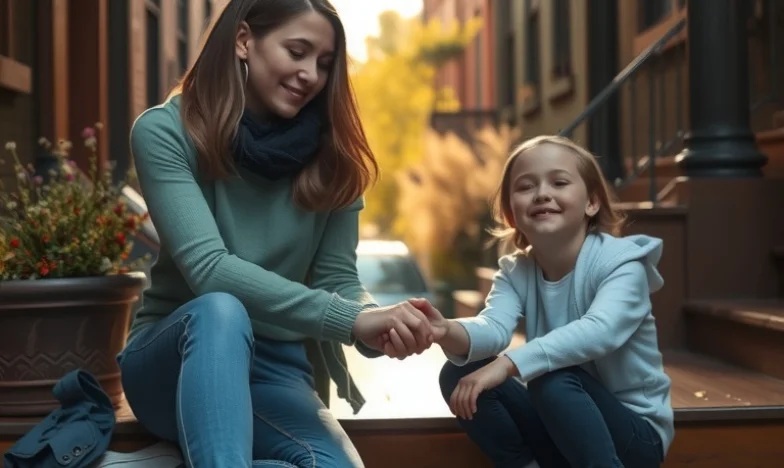
Now, years later, I sit on our porch, watching Lily draw chalk hearts on the sidewalk. Gabriel sits beside me, his hand warm in mine.
“Do you regret it?” I ask softly.
He shakes his head. “I regret the years we lost. But I’m glad I said goodbye.”
I nod, feeling the ache of all that was left unsaid, all that was lost to pride and pain. But I also feel hope—the hope that maybe, just maybe, love can heal what silence leaves behind.
Was it worth the stubbornness? I still don’t know. But I do know this: when parents leave, only silence remains. And sometimes, the only way forward is to break that silence, no matter how much it hurts.
Based on a true story.