For Twenty Years, My Husband Gave Me ‘Soothing Tea’ Every Night—And I Never Knew What Was Happening While I Slept

“You look tired, honey. Let me make you your tea.”
I remember the way Mark’s voice would soften as he said it, every night for twenty years. The kitchen light glowed warm against the darkness outside, the hum of the dishwasher a lullaby in the background. I’d curl up on the couch, trusting him with my whole heart, never questioning the ritual that ended each day.
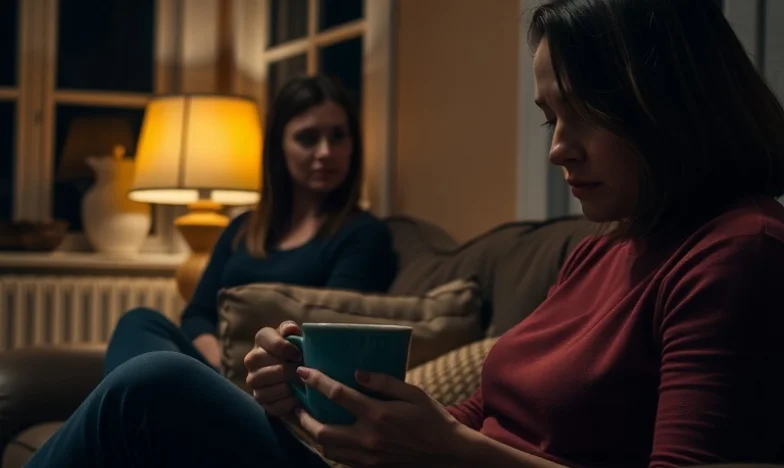
But tonight, as I stare at the chipped blue mug in my hands, my fingers tremble. The scent of chamomile and lemon balm is suddenly sickening. My daughter, Emily, sits across from me, her eyes wide with concern.
“Mom,” she whispers, “are you okay?”
I want to answer her. I want to say yes. But all I can think about are the dreams—the wild, swirling dreams of laughter and music and strangers in my living room. Dreams that never made sense.
—
I grew up in Ohio, in a small town where everyone knew everyone else’s business. My parents were strict but loving; they taught me to trust family above all else. When I met Mark at Ohio State, he was charming and attentive. He made me feel safe.
We married young. He got a job as an accountant; I taught third grade. We bought a modest house in Columbus—a fixer-upper with a big backyard and creaky floors. Life was ordinary, but it was ours.
Every night after Emily was born, Mark started making me tea. “You need to relax,” he’d say. “You work so hard.”
At first, it was sweet. A small gesture of love.
But soon, the dreams began.
—
They were always the same: flashes of people moving through our house, laughter echoing down the hallway, music thumping from somewhere far away. Sometimes I’d see Mark’s face among the crowd, sometimes not. I’d wake up groggy and disoriented, convinced it was just stress or exhaustion.
I never told anyone about the dreams—not even Mark. He’d ask how I slept, and I’d shrug it off.
“Just tired,” I’d say.
He’d smile and kiss my forehead.
—
Years passed. Emily grew up and left for college in Chicago. Mark and I settled into a comfortable routine—work, dinner, tea, sleep. The dreams faded into background noise.
Until last month.
Emily came home for spring break. She wanted to surprise me with breakfast in bed, but when she came downstairs at 7 a.m., she found strangers passed out on our living room floor.
She called 911 before waking me up.
I remember her shaking me by the shoulders, her voice frantic: “Mom! Mom! Wake up! Who are these people?”
I stumbled out of bed, my head pounding. The living room was trashed—empty bottles everywhere, cigarette butts ground into the carpet. Three people I’d never seen before were sprawled on the couch and floor.
Mark was nowhere to be found.
—
The police arrived within minutes. They questioned me for hours—Did I know these people? Had I been drinking? Did I remember anything?
I remembered nothing.
Emily sat beside me, holding my hand so tightly it hurt.
“Mom,” she said softly after the officers left, “this isn’t normal.”
She was right.
—
Mark came home that afternoon, acting surprised by the mess. He claimed he’d gone out for an early run and had no idea what happened.
But Emily didn’t buy it. She insisted we install cameras in the house—just in case.
That night, Mark made my tea as usual. But when he handed me the mug, Emily intercepted it.
“I’ll take that,” she said coolly.
Mark’s face went pale.
—
The next morning, Emily showed me the footage from the living room camera. My hands shook as I watched myself—eyes glassy, stumbling through a crowd of strangers while Mark laughed and poured drinks for everyone.
He’d been throwing parties in our house for years while I slept through it all.
I confronted him that night after Emily left for a walk.
“How could you?” My voice broke on the words.
He didn’t deny it. He just stared at his hands and said quietly, “You never wanted to have fun anymore.”
I felt something inside me shatter.
—
The next days blurred together—police reports, doctor visits, toxicology tests. The tea had been laced with sedatives for years. Mark confessed everything: he’d started with small doses to help me sleep through his poker nights with friends. Over time, it became easier to keep me sedated than to ask for permission or deal with my disapproval.
He swore he never meant to hurt me—that he loved me in his own way.
But love doesn’t look like this.
—
Emily moved back home to help me pick up the pieces. Some days I can barely get out of bed; other days I rage at the world for letting this happen under my nose.
My parents call every night now—worried sick but unsure what to say. Friends from church drop off casseroles and flowers. Everyone wants to help, but no one knows how.
I keep replaying those twenty years in my mind—every smile, every kiss goodnight, every cup of tea handed to me with such care. How much of my life was real? How much did I lose?
—
The hardest part is trusting myself again. For so long, I believed in Mark—believed in us. Now I question everything: my memories, my instincts, even my own judgment.
Emily sits with me on the porch most evenings now. We watch the sun set over our backyard—the same backyard where we once played catch and planted tulips together.
“Mom,” she says softly one night, “you’re stronger than you think.”
I want to believe her.
—
Mark is gone now—arrested and awaiting trial. The house is quiet at night; sometimes too quiet. But there’s a strange comfort in knowing that every sound is real—that nothing is happening behind my back while I sleep.
I’ve started seeing a therapist. We talk about boundaries and trust and healing from betrayal so deep it feels like a wound that will never close.
Some nights I still dream of parties—of laughter echoing down empty hallways—but now I know they’re just dreams.
—
If you’re reading this and something feels off in your own life—if you’re doubting your instincts or brushing aside strange feelings—please listen to yourself. Don’t wait twenty years like I did.
Sometimes love isn’t what it seems. Sometimes safety is just an illusion we cling to because we’re too afraid to look closer at what’s really happening behind closed doors.
But you deserve better. We all do.
Based on a true story.