Shadow on the Edge of Town – Anna’s Story from the Last House on Willow Lane

“You know, Anna, folks around here don’t take kindly to strangers.” The words hung in the air like the thick, humid fog that rolled in every evening from the cornfields. I stood on the porch of the old house at the end of Willow Lane, my hands trembling as I fumbled with the keys. Mrs. Jenkins, my nearest neighbor, watched me from her own porch, arms crossed, eyes narrowed. I forced a smile, but it felt brittle, like the peeling paint on the front door.
I’d left Chicago with nothing but a suitcase and a heart full of regrets. The house was a relic, abandoned for years, its windows clouded with dust and its garden choked with weeds. But it was cheap, and I needed cheap. I needed distance—from my family, from my ex-husband, from the city that had chewed me up and spat me out. I needed a place where no one knew my name, or so I thought.
The first night, the silence was deafening. I lay on the creaky mattress, listening to the wind rattle the shutters, my mind replaying the last fight with my mother. “You’re running away again, Anna. That’s all you ever do.” Maybe she was right. But what else could I do after losing my job, my marriage, and my sense of self all in one year?
The next morning, I ventured into town. The diner was the kind of place where the waitress knew everyone’s order by heart. As I walked in, conversations faltered. Heads turned. I could feel their eyes on me, sizing me up, whispering. I ordered coffee, my hands shaking so badly I nearly spilled it. The waitress, a woman about my age with tired eyes and a name tag that read “Maggie,” gave me a sympathetic smile. “Don’t mind them. They’ll get used to you. Eventually.”
But they didn’t. Not really. Every trip to the grocery store was an ordeal. People stared, whispered, speculated. I heard the rumors—she’s hiding from something, she’s got a record, she’s running from the law. The truth was less dramatic, but no less painful. I was running from myself, from the mistakes I couldn’t forgive.
One evening, as I struggled to fix the broken fence in the backyard, a voice startled me. “Need a hand?” I turned to see a man, maybe in his late thirties, with kind eyes and a gentle smile. “I’m Jack. I live down the road.”
I hesitated, but something in his voice made me nod. We worked in silence for a while, the only sounds the chirping of crickets and the distant hum of a tractor. Finally, he spoke. “People around here can be… cautious. But they mean well. Mostly.”
I laughed, a bitter sound. “I’m not sure I do.”
He looked at me, really looked, and I felt exposed. “You don’t have to tell me your story. But if you ever want to, I’m a good listener.”
That night, I sat on the porch, watching the fireflies dance in the darkness. I thought about Jack’s offer, about the kindness in his eyes. I wanted to trust him, but trust was a luxury I couldn’t afford.
Weeks passed. Slowly, I began to carve out a routine. I planted tomatoes in the garden, painted the living room, tried to make the house feel like home. Jack stopped by now and then, bringing fresh eggs or helping with repairs. We talked about everything and nothing—music, books, the weather. He never pressed me for details, never asked about my past.
But the town didn’t forget. One afternoon, as I walked to the mailbox, I overheard two women talking. “She’s trouble, that one. Mark my words.”
I wanted to scream, to tell them they didn’t know me, that I wasn’t the villain they imagined. But I kept my head down and walked on.
One rainy night, there was a knock at my door. I opened it to find my younger brother, Ben, soaked to the skin. “Mom’s in the hospital,” he said, his voice breaking. “She’s asking for you.”
My heart clenched. I hadn’t spoken to my mother in months, not since our last argument. I wanted to slam the door, to run away again. But I couldn’t. I packed a bag and drove through the storm, Ben silent beside me.
At the hospital, my mother looked smaller than I remembered, her hair gray and her skin papery. She reached for my hand. “Anna, I’m sorry. I was hard on you. I just… I didn’t want to lose you.”
Tears burned my eyes. “I’m sorry too, Mom. I just needed to find myself.”
We talked for hours, the walls between us crumbling. For the first time, I told her about the miscarriage, about the depression that followed, about the marriage that fell apart under the weight of grief. She cried with me, held my hand, forgave me.
When I returned to Willow Lane, something had shifted. The house felt warmer, the town less hostile. Jack met me on the porch, concern etched on his face. “You okay?”
I nodded. “Getting there.”
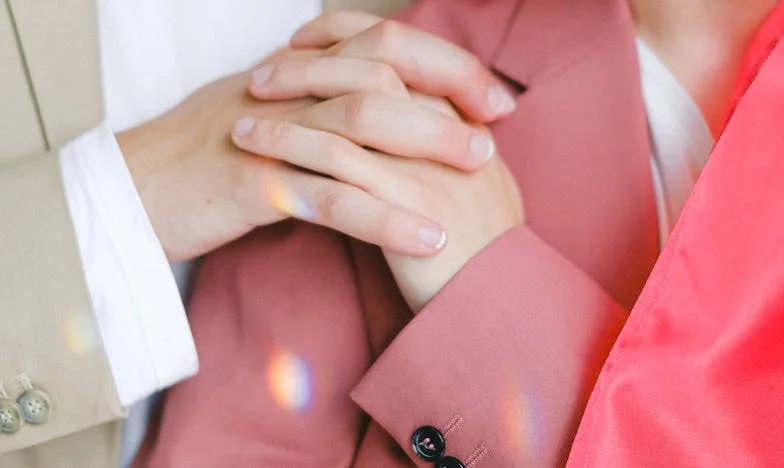
He took my hand, and for the first time in a long time, I let myself hope.
But healing isn’t a straight line. There were setbacks—nights when the loneliness pressed in, days when the whispers in town grew louder. One afternoon, I found a note taped to my door: “Go back where you came from.”
I sat on the porch, the note crumpled in my fist, anger and sadness warring inside me. Jack sat beside me, silent. Finally, I spoke. “Will I ever belong here?”
He squeezed my hand. “You belong wherever you decide to plant your roots. Don’t let them decide for you.”
Slowly, I began to reach out. I volunteered at the library, joined the community garden, baked cookies for the church bake sale. Some people warmed to me; others never did. But I realized that belonging wasn’t about being accepted by everyone—it was about accepting myself.
One evening, as the sun set over the fields, I sat on my porch with Jack, watching the sky turn gold and pink. “Do you ever feel like a stranger in your own life?” I asked.
He smiled, a little sadly. “All the time. But I think that’s how we find out who we really are.”
Now, when I walk through town, I hold my head a little higher. The whispers haven’t stopped, but they don’t cut as deep. I’ve learned that forgiveness isn’t a gift you give to others—it’s something you give yourself, over and over, until the wounds begin to heal.
Sometimes I wonder if I’ll ever truly belong, if the shadows at the edge of town will ever fade. But maybe that’s not the point. Maybe the point is learning to live with the shadows, to find light in unexpected places, to keep moving forward even when the path is uncertain.
Would you have stayed, or would you have run? How do you forgive yourself when the world won’t let you forget?