When the Door Closes: A Story of Forgiveness and Stubbornness in the Heart of Ohio

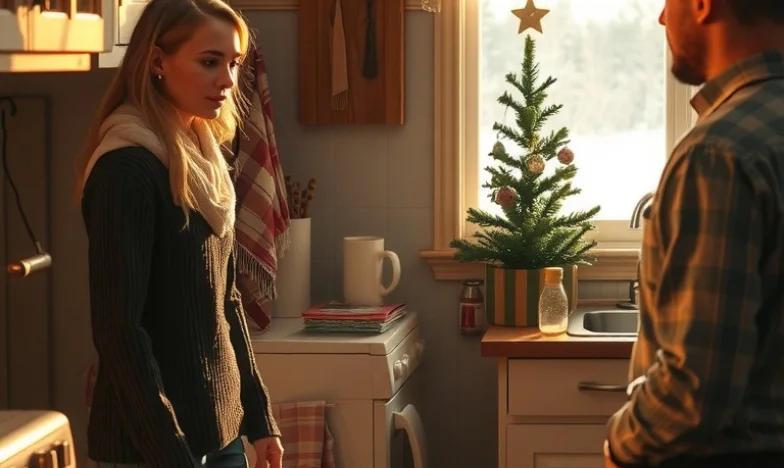
“You’re really not going to call them?” I asked, my voice trembling as I stood in the kitchen, the scent of cinnamon rolls from the oven mixing with the tension in the air. Michael’s jaw clenched, his eyes fixed on the window, watching the first snow of December dust the backyard.
“No, Em. I told you. I don’t want them there,” he said, voice flat, final. The silence that followed was thick, broken only by the ticking of the clock and the distant laughter of my younger sister, Sarah, decorating the Christmas tree in the living room.
It was two weeks before our wedding, and the invitations had all been sent—except to Michael’s parents. I’d never met them. He’d told me stories, always with a bitter edge: his father’s harsh words, his mother’s silence, the night he left home at nineteen after a fight that ended with a slammed door and a vow never to return. I’d listened, tried to understand, but as the day approached, the absence of his family felt like a wound that wouldn’t heal.
“Michael, it’s your wedding. Your parents should be there. What if—”
He cut me off, voice rising. “What if what, Emily? What if they ruin it? What if Dad starts drinking and says something awful? What if Mom just sits there pretending everything’s fine? I’m done with them.”
I wanted to argue, to plead, but I saw the pain behind his anger. I just nodded, swallowing my words, and went to help Sarah with the ornaments. But that night, as I lay in bed beside Michael, listening to his steady breathing, I couldn’t sleep. I kept thinking about my own parents, how they’d hugged me tight when I told them about the engagement, how my dad had cried when he walked me down the aisle in my dreams. I couldn’t imagine a wedding without them.
The day came, cold and bright, the church filled with friends and my family, everyone smiling, laughing, taking pictures. But there was an empty pew near the front, and every time I glanced at Michael, I saw the shadow in his eyes. We danced, we cut the cake, we toasted to our future, but when the night was over and we were alone in our hotel room, he sat on the edge of the bed, staring at his phone.
“Do you think I did the right thing?” he asked, voice small, almost childlike.
I sat beside him, took his hand. “I don’t know, Michael. I just know that sometimes, when you close a door, it’s hard to open it again.”
He didn’t answer. He just turned off his phone and climbed into bed, pulling the covers over his head.
The first year of our marriage was a patchwork of joy and tension. We bought a little house in Columbus, painted the walls together, argued about furniture and bills and whose turn it was to shovel the driveway. On holidays, my family filled our home with laughter and food, but Michael always seemed distant, especially on Father’s Day and Christmas. He never talked about his parents, but sometimes I’d catch him staring at old photos, his face unreadable.
One night, after Thanksgiving, I found him in the garage, sitting on the cold concrete floor, a half-empty bottle of bourbon beside him. He looked up, eyes red.
“I got a card from my mom,” he said, voice hoarse. “She said she misses me. Asked if we could talk.”
My heart ached for him. “What did you say?”
He shook his head. “Nothing. I threw it away.”
I knelt beside him, put my arms around him. “Michael, you don’t have to forgive them. But maybe you could talk. Just once.”
He pulled away, anger flaring. “You don’t get it, Emily! You don’t know what it was like!”
I flinched, hurt, but I didn’t leave. I just sat with him until the cold seeped into my bones and he finally came inside.
The years passed. We had a son, Jack, and then a daughter, Lily. Parenthood changed us, softened Michael in ways I hadn’t expected. He doted on the kids, read them stories, built them a treehouse in the backyard. But every time Jack asked about his other grandparents, Michael would change the subject or leave the room. I tried, gently, to bring it up, but he always shut me down.
One Christmas, when Jack was six, he found an old photo album in the attic. He brought it to the living room, flipping through pictures of Michael as a boy, grinning beside a tall man with kind eyes and a woman with a shy smile.
“Daddy, who are these people?” Jack asked.
Michael froze, the color draining from his face. He took the album, closed it, and put it back on the shelf. “Just some people from a long time ago, buddy.”
Jack looked confused, but didn’t press. I watched Michael retreat to the kitchen, shoulders hunched, and my heart broke for him—and for the family we were missing.
Then, one spring morning, the phone rang. I answered, expecting a telemarketer, but the voice on the other end was trembling, familiar from the few Christmas cards that had come over the years.
“Is Michael there? This is Linda. His mother.”
I hesitated, unsure what to do. Michael was outside, mowing the lawn. I watched him through the window, the kids chasing bubbles nearby.
“He’s here,” I said softly. “Do you want to talk to him?”
There was a long pause. “Please. It’s important.”
I called him in, handed him the phone. He stared at it like it was a snake, then pressed it to his ear.
“Yeah?”
I couldn’t hear her words, but I saw his face change—first confusion, then shock, then something like fear. He hung up without a word, walked past me, and locked himself in the bathroom. I heard him crying, deep, wrenching sobs that shook the walls.
When he finally came out, his face was pale, eyes swollen. “My dad’s in the hospital. Heart attack. They don’t know if he’ll make it.”
I reached for him, but he pulled away. “I can’t go, Emily. I can’t.”
“Michael, you have to. You’ll regret it if you don’t.”
He shook his head, tears streaming down his face. “It’s too late. He wouldn’t want to see me.”
I wanted to scream, to shake him, but I just held him as he cried. That night, he sat in Jack’s room, watching him sleep, his hand resting on our son’s back. I knew he was thinking about all the years he’d lost.
The next morning, his father died. Michael didn’t go to the funeral. He spent the day in the backyard, building a birdhouse with Jack, silent and haunted. When the sun set, he came inside, sat at the kitchen table, and finally spoke.
“I thought I was protecting myself. But all I did was build a wall I can’t tear down. I wish I’d tried, Em. I wish I’d just picked up the phone.”
I squeezed his hand, tears in my eyes. “It’s not too late to forgive, Michael. Maybe not for him, but for you.”
He nodded, but I saw the regret in his eyes, the weight of all the words left unsaid.
Now, years later, as we watch Jack and Lily grow, Michael tries to be the father he never had. He tells them stories, hugs them tight, never lets a day go by without saying he loves them. But sometimes, late at night, I see him staring at the old photo album, and I know he’s still searching for peace.
I wonder, if you were in his shoes, would you have made the same choice? Or would you have found the courage to forgive before it was too late?