When My Mother-in-Law Tore Us Apart: Finding the Courage to Defend What Matters

“Lucia, hurry up with those pancakes! Your grandpa likes them hot, and don’t forget to refill my coffee!” My mother-in-law’s voice cut through the kitchen like a cold wind, sharp and demanding. I stood in the doorway, frozen, watching my ten-year-old daughter scurry around the table, her small hands trembling as she tried to keep up. It was Thanksgiving morning, and the house was supposed to be filled with warmth and laughter, but all I could feel was a knot tightening in my stomach.
I’d always known that Linda, my husband’s mother, was a force to be reckoned with. She had opinions about everything—how I raised my kids, how I cooked, even how I decorated our home in suburban Ohio. But until that morning, I’d never seen her direct her sharp tongue at Lucia. My daughter’s cheeks were flushed, her eyes darting to me for help, but Linda just kept barking orders. “Don’t just stand there, Lucia! Wipe up that spill. And where’s my cranberry sauce?”
I stepped forward, my voice shaking. “Linda, maybe Lucia can take a break. She’s just a kid.”
Linda turned to me, her lips pursed. “If you don’t teach her to help out now, she’ll never learn responsibility. Back in my day, I was running a household by her age.”
I wanted to scream. Instead, I forced a smile and said, “She’s helping enough. Why don’t I take over?”
Linda rolled her eyes and muttered something about ‘modern mothers’ as she swept past me. I knelt beside Lucia, brushing a strand of hair from her face. “You okay, honey?”
Lucia nodded, but I could see the tears she was fighting back. “I just wanted to help,” she whispered.
That was the moment I knew something had to change. But change, I would soon learn, is never easy—especially when it means standing up to family.
The weeks that followed were a blur of tension and whispered arguments. Linda moved in with us after her hip surgery, and what was supposed to be a temporary arrangement stretched on and on. She criticized everything: the way I folded laundry, the snacks I packed for the kids, even the way my husband, Mark, and I spoke to each other. Mark tried to keep the peace, but I could see the strain in his eyes. He loved his mother, but he loved us too. He was caught in the middle, and it was tearing him apart.
One night, after the kids were in bed, I found Mark sitting alone in the dark living room, staring at the family photos on the mantel. “She’s your mom,” I said softly, sitting beside him. “But she’s hurting Lucia. She’s hurting all of us.”
He sighed, rubbing his temples. “I know. I just… I don’t know what to do. She’s always been like this, but it’s worse now. I feel like I’m failing everyone.”
I reached for his hand. “We have to protect our family. Lucia is scared of her own grandmother. That’s not okay.”
He nodded, but I could see the pain in his eyes. “I’ll talk to her. I promise.”
The next morning, Mark tried to set boundaries. He told Linda that Lucia wasn’t her servant, that she needed to respect our rules. Linda exploded. “You’re choosing her over me? After everything I’ve done for you?” She slammed her coffee mug down so hard it cracked. “You’re ungrateful. Both of you.”
The days grew colder, both outside and inside our home. Linda started ignoring me, making snide comments under her breath. She’d whisper to Mark when she thought I couldn’t hear, planting seeds of doubt. “She’s turning you against your own mother. She doesn’t respect our family.”
I tried to shield Lucia from the worst of it, but kids are smart. She started having nightmares, waking up crying. “I don’t want Grandma to be mad at me,” she’d sob. My heart broke a little more each time.
Christmas came, and instead of joy, our house was filled with tension. Linda criticized the decorations, the gifts, the food. She made Lucia cry at dinner, snapping at her for dropping a fork. Mark and I exchanged helpless glances across the table, the holiday spirit crushed beneath the weight of her words.
After dinner, I found Lucia curled up in her room, clutching her favorite stuffed animal. “I wish Grandma would go home,” she whispered. “I don’t like it when she’s here.”
That night, Mark and I sat in our bedroom, the silence heavy between us. “We can’t do this anymore,” I said finally. “We’re losing Lucia. We’re losing ourselves.”
Mark nodded, tears in his eyes. “I know. But how do I tell my own mother she can’t be here?”
I squeezed his hand. “We have to. For Lucia. For us.”
The next morning, Mark sat down with Linda. I listened from the hallway, my heart pounding. “Mom, we need some space. Things aren’t working. You can’t keep treating Lucia like this. You can’t keep treating us like this.”
Linda’s voice rose, shrill and wounded. “So you’re kicking me out? After everything I’ve sacrificed?”
Mark’s voice was steady, but I could hear the pain. “We love you, but we need to protect our family. We need you to leave.”
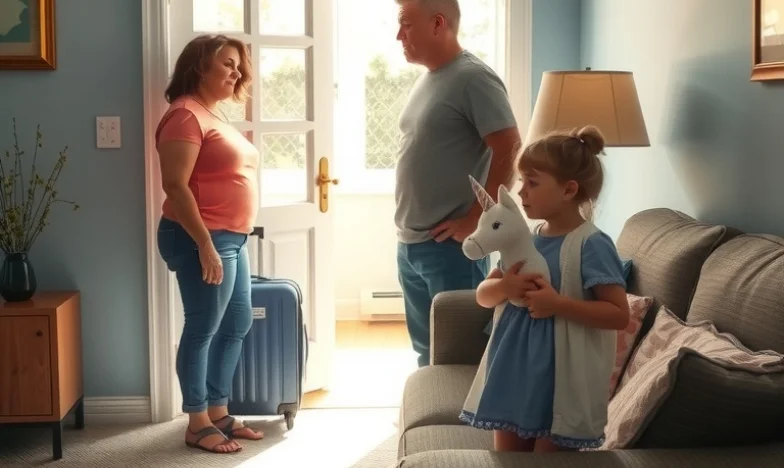
Linda packed her things in silence, her face a mask of anger and betrayal. She didn’t say goodbye to Lucia. She barely looked at me. When the door closed behind her, the house felt both emptier and lighter.
The weeks that followed were hard. Mark grieved the loss of his relationship with his mother. Lucia slowly started to smile again, the shadows fading from her eyes. We talked a lot—about boundaries, about love, about how sometimes the hardest thing is standing up to the people you care about most.
On Easter, we sat around the table, just the three of us, coloring eggs and laughing. The house was filled with warmth again. Lucia looked up at me and said, “I’m glad it’s just us.”
I hugged her tight, tears in my eyes. “Me too, honey. Me too.”
Sometimes I wonder if we did the right thing. Family is supposed to stick together, right? But what do you do when the person who’s supposed to love you the most is the one hurting you? Would you have had the courage to stand up for your family, even if it meant losing someone you loved?