When My Mother-in-Law Knocked: The Day Our Family Changed Forever

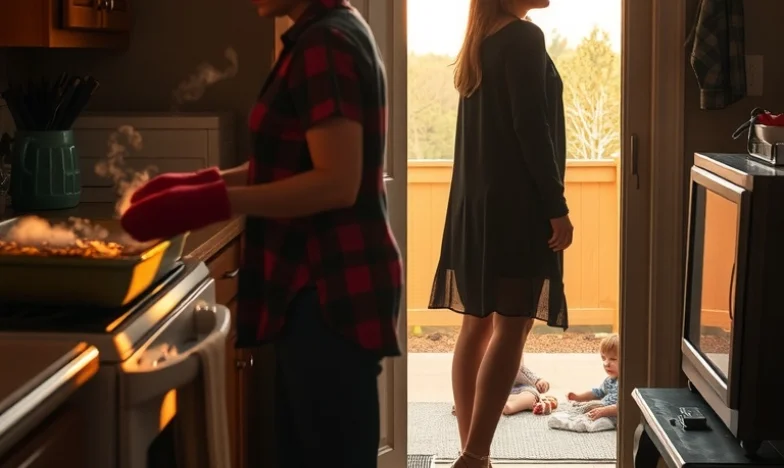
The doorbell rang just as I was pulling a tray of lasagna out of the oven. My hands trembled, oven mitts slipping, as the sharp chime echoed through our small Connecticut home. I wasn’t expecting anyone. My husband, Mike, was still at work, and the kids were at their after-school program. For a split second, I considered ignoring it. But the bell rang again—insistent, impatient.
I wiped my hands on my jeans and hurried to the door. Through the frosted glass, I saw her silhouette: tall, rigid, unmistakable. My mother-in-law, Linda. My heart thudded in my chest. She never came unannounced. Not since the last time, two years ago, when a surprise visit ended in tears and three months of silence.
I opened the door, forcing a smile. “Linda! What a surprise.”
She stepped inside without waiting for an invitation, her eyes scanning the living room. “I was in the neighborhood,” she said, voice clipped. “Thought I’d check in. You know, see how things are going.”
I tried to keep my tone light. “Everything’s fine. Mike’s at work, but he’ll be home soon.”
She set her purse on the coffee table, ignoring the stack of laundry I hadn’t had time to fold. “I’ll wait.”
The next hour crawled by. Linda sat stiffly on the couch, commenting on the dust on the TV stand, the toys scattered on the floor, the faint smell of garlic in the air. I offered her coffee. She declined. I offered her a slice of lasagna. She pursed her lips.
Finally, Mike came home. Relief washed over me as I heard his car pull into the driveway. He walked in, surprised to see his mother. “Mom! What brings you here?”
Linda’s eyes flicked to me. “I wanted to talk. Privately.”
Mike glanced at me, uncertain. I nodded, trying to hide my anxiety. I busied myself in the kitchen, straining to hear their voices from the living room. Their words were muffled, but I caught snippets: “concerned,” “the kids,” “too much work,” “not enough time.”
When I returned with a tray of drinks, Linda’s face was tight with disapproval. Mike looked defeated. “We’re just talking about the kids’ routines,” he said, avoiding my eyes.
Linda stood abruptly. “I just want what’s best for my grandchildren. They need structure. Stability. Not chaos.”
I felt my cheeks burn. “I do my best, Linda. I work from home, I take care of the house, I—”
She cut me off. “Maybe if you spent less time working and more time being a mother, things would be different.”
The words hit me like a slap. Mike opened his mouth, but Linda was already at the door. “I’ll see myself out.”
The door slammed behind her, rattling the picture frames on the wall. The silence that followed was heavier than any argument.
Mike and I stood in the hallway, neither of us speaking. Finally, he said, “She means well. She just… worries.”
I shook my head, tears stinging my eyes. “She doesn’t see how hard I try. She only sees what’s wrong.”
That night, we barely spoke. The kids came home, chattering about their day, oblivious to the tension. I tucked them into bed, kissed their foreheads, and sat in the dark living room, replaying Linda’s words over and over.
The days that followed were strained. Mike called his mother, but she didn’t answer. She sent a text: “I need time.”
I felt guilty. Maybe I should have been more welcoming. Maybe I should have listened instead of defending myself. But another part of me was angry—furious, even. Why was it always my fault? Why did I have to prove myself, again and again?
A week later, Mike suggested we invite Linda for Sunday dinner. “We need to talk this out,” he said. “For the kids.”
I agreed, though my stomach twisted with dread. I spent all day cleaning, cooking, making sure everything was perfect. When Linda arrived, she barely looked at me. Dinner was tense, conversation stilted.
Halfway through the meal, she set down her fork. “I just want to be involved. I want to help.”
I swallowed hard. “We appreciate your help, Linda. But sometimes it feels like you don’t trust me.”
She looked at me, her eyes softening for the first time. “I lost my own mother when I was young. I never had anyone to guide me. I just… I don’t want you to feel alone.”
The words caught me off guard. For a moment, I saw her not as my critic, but as a woman who had lost, who was afraid.
“I don’t want to be alone,” I said quietly. “But I need you to trust me. I need you to see that I’m doing my best.”
Linda nodded, tears in her eyes. “I’m sorry. I just want what’s best.”
We sat in silence, the air heavy with unspoken words. Mike reached for my hand under the table. For the first time in weeks, I felt hope.
But healing wasn’t instant. There were still awkward moments, still misunderstandings. Sometimes, Linda would slip back into criticism. Sometimes, I would snap, my patience worn thin. But we tried. We talked. We listened.
Months passed. The kids grew, the seasons changed. Linda became a more regular presence in our lives—not as a judge, but as a grandmother. We found a fragile peace, built on honesty and forgiveness.
Still, sometimes, when I hear the doorbell ring unexpectedly, my heart skips a beat. I remember how easily things can break. How quickly words can wound. And I wonder: could I have done something differently? Or are some doors better left closed?
Based on a true story.