When I Needed Support, My Husband’s Family Turned Their Backs on Me: I Won’t Be Their Savior Anymore

“You know, Emily, we always do pumpkin pie this way,” my mother-in-law, Linda, said, her voice tight as she watched me pour the filling into the crust. It was my first Thanksgiving as a married woman, and I was desperate to fit in. The kitchen was crowded with laughter and the clatter of pans, but I felt like I was standing on the outside of a glass wall. My husband, Mark, was in the living room with his brother, shouting at the football game, oblivious to the tension simmering in the kitchen. I smiled, swallowing the lump in my throat, and tried to laugh it off. “Guess I’ll have to learn the family secrets,” I said, but Linda just pursed her lips and turned away.
That was five years ago. From the start, I felt like a guest in Mark’s family, never quite belonging. I tried everything—baking, babysitting, organizing birthday parties, even driving Linda to her doctor’s appointments when Mark’s sister, Rachel, was too busy. I was the one who remembered everyone’s birthdays, who sent cards and gifts, who stayed late to help clean up after every holiday meal. I thought if I just tried hard enough, I’d finally be accepted. But no matter what I did, I was always just Mark’s wife, never really one of them.
It wasn’t all bad. There were moments—like the Christmas when Mark’s dad, Bill, gave me a mug with my name on it, or the Fourth of July barbecue when Rachel hugged me and said, “You’re family now.” But those moments were rare, flickers of warmth in a house that always felt a little too cold.
Then, last year, everything changed. My mom was diagnosed with breast cancer. I was terrified. Mark tried to be supportive, but he worked long hours, and I was left to shuttle between the hospital and home, barely sleeping, barely eating. I called Linda, hoping for comfort. “I’m so sorry, Emily,” she said, but her voice was distant. “Let us know if you need anything.”
I did need something. I needed someone to sit with me in the waiting room, to bring me a casserole, to ask how I was holding up. But no one came. Not Linda, not Rachel, not even Bill. They sent a card, signed with all their names, but it felt like a formality. I watched as Mark’s family rallied around Rachel when she broke her ankle, organizing meal trains and taking turns driving her kids to school. I watched as they threw a surprise party for Bill’s retirement, everyone pitching in, laughing, hugging. But when I needed them, I was alone.
One night, after a long day at the hospital, I came home to find Mark on the phone with his mom. “Yeah, Em’s fine,” he said, glancing at me. “She’s just tired.” I wanted to scream. I wasn’t fine. I was falling apart. I wanted someone to see me, to really see me, but it was like I was invisible.
The weeks dragged on. My mom’s treatment was brutal. I missed work, lost weight, stopped sleeping. Mark tried, but he didn’t understand. He’d never had to watch someone he loved fade away. I called Rachel, hoping for a friend. “I’m really busy with the kids, Em,” she said. “But I’ll pray for you.”
I started to resent them. All those years I’d spent helping, supporting, loving them—and now, when I needed just a fraction of that in return, they had nothing for me. I stopped calling. I stopped sending cards. I stopped showing up for Sunday dinners. Mark noticed, but he didn’t push. He just looked at me with sad eyes, like he knew something was broken but didn’t know how to fix it.
The final straw came at Easter. My mom was in remission, but I was exhausted, emotionally and physically. Linda called, asking if I could bring my famous deviled eggs. I hesitated. “I’m not sure I’ll make it this year,” I said. There was a pause. “Oh,” she said, her voice cool. “Well, we’ll miss you.” That was it. No questions, no concern, just disappointment that I wouldn’t be there to fill a role.
I hung up and cried. I cried for all the years I’d spent trying to earn their love, for all the times I’d put their needs before my own, for all the ways I’d let myself be used. I realized I’d been their savior, their helper, their fixer—but never their family.
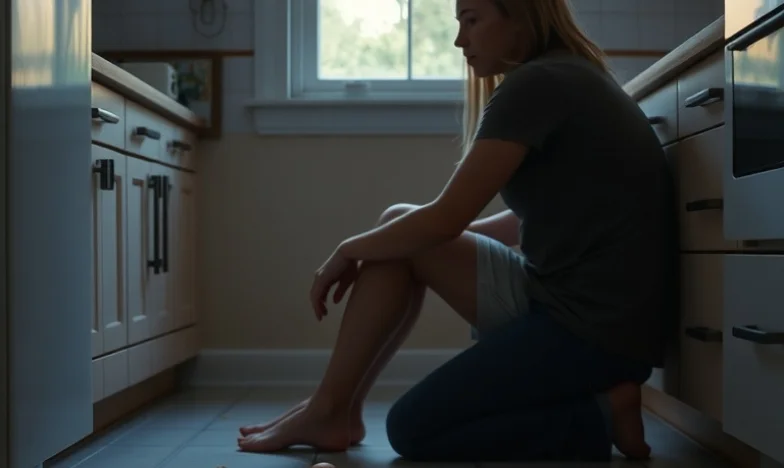
Mark came home to find me sitting on the kitchen floor, surrounded by broken eggshells. “Em, what’s wrong?” he asked, kneeling beside me. I looked at him, really looked at him, and saw the worry in his eyes. “I can’t do this anymore,” I whispered. “I can’t keep giving and giving and getting nothing back.”
He pulled me into his arms. “I’m sorry,” he said. “I should have seen it. I should have done more.”
We talked for hours that night. For the first time, I told him everything—how I’d felt like an outsider, how I’d tried so hard, how his family’s indifference had broken me. He listened, really listened, and for the first time, I felt heard.
After that, things changed. I stopped trying to please Mark’s family. I stopped volunteering for every holiday, stopped bending over backward to make them happy. I started saying no. It wasn’t easy. Linda called less, Rachel stopped texting. Mark’s dad sent a Christmas card, but it was just signed “Bill.”
But something else happened, too. I started to find myself again. I reconnected with old friends, spent more time with my mom, started going to therapy. I realized I didn’t need Mark’s family to validate me. I was enough, just as I was.
This past Thanksgiving, Mark and I hosted dinner at our house. We invited my mom, my best friend, and a few neighbors. It was small, but it was warm and full of laughter. Mark’s family didn’t come. They had their own dinner, their own traditions. For the first time, I didn’t feel left out. I felt free.
Sometimes I wonder if things could have been different. If I’d spoken up sooner, if I’d set boundaries, if I’d demanded more. But I know now that I can’t change other people—I can only change myself.
So here I am, stronger than I ever thought I could be. I’m not their savior anymore. I’m not their fixer. I’m just me, and that’s enough.
Do you ever wonder how much you should give before you finally say, “enough”? Have you ever felt like the outsider in your own family? I’d love to hear your stories.