The Scent of Fresh Bread and the Bitterness of Unspoken Words – My American Kitchen Story

The kitchen clock ticked louder than usual, or maybe it was just my nerves. I stood by the counter, hands dusted with flour, kneading dough for the bread I’d promised to make. The house was quiet except for the hum of the fridge and the occasional creak of the old floorboards. I could hear Mark’s footsteps upstairs, heavy and deliberate, as if he was pacing out his own frustrations.
I pressed my palms into the dough, feeling its warmth, trying to focus on the simple, repetitive motion. But my mind was racing. I glanced at the calendar pinned to the fridge—another Thursday, another dinner where we’d sit across from each other, pretending everything was fine.
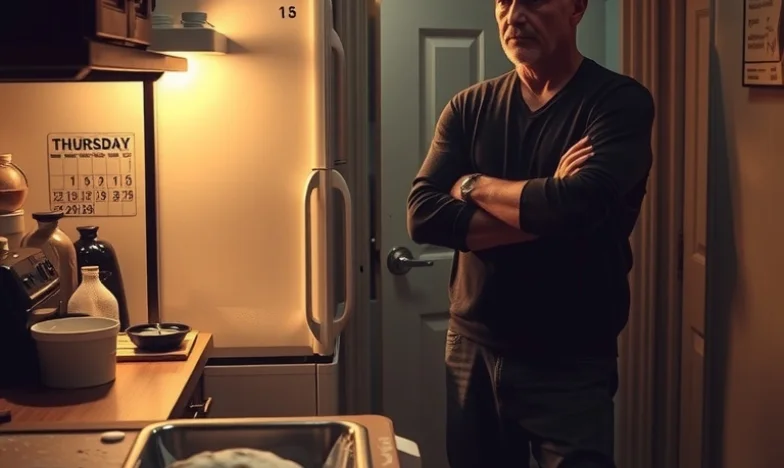
“Hey, do you want me to set the table?” Mark’s voice startled me. He stood in the doorway, arms crossed, eyes tired. He looked like he hadn’t slept in days, but then again, neither had I.
I nodded, not trusting my voice. He moved past me, grabbing plates from the cabinet. The silence between us was thick, almost suffocating. I wanted to say something—anything—but the words caught in my throat.
The bread went into the oven. I set the timer, wiping my hands on a towel. Mark was already pouring himself a glass of water, his back to me. I watched his shoulders rise and fall with each breath, so familiar and yet so distant.
“Did you talk to Emily about the college visit?” he asked, not turning around.
I hesitated. “She said she’s not sure if she wants to go. She’s… confused.”
He sighed, setting the glass down a little too hard. “She needs to make a decision. We can’t just keep waiting.”
I bristled. “She’s seventeen, Mark. She’s allowed to be unsure.”
He turned, frustration etched on his face. “We’re not helping her by letting her drift. She needs direction.”
I felt my own anger rising, but I swallowed it. This was how it always went—me, trying to keep the peace; him, pushing for answers. The bread timer beeped, a sharp sound that made us both jump.
I pulled the loaf from the oven, the scent filling the kitchen. For a moment, I let myself enjoy it—the golden crust, the promise of warmth. But the tension lingered, unbroken.
We sat down to eat. Emily joined us, earbuds dangling from her ears, eyes glued to her phone. Mark tried to make conversation, asking about her classes, her friends. She shrugged, barely responding. I watched them, feeling the gap between us widen with every unanswered question.
After dinner, Mark retreated to his office. Emily disappeared upstairs. I was left alone with the dishes and the echo of things unsaid.
I scrubbed plates, the hot water stinging my hands. My mind replayed the evening—Mark’s impatience, Emily’s silence, my own inability to bridge the gap. I thought about the compromises I’d made over the years: moving to this town for Mark’s job, putting my career on hold, smoothing over every argument for the sake of peace.
Was this what compromise looked like? A family sitting together, but miles apart?
I remembered the early days—late-night talks, laughter in the kitchen, dreams we shared over coffee. Somewhere along the way, those dreams had faded, replaced by routines and responsibilities. We’d stopped talking about what we wanted, settling instead for what was easiest.
The next morning, I woke before dawn. I sat at the kitchen table, staring at the loaf of bread from the night before. I broke off a piece, savoring the taste, the texture. It was good—better than I expected. But it didn’t fill the emptiness I felt.
Mark came downstairs, briefcase in hand. He paused, looking at me. “You okay?”
I wanted to say no. I wanted to tell him how lonely I felt, even when he was right there. But the words wouldn’t come.
“I’m fine,” I lied.
He nodded, kissed my forehead, and left for work.
I spent the day cleaning, organizing, trying to distract myself. But the silence was relentless. I called my sister, hoping for comfort. She listened, her voice gentle. “You can’t keep carrying this alone, Sarah. You have to talk to him.”
I knew she was right. But the thought of opening up, of risking another argument, terrified me.
That evening, Mark came home late. Emily was already in her room. I reheated leftovers, setting the table for two. We ate in silence, the clatter of forks and knives the only sound.
After dinner, I found Mark in the living room, staring at the TV but not really watching. I sat beside him, heart pounding.
“Mark, we need to talk.”
He muted the TV, turning to face me. “What’s going on?”
I took a deep breath. “I feel like we’re drifting apart. I feel… alone. Even when we’re together.”
He looked away, jaw clenched. “I know. I feel it too.”
We sat there, the weight of our honesty settling between us. For the first time in months, we talked—really talked. About Emily, about our fears, about the compromises we’d made and the dreams we’d lost.
It wasn’t easy. There were tears, raised voices, moments when I wanted to walk away. But we kept talking, kept trying.
In the days that followed, things didn’t magically get better. But there was a shift—a willingness to be honest, to face the discomfort instead of hiding from it.
One evening, as I pulled another loaf of bread from the oven, Mark came up behind me, wrapping his arms around my waist. “Thank you,” he whispered. “For not giving up.”
I leaned into him, feeling the warmth of his embrace. The silence was still there, but it was softer now—no longer a wall, but a space where we could begin again.
Sometimes, compromise means losing yourself. But sometimes, it’s the first step toward finding your way back.
Based on a true story.