Bring the Grandkids, But Don’t Forget Your Wallet – The Summer My Family Fell Apart in My Parents’ Garden

“Anna, are you bringing the kids this weekend?”
My mother’s voice crackled through the phone, brittle and expectant. I could hear the clatter of dishes in the background, the faint hum of the old refrigerator in their kitchen. It was early June, and the garden was already wild with weeds and the promise of tomatoes. I hesitated, glancing at my calendar, already packed with soccer games, work deadlines, and the endless logistics of single motherhood.
“Yeah, Mom, I’ll bring them. Saturday, okay?”
“And Anna—don’t forget your wallet. We need to pick up mulch and some new tools. Your father can’t drive anymore.”
I bit my lip. There it was, the unspoken contract. Bring the grandkids, but bring your money, too. I hung up, my heart heavy with a resentment I didn’t want to admit.
—
The drive to my parents’ house in upstate New York always felt longer than it was. My kids, Emily and Jack, squabbled in the backseat, their voices rising and falling like the hills we passed. I tried to focus on the road, but my mind kept circling back to my mother’s words.
I remembered summers when I was a child, running barefoot through that same garden, my father’s laughter echoing as he chased me with the hose. Now, the garden was overgrown, my father’s hands shaky, my mother’s patience thin.
When we arrived, my mother was waiting on the porch, arms folded. My father sat in his old lawn chair, staring at the patchy grass. The air was thick with humidity and something else—something unsaid.
“Anna! You’re late,” my mother snapped. “The kids can help weed. And we need to go to Home Depot before it gets too hot.”
I forced a smile. “Hi, Mom. Hi, Dad.”
Jack ran to his grandfather, who barely looked up. Emily hung back, sensing the tension.
—
We spent the morning pulling weeds, sweat dripping down our backs. My mother barked orders, her voice sharp. My father shuffled behind us, muttering about the old days, about how things used to be.
At noon, my mother handed me a list. “We need all this. And Anna—can you pay? Our Social Security barely covers the bills.”
I stared at the list: mulch, fertilizer, a new hose, groceries. My paycheck barely stretched to the end of the month as it was. I wanted to scream, to tell her I couldn’t keep doing this. But I nodded, swallowing my pride.
At Home Depot, Emily tugged at my sleeve. “Mom, can we get ice cream after?”
I looked at her, her hopeful eyes, and felt the weight of everyone’s needs pressing down on me.
—
That night, after the kids were asleep on the pull-out couch, I sat with my parents on the porch. Fireflies blinked in the darkness. My father cleared his throat.
“Anna, your mother and I… we’re not as young as we used to be. The garden’s too much. We thought maybe you could come every weekend. Help out. Maybe… chip in a little more.”
I felt my chest tighten. “Dad, I’m doing my best. I have the kids, work… I can’t do everything.”
My mother’s voice was cold. “We did everything for you, Anna. We gave you everything. Now we need you.”
I wanted to shout, to tell them how hard it was, how alone I felt. But the words stuck in my throat.
—
The weeks blurred together. Every Saturday, we drove up. Every Saturday, I paid for groceries, for garden supplies, for little things my parents needed. My savings dwindled. My patience wore thin.
One afternoon, as I was digging in the dirt, Emily came to me, tears in her eyes.
“Grandma yelled at me. She said I was lazy.”
I hugged her, anger burning in my chest. I marched to the porch, where my mother sat, knitting.
“Mom, you can’t talk to Emily like that.”
She looked up, her eyes hard. “She needs to learn. Life isn’t easy.”
I clenched my fists. “She’s a child. She’s trying.”
My father shuffled out, his voice trembling. “Enough, both of you. This isn’t helping.”
We sat in silence, the air thick with old wounds.
—
One evening, after a long day in the garden, I found my mother crying in the kitchen. I’d never seen her cry before.
“I’m scared, Anna. Your father’s getting worse. I don’t know how to do this alone.”
I sat beside her, my own tears falling. “I’m scared too, Mom. I’m trying, but I can’t do it all.”
She reached for my hand, her grip surprisingly strong. “I just want us to be a family. Like we used to be.”
I thought of all the things we never said—the disappointments, the sacrifices, the love buried under years of resentment.
—
The summer dragged on. The garden flourished, but our family wilted. My kids grew quiet, dreading the weekends. I grew angry, snapping at everyone. My parents grew frailer, more dependent.
One Saturday, as we packed to leave, my mother pressed a twenty-dollar bill into my hand.
“For gas,” she whispered, her eyes shining with guilt.
I wanted to refuse, but I took it, too tired to argue.
On the drive home, Emily asked, “Mom, why do we have to go every weekend? Why is Grandma so sad?”
I didn’t know how to answer.
—
The turning point came in late August. My father fell in the garden, breaking his hip. The hospital called me at work. I rushed to his side, my mother frantic, my kids left with a neighbor.
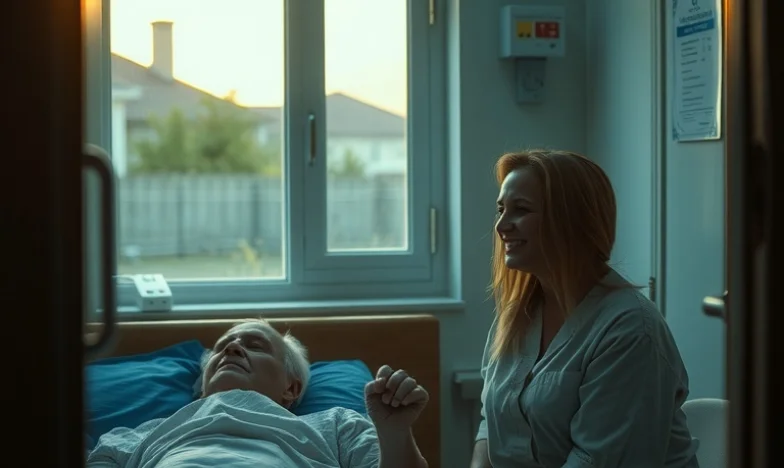
In the sterile hospital room, my father looked at me, his eyes clear for the first time in months.
“Anna, I’m sorry. We never meant to make you feel like this. We just… we’re scared. Of being alone. Of losing everything.”
I held his hand, tears streaming down my face. “I’m scared too, Dad. I don’t know how to help you. I don’t know how to help myself.”
He squeezed my hand. “Just be here. That’s enough.”
—
After my father came home, things changed. My mother stopped asking for money. We hired a part-time nurse, using what little savings they had. I visited less often, but when I did, I brought only myself and the kids—no lists, no expectations.
We sat in the garden, watching the sun set, the air filled with the scent of tomatoes and basil. My parents talked about their childhoods, about dreams they’d given up, about regrets and hopes.
For the first time, we were honest—with each other, and with ourselves.
—
Now, years later, the garden is gone, replaced by a patch of wildflowers. My father’s chair sits empty. My mother lives with us now, quieter, softer.
Sometimes, on summer evenings, I sit on the porch with my own children, telling them stories about the garden, about love and loss, about the things we carry and the things we let go.
I still wonder if we’ll ever be truly honest with each other. But I know now that love isn’t about money or duty—it’s about showing up, even when it hurts.
Based on a true story.