Between the Stove and Silence: My Marriage Was Cooked to Perfection, But I Was Left Burnt Out

“You know I can’t eat leftovers, Sarah. Why do you keep making them?”
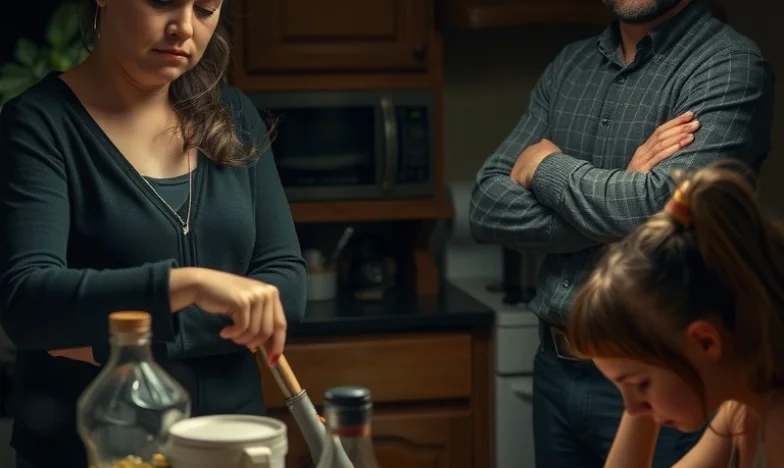
Derek’s voice cut through the kitchen like a knife through butter. I stood by the stove, spatula in hand, watching the steam rise from the pot of chili I’d made last night. My hands trembled as I stirred, the familiar ache in my wrist flaring up again.
“I just thought—” I started, but he was already shaking his head, disappointment etched deep into his brow.
The silence that followed was heavier than the smell of onions that clung to my hair. Our daughter, Emily, sat at the table, eyes glued to her phone, pretending not to notice. But I saw her shoulders tense, the way she pressed her lips together.
—
Every day felt like a test I was destined to fail. Derek insisted on fresh meals—breakfast, lunch, and dinner—no matter how late he got home from work or how tired I was after my own shift at the hospital. He said it was about health, about tradition, about love. But to me, it felt like a prison sentence served one meal at a time.
I used to love cooking. When we first married, I’d spend hours experimenting with recipes, surprising him with homemade pies or spicy jambalaya. He’d laugh, kiss my cheek, and say I was the best thing that ever happened to him.
But somewhere along the way, the joy soured. The compliments faded. The demands grew.
“Why can’t you just order takeout like other families?” Emily asked one night as I chopped carrots for Derek’s favorite stew.
I forced a smile. “Your dad likes things a certain way.”
She rolled her eyes. “Yeah, his way.”
I wanted to defend him. To explain that he worked hard, that he deserved comfort at home. But the words stuck in my throat. Instead, I focused on the rhythm of the knife against the cutting board—chop, chop, chop—hoping it would drown out my doubts.
—
The kitchen became my world and my cage. Every morning before sunrise, I’d pack Derek’s lunch: turkey sandwiches with homemade bread (store-bought was never good enough), apple slices arranged just so, a thermos of soup made fresh at 5 a.m.
At work, my coworkers raved about meal-prep hacks and frozen dinners. They laughed about burnt casseroles and pizza nights. I envied their freedom—their ability to let go.
One afternoon in the break room, my friend Lisa asked why I never joined them for happy hour.
“I have to get home,” I said. “Derek doesn’t like eating late.”
She frowned. “He can’t make himself a sandwich?”
I shrugged. “He says it’s not the same.”
Lisa gave me a look—half pity, half disbelief. “Sarah, you’re not his chef.”
But wasn’t I? Wasn’t that what marriage meant—sacrifice?
—
The fights started small: a forgotten salad dressing, overcooked rice. But they grew sharper with each passing month.
“You don’t care anymore,” Derek accused one night after pushing away a plate of reheated lasagna.
I stared at him across the table, my appetite gone. “I’m tired, Derek. I worked a double shift.”
He sighed dramatically. “Everyone’s tired. But you used to try.”
Emily slammed her fork down. “Maybe if you helped out once in a while!”
Derek glared at her. “Stay out of this.”
She stormed off to her room, slamming the door so hard the walls rattled.
I sat there in the echoing silence, tears stinging my eyes. Was this what we’d become?
—
One Saturday morning, I woke up before dawn and just… sat there. The house was quiet except for the hum of the fridge and Derek’s soft snoring down the hall.
I thought about all the things I’d given up: book club nights, yoga classes with Lisa, lazy Sundays reading in bed. All replaced by grocery lists and meal plans and endless dishes.
I thought about my mother—how she used to hum while she cooked, how she’d dance around the kitchen with my dad as they made pancakes on weekends.
When did we stop dancing?
—
That afternoon, Emily found me crying in the pantry.
“Mom?” she whispered, kneeling beside me.
I wiped my eyes quickly. “Just tired.”
She hugged me tight. “You don’t have to do this anymore.”
Her words hit me harder than any argument with Derek ever had.
—
That night at dinner, I served takeout pizza and salad from a bag.
Derek stared at his plate in disbelief. “What is this?”
I met his gaze for the first time in months. “Dinner.”
He opened his mouth to argue but stopped when he saw Emily glaring at him.
We ate in silence—an uneasy truce—but for once, I didn’t feel guilty.
—
The next day, I called Lisa and asked if she wanted to grab coffee after work. She squealed with delight.
When I got home that evening, Derek was waiting in the kitchen.
“Where were you?” he demanded.
“I needed some time for myself,” I said quietly.
He looked lost for a moment—like he didn’t recognize me anymore.
“Are you… leaving me?” he asked finally.
I shook my head. “No. But things have to change.”
He didn’t answer right away. Instead, he sat down at the table and buried his face in his hands.
—
Change didn’t come overnight. There were more fights—some loud, some silent—but slowly, Derek started helping out more. He learned how to make scrambled eggs and even tried his hand at spaghetti (it was terrible, but we ate it anyway).
Emily started cooking with me on weekends—her way of making sure I never felt alone in the kitchen again.
I went back to yoga class and joined book club again. The house wasn’t always spotless; dinner wasn’t always fresh or fancy. But laughter started creeping back into our lives—awkward at first, then genuine.
—
Sometimes I still miss those early days—the thrill of impressing Derek with a new recipe or watching Emily’s face light up at her favorite cookies.
But now I know love isn’t measured in meals or sacrifices made in silence.
It’s found in shared chores, honest conversations—and yes, even in takeout pizza on a Friday night.
I’m still learning how to put myself on the menu again. Some days are easier than others.
But every day feels a little lighter now that I’ve remembered how to dance in my own kitchen.
Based on a true story.