I Never Thought I’d Have to Pretend to Be Dead – My Fight Against Domestic Violence in an American Family

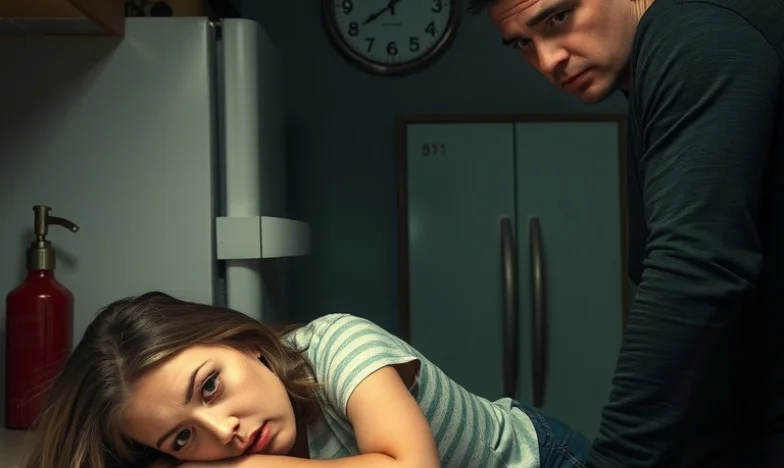
Leaning against the kitchen counter, I could feel my heart pounding so loudly I thought it might burst. The clock on the wall read 2:13 AM. My husband, Mark, was standing over me, his fists clenched, his face twisted in a rage I no longer recognized.
“Get up, Emily!” he shouted, his voice echoing off the tile. “You think you can just ignore me?”
I tried to speak, but my jaw throbbed from where he’d struck me minutes earlier. The metallic taste of blood filled my mouth. I stared up at him, my vision blurring, and realized with a cold certainty: if I didn’t do something, I might not survive the night.
—
I never thought my life would come to this. I grew up in a small town in Ohio, the kind of place where everyone knows your name and secrets are buried deep. Mark and I met in college. He was charming, attentive, the kind of guy who brought flowers for no reason and made me laugh until I cried. My parents adored him. We got married in a white church with my dad walking me down the aisle, and for a while, I believed in happily ever after.
But things changed after our son, Ethan, was born. Mark lost his job at the plant, and the stress started to eat away at him. He drank more. He snapped at me over little things. The first time he hit me, he cried for hours afterward, swearing it would never happen again. I wanted to believe him. I needed to believe him.
The abuse became a cycle—apologies, promises, then violence. I learned to walk on eggshells, to anticipate his moods, to hide bruises with makeup and long sleeves. My friends drifted away. My family stopped visiting. I told myself I was staying for Ethan, that he needed his father, that things would get better.
But they never did.
—
That night, Mark came home late, reeking of whiskey. Ethan was asleep upstairs. I tried to keep my voice calm as I asked him to lower his voice. That’s when he snapped. The argument escalated quickly, and before I knew it, I was on the floor, gasping for breath.
He stood over me, breathing hard. “You’re nothing without me,” he spat. “You think you can leave? You’re mine, Emily. Mine.”
I closed my eyes, willing myself to disappear. Then, in a moment of clarity, I realized what I had to do. I went limp, letting my head roll to the side, my breathing shallow. I remembered reading somewhere that sometimes, if you pretend to be unconscious—or dead—your attacker might stop.
Mark stared at me for what felt like an eternity. I could hear his breathing, ragged and uneven. Then, suddenly, he stepped back. I heard him mutter something under his breath, then the sound of a beer can cracking open. He left the kitchen, slamming the door behind him.
I lay there, afraid to move, afraid he’d come back. My mind raced: What if he checked my pulse? What if he realized I was faking? But he didn’t. Minutes passed. Then an hour. Finally, I heard him snoring from the living room couch.
I crawled to my phone, hidden behind the breadbox. My hands shook as I dialed 911. The operator’s calm voice was a lifeline. “Help is on the way, ma’am. Stay on the line.”
—
The police arrived quietly, their blue and red lights flashing through the kitchen window. They took Mark away in handcuffs. I remember Ethan’s small face peeking out from the stairs, his eyes wide with fear. I scooped him into my arms, whispering that everything would be okay, even though I wasn’t sure I believed it myself.
The days that followed were a blur of hospital visits, police interviews, and paperwork. My parents drove in from Cleveland, their faces etched with worry and guilt. “Why didn’t you tell us?” my mother sobbed. I didn’t have an answer. Shame, fear, hope—it all tangled together until I couldn’t tell one from the other.
I moved in with my parents, Ethan clutching my hand everywhere we went. The nightmares came every night. I’d wake up sweating, convinced Mark was standing over me. Therapy helped, slowly. I learned to say the words: I am a survivor. I am not to blame.
But the hardest part was facing Ethan. He was only six, but he’d seen too much. One night, as I tucked him in, he whispered, “Mommy, are you safe now?”
I hugged him tight, tears streaming down my face. “Yes, baby. We’re safe now.”
—
The court hearings dragged on for months. Mark’s family blamed me, said I’d ruined his life. My own relatives were divided—some offered support, others whispered that I should have tried harder to keep the family together. The guilt was crushing.
But I kept going. I found a job at a local daycare. I started running in the mornings, feeling my body grow stronger with each mile. I joined a support group for survivors. We shared our stories, our pain, our hope. I realized I wasn’t alone.
One afternoon, after a particularly hard session, I sat in my car and stared at my reflection. My face was thinner, older, but my eyes were clear. For the first time in years, I saw someone I recognized. Someone who had survived.
—
The turning point came when Ethan brought home a drawing from school. It was a picture of our family—just the two of us, holding hands under a bright yellow sun. He’d drawn a big smile on my face.
“Do you like it, Mommy?” he asked, his eyes searching mine.
I nodded, my throat tight. “I love it, sweetheart.”
In that moment, I realized I wasn’t just surviving anymore. I was living. I was building a new life for us, one where fear didn’t rule our days.
—
It’s been three years since that night. Mark is serving time for aggravated assault. Ethan and I have our own apartment now. There are still hard days—triggers, memories, the ache of what was lost. But there is also laughter, hope, and the quiet strength that comes from knowing we made it out alive.
Sometimes, when I walk into the kitchen and feel the cool tiles under my feet, I remember that night. I remember the fear, the pain, the desperate act that saved my life. But I also remember the courage it took to get up, to ask for help, to start over.
If you’re reading this and you’re trapped in your own nightmare, please know: you are not alone. There is a way out. There is hope.
Based on a true story.