My Brother Stole My Home and My Family Turned Against Me: A Story of Betrayal and the Fight for Justice

“You can’t just take my apartment, Brian!” I shouted, my voice echoing off the bare walls. My hands shook as I clutched the letter from the lawyer, the words blurring through my tears. Brian stood in the doorway, arms crossed, his face cold and unmoved.
“I’m not taking anything that isn’t mine, Emily,” he said, voice flat. “Mom says it’s better this way. You’re always causing problems.”
The words hit me harder than I expected. Always causing problems. That’s what they said when I was twelve and wanted to go to art camp instead of helping Brian with his science fair project. That’s what they said when I asked why Brian got a car for his sixteenth birthday and I got a used bicycle. And now, at thirty-two, it was what they said as they took away the only place I’d ever truly called home.
—
My father died when I was seventeen. It was sudden—a heart attack in the middle of the night. I remember the way my mother clung to Brian at the funeral, her hand never leaving his shoulder, while I stood alone, numb and invisible. After Dad’s death, everything changed. Mom remarried a year later to a man named Richard, who never tried to hide his preference for Brian. I tried to keep the peace, but the house felt colder, smaller. I left for college as soon as I could, scraping by on scholarships and part-time jobs.
But the apartment—Dad’s old place in Queens—was supposed to be mine. He’d left it to me in his will, a small two-bedroom with creaky floors and a view of the city skyline. It was my sanctuary, the only thing that made me feel close to him. I moved in after college, painted the walls yellow, filled the rooms with my art. For a while, I felt safe.
Then Mom called. “Brian needs a place to stay,” she said. “He’s going through a rough patch.”
I hesitated, but she insisted. “Just for a few months, Em. He’s your brother.”
Brian moved in, bringing chaos with him. He left dirty dishes in the sink, borrowed my car without asking, threw parties that lasted until dawn. I tried to talk to Mom, but she brushed me off. “He’s just finding his way. Be patient.”
One night, after another argument about rent, Brian slammed his bedroom door and shouted, “You’re so selfish, Emily! Dad would be ashamed of you!”
I felt something inside me snap. I called Mom, desperate for support. She sighed. “Maybe you should move out for a while. Let Brian get back on his feet.”
I couldn’t believe what I was hearing. “But this is my home. Dad left it to me.”
“Brian needs it more right now,” she said, her voice icy. “Don’t make this harder than it has to be.”
—
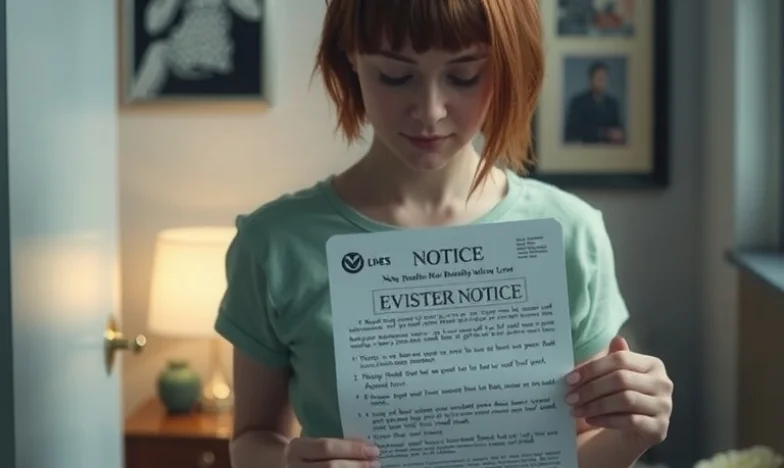
The eviction notice came two weeks later. Brian had convinced Mom and Richard to challenge Dad’s will, claiming I was “unstable” and “unfit” to manage the property. I sat in the lawyer’s office, numb, as they explained that Mom had filed for guardianship over the apartment, citing my “emotional issues.”
I tried to fight back. I gathered letters from friends, proof of my steady job, my clean record. But Mom and Brian had money, connections. The court sided with them. I was given thirty days to vacate.
Packing my things, I found an old photo of Dad and me at Coney Island. I pressed it to my chest and sobbed. How had it come to this? How had my own family become strangers?
—
I crashed on friends’ couches, worked extra shifts at the bookstore, tried to save up for a deposit on a new place. Every night, I replayed the last conversation with Mom in my head.
“Why are you doing this to me?” I’d asked, voice trembling.
She didn’t answer at first. Then, quietly, “Brian needs me. He always has. You’re strong, Emily. You’ll figure it out.”
But I wasn’t strong. I was broken, angry, lost. I missed my father more than ever. I missed the way he used to tuck me in at night, the way he’d call me his “brave girl.”
—
Months passed. I found a tiny studio in Brooklyn, barely big enough for my bed and easel. I stopped answering Mom’s calls. Brian texted once, a single line: “Hope you’re okay.” I deleted it without replying.
I started therapy, desperate to make sense of the betrayal. My therapist, Dr. Harris, listened as I poured out my grief.
“It’s not your fault,” she said gently. “Sometimes, families fail us. That doesn’t mean you deserved it.”
I wanted to believe her. Some days, I almost did.
—
One rainy afternoon, I ran into Brian at a coffee shop. He looked tired, older. He tried to smile. “Hey, Em.”
I stared at him, heart pounding. “Why did you do it?”
He looked away. “I don’t know. Mom… she always said you’d be fine. I just needed help.”
“And you thought taking my home was the answer?”
He shrugged, shame flickering across his face. “I’m sorry.”
I wanted to scream, to hit him, to make him feel the pain I carried every day. Instead, I walked away, tears blurring my vision.
—
The holidays came and went. I spent Thanksgiving with friends, Christmas alone. Mom sent a card, unsigned. I threw it in the trash.
But slowly, I started to heal. I painted again, filling canvas after canvas with swirling colors and broken shapes. I found a new family in my friends, people who saw me, who loved me for who I was.
Sometimes, late at night, I still dream of the old apartment—the yellow walls, the city lights. I wonder if Brian ever thinks of me, if Mom regrets what she did. I wonder if I’ll ever forgive them.
But I know this: I survived. I fought for what was mine, even when I lost. And in the end, I found something stronger than family—myself.
Would I do it all again? I don’t know. But I do know this: sometimes, the people who are supposed to protect us are the ones who hurt us most. And sometimes, the only justice is learning to let go.
Based on a true story.