The House That Was Never Mine: The Bitter Truth About Family and Belonging

“Get out of my house, Emily! You were never welcome here!”
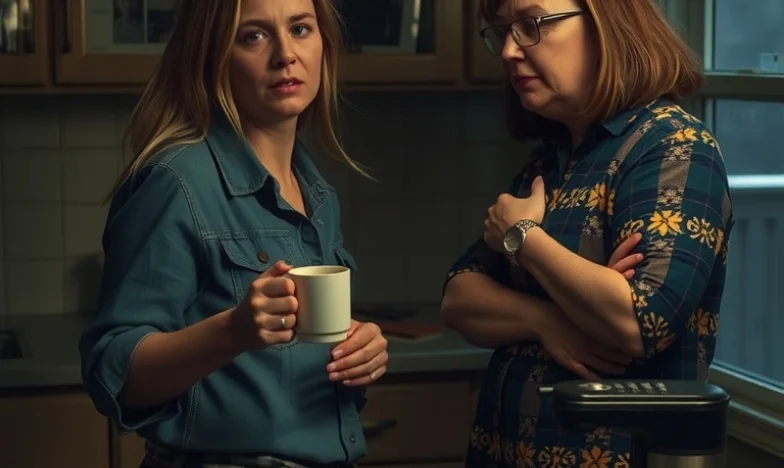
Her voice echoed down the hallway, sharp as broken glass. I stood in the kitchen, hands trembling, clutching a chipped mug of coffee. The walls seemed to close in, every family photo now a silent witness to my humiliation.
I never thought it would come to this. Not after all the years I’d tried to make this house a home.
—
It was a Tuesday night in late October, the kind where the wind rattles the windows and the leaves swirl like ghosts on the porch. My husband, Mark, was late again. I’d just finished setting the table when his mother, Linda, stormed in from the living room.
She didn’t even try to hide her contempt. “You think you belong here? You think you can just waltz in and take over?”
I swallowed hard. “Linda, I’m just trying to—”
She cut me off with a wave of her hand. “Don’t you dare call me Linda. It’s Mrs. Carter to you.”
I looked down at my wedding ring, twisting it nervously. Mark and I had been married for three years, but it felt like I’d been fighting for acceptance since day one.
—
Mark and I met in college. He was charming, ambitious, and made me laugh when I needed it most. We dreamed of building a life together—a little house, maybe kids someday. But after his father died suddenly, Mark insisted we move in with his mom “just for a while.” That “while” stretched into years.
At first, I tried to see Linda’s coldness as grief. But as time passed, her bitterness only grew. She criticized everything: my cooking, my job at the library, even the way I folded towels.
Mark always said, “She’ll come around. Just give her time.”
But time only made things worse.
—
That night, after Linda’s outburst, I sat on the edge of our bed waiting for Mark. When he finally came home, I told him what happened.
He sighed, rubbing his temples. “Emily, you know how she gets. She doesn’t mean it.”
“She threatened to throw me out.”
He looked away. “It’s her house.”
The words hit me like a slap. “Our house,” I whispered.
He shook his head. “No, Em. Dad left everything to her.”
I felt something inside me crack. “So if she wants me gone—”
He didn’t answer.
—
The next morning, I found Linda in the kitchen, sorting through old papers. She barely glanced at me.
“I want you out by Friday,” she said flatly.
I stared at her, searching her face for any sign of kindness. “Why are you doing this?”
She slammed a folder shut. “You’re not family. You never were.”
I wanted to scream, to beg Mark to stand up for me. But he was already pulling away—working late, sleeping on the couch.
I called my mom in Ohio that night. Her voice was warm but tired. “Come home if you need to,” she said. “We’ll make room.”
But I couldn’t leave Mark. Not yet.
—
On Thursday, as I packed my things in silence, I found an old letter tucked behind a drawer in Mark’s childhood desk. The envelope was yellowed and addressed to Mark’s father.
Curiosity got the better of me. I opened it—and my world tilted on its axis.
Inside was a confession: Linda had never wanted children. She’d married Mark’s father for security after her own family disowned her. The letter spoke of resentment—how she blamed Mark for trapping her in a life she never chose.
Tears blurred my vision as I read her words: “I can’t love him like you do. I can’t love any of them.”
Suddenly, everything made sense—the coldness, the anger, the way she looked at me like an intruder.
—
That night, I confronted Mark with the letter.
He read it in silence, jaw clenched tight.
“I’m sorry,” he whispered finally. “I didn’t know.”
I reached for his hand. “We can leave together. Start over.”
He pulled away. “She’s still my mom.”
I felt so small in that moment—smaller than I’d ever felt before.
—
Friday came with gray skies and rain tapping at the windows. Linda watched from the doorway as I carried boxes to my car.
“Don’t look so sad,” she said quietly. “You’ll be better off.”
I wanted to hate her—but all I felt was pity.
Mark didn’t come home until after I’d left.
—
I drove through the rain for hours, crying until there were no tears left. By midnight, I was parked outside my childhood home in Ohio.
My mom hugged me tight and let me sleep in my old room—the one with faded posters and a creaky bed that still smelled like lavender.
For weeks, I drifted through days in a fog: job hunting, therapy sessions, long walks by the lake where I tried to stitch myself back together.
Mark called sometimes—apologizing, promising things would change if I came back.
But something inside me had shifted.
—
One afternoon in December, as snow fell softly outside, my mom sat beside me on the couch.
“You don’t have to go back,” she said gently.
“I know,” I whispered.
She squeezed my hand. “You deserve a home where you’re wanted.”
And for the first time in months, I believed her.
—
It’s been a year since that night Linda screamed at me to get out.
I have a new apartment now—a tiny place with peeling paint and noisy neighbors but filled with sunlight and peace.
Sometimes I still dream about that house in Michigan—the one that was never really mine. But when I wake up, I remind myself: home isn’t walls or furniture or even family by blood.
Home is where you are loved without conditions.
And that’s what I’m building now—one day at a time.
Based on a true story.