My Son, My Reflection: How Becoming a Mother at Forty Changed Us Forever

“You never let me fail, Mom. That’s why I don’t know how to live now.”
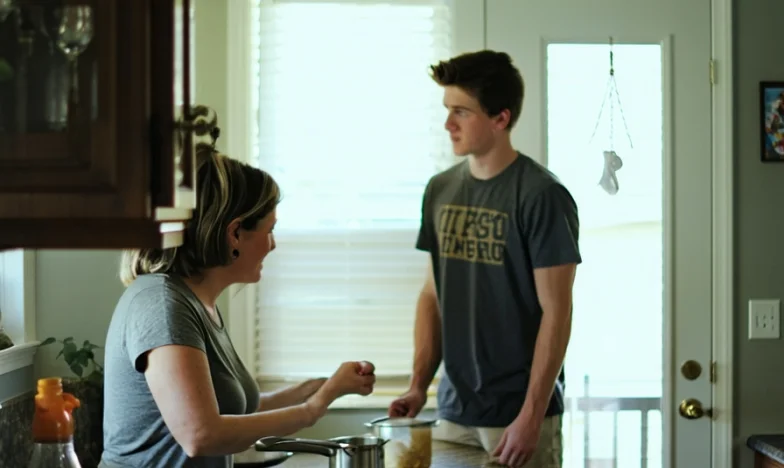
The words hit me like a slap. My son, Matthew, stood in the doorway of our kitchen, his face flushed with anger and something deeper—hurt, maybe, or fear. I gripped the edge of the counter, feeling the cool granite under my fingers as my world tilted.
I wanted to shout back, to defend myself. But all I could do was whisper, “I just wanted you to be happy.”
—
I was forty when Matthew was born. For years, I watched friends cradle their babies while I sat through endless fertility treatments and silent car rides home with my husband, Tom. When Matthew finally arrived—tiny, red-faced, perfect—I promised myself he’d never feel unwanted or alone.
Maybe that’s where it all began.
Our house in suburban Ohio was filled with laughter and toys. I baked cookies for every school event. I drove Matthew to soccer, piano, chess club—anything he wanted. If he forgot his homework, I’d rush it to school. If he failed a test, I’d email the teacher for extra credit.
Tom worried. “He needs to learn consequences,” he’d say. But I couldn’t bear to see Matthew sad. After all those years of waiting, how could I?
When Matthew was twelve, Tom died suddenly—a heart attack on a cold January morning. The grief nearly swallowed me whole. But Matthew needed me more than ever. So I doubled down: more attention, more protection, more love.
I thought I was saving him from pain. Maybe I was just saving myself from loneliness.
—
Matthew grew into a gentle teenager—smart, sensitive, but anxious. He’d call me from college over the smallest things: a lost wallet, a bad grade, a roommate who played music too loud. I’d drive three hours to help him move dorms or talk to his professors.
Friends told me to let go. “He’ll figure it out,” they said. But what if he didn’t?
Now he’s twenty-four and back home, jobless after quitting his third job in two years. He spends hours in his room, gaming or scrolling on his phone. Sometimes he comes down for dinner; sometimes he doesn’t.
Tonight’s argument started over rent money. I suggested he contribute something—just a little. He exploded.
“You always said you’d take care of me! Now you want me gone?”
I tried to explain it wasn’t about wanting him gone—it was about helping him grow up. But the words tangled in my throat.
—
After he stormed upstairs, I sat alone at the kitchen table, staring at the empty chair across from me. The silence pressed in on all sides.
Was this my fault? Did loving him so fiercely make him afraid of the world? Did protecting him from every hurt leave him unable to face disappointment?
I remembered the nights rocking him to sleep, promising nothing would ever hurt him. The truth is, life hurts us all eventually.
—
The next morning, I found Matthew in the backyard, sitting on the old swing set Tom built years ago. He looked so much like the little boy he once was—lost and hopeful all at once.
I sat beside him. For a while, we just listened to the wind in the trees.
“I’m scared,” he said quietly. “I don’t know how to do this—be an adult.”
My heart broke and mended at the same time.
“I’m scared too,” I admitted. “But maybe we can figure it out together.”
He nodded, wiping his eyes with the sleeve of his hoodie.
—
We started small: a list of chores for both of us; a budget for groceries; job applications sent out together at the kitchen table. Some days were good—he got an interview or cooked dinner for us both. Some days were hard—he snapped at me or retreated into silence.
But slowly, things changed.
I joined a support group for parents like me—late-in-life moms who struggled with letting go. We shared stories about guilt and hope and learning to trust our kids—and ourselves.
Matthew found a part-time job at a local bookstore. He made friends there—people his own age who didn’t know his history or mine. He started going out more, coming home with stories about customers and coworkers.
One night, as we washed dishes together, he said, “Thanks for not giving up on me.”
I smiled through tears. “Thanks for giving me a reason to keep trying.”
—
Sometimes I still wonder if I failed him by loving too much—or if loving fiercely is just another way of being human.
I watch Matthew now—older, braver, still uncertain but moving forward—and see not just my son but my reflection: all my fears and hopes and second chances wrapped up in one imperfect person.
Maybe that’s what motherhood is—a mirror we hold up to ourselves, showing us both our strengths and our blind spots.
Would things have been different if I’d been younger? If Tom had lived? If I’d let Matthew fall more often?
I don’t know the answers. But I do know this: love is never wasted, even when it hurts.
And every day we get up and try again is another chance to get it right.
Based on a true story.