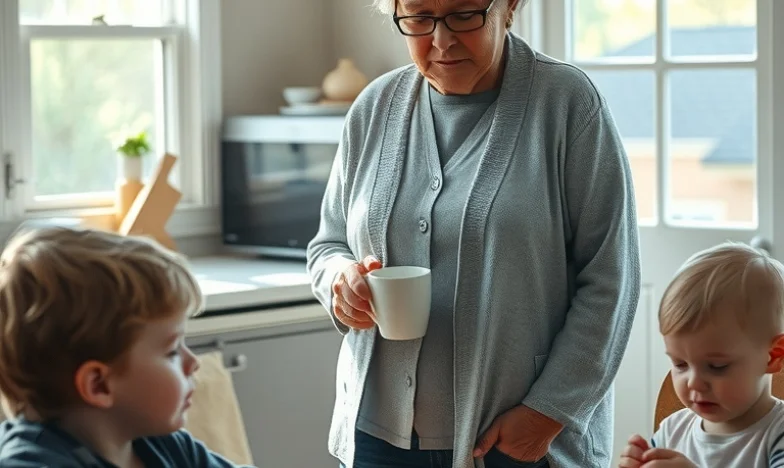
“You Don’t Do Anything Anymore—Watch My Kids!”: How Retirement Forced Me to Stand Up for Myself and My Family

“Mom, you’re retired now. You don’t do anything anymore—can you watch the kids for a week while I’m in Chicago?”
Emily’s voice crackled through the phone, casual, almost dismissive. I stood in my kitchen, the sunlight streaming across the counter where my half-finished crossword puzzle sat. My hands trembled, not from age, but from the sudden weight of her words.
I’d been retired for exactly three weeks. Three weeks of waking up without an alarm, of finally reading the books I’d stacked for years, of dreaming about painting classes and maybe, just maybe, a trip to Maine with my old friend Linda. I was sixty-eight, and for the first time since I was sixteen, my time was my own.
But in that moment, Emily’s words slammed into me like a cold wind. “You don’t do anything anymore.”
I took a breath. “Emily, I—”
She cut me off, her tone brisk. “It’s just a week, Mom. You love the kids. And you’re home anyway. I really need this for work.”
I looked at the calendar. Three kids—Aiden, six; Chloe, four; and baby Max, just eighteen months. Seven days. Seven nights. I loved them, of course I did. But I’d raised my own, and I’d been looking forward to this new chapter. Was it selfish to want something for myself?
“Mom?” Emily’s voice was sharper now. “Can you do it or not?”
I hesitated. My son, Mark, was always busy with work, and Emily’s job had her flying all over the country. I knew they struggled with childcare. But did that mean I was just… available?
“I’ll think about it,” I said, my voice smaller than I wanted.
She sighed. “I really need you to say yes.”
After we hung up, I sat at the kitchen table, staring at the crossword. The word I needed was ‘identity.’
—
That night, I called Linda. “Am I being unreasonable?” I asked. “Emily thinks I have nothing to do now. But I had plans. I wanted to take that watercolor class with you.”
Linda laughed, but there was sympathy in her voice. “You’re not being unreasonable, Maggie. You’re allowed to have a life. Retirement isn’t a waiting room for death.”
I smiled, but the guilt gnawed at me. Wasn’t family supposed to come first? My own mother had watched my kids when I went back to work. But she’d never seemed to mind. Or had she?
The next morning, Mark called. “Mom, Emily said you’re hesitating. Is everything okay?”
I heard the worry in his voice, but also the expectation. I was the safety net. The reliable one. The one who never said no.
“I just… I had plans, Mark. I wanted to start living for myself a little.”
He was quiet. “We really need you, Mom. Just this once.”
I agreed. What else could I do?
—
The week started with chaos. Emily dropped the kids off at 6 a.m. on Sunday, her suitcase already in the car. She hugged them quickly, barely looking at me. “Thank you, Mom. You’re a lifesaver.”
Aiden was already asking for pancakes. Chloe wanted to wear her Elsa dress to daycare. Max was crying, reaching for his mother. I felt the old routines snap back into place—diapers, snacks, nap schedules, tantrums. My dreams of quiet mornings and painting classes faded into the background.
By Tuesday, I was exhausted. The kids were sweet, but relentless. I barely had time to shower, let alone read or paint. At night, I lay in bed, staring at the ceiling, wondering if this was all I was now—a backup parent, a placeholder.
On Wednesday, Chloe had a meltdown over a missing stuffed animal. Aiden refused to do his homework. Max threw his lunch on the floor. I snapped. “I am not your maid!” I shouted, instantly regretting it.
The kids stared at me, wide-eyed. I knelt down, tears in my eyes. “I’m sorry. Grandma’s just tired.”
That night, I called Linda again. “I feel invisible,” I whispered. “Like I don’t matter unless I’m useful.”
Linda was quiet for a moment. “Maybe it’s time you told them how you feel.”
—
Thursday morning, Mark called. “How’s it going, Mom?”
I hesitated, then let it spill out. “I’m tired, Mark. I love the kids, but I’m not just… here to fill in. I had plans. I want to live, too.”
He was silent. “I’m sorry, Mom. I guess we just… assumed.”
I heard the guilt in his voice, but also something else—understanding.
That night, after the kids were asleep, I wrote Emily an email. I told her how much I loved my grandchildren, but also how much I needed time for myself. How retirement wasn’t the end of my life, but the beginning of a new one. How I wanted to help, but not at the cost of my own dreams.
I didn’t know what she’d say. I was terrified she’d be angry, or worse, disappointed in me.
—
Emily came home on Saturday, looking tired but grateful. She hugged the kids, then turned to me. “Thank you, Maggie. I know it was a lot.”
I nodded, unsure what to say.
She hesitated. “I got your email. I’m sorry. I didn’t think… I just assumed you’d want to help. I didn’t think about what you might want.”
I felt tears prick my eyes. “I do want to help. But I want to live, too.”
She nodded. “We’ll figure something out. Maybe we can get a sitter next time. Or Mark can take some time off.”
It wasn’t perfect. But it was a start.
—
The next week, I signed up for the watercolor class. I started walking in the mornings, just for me. Mark called more often, just to check in. Emily sent me photos of the kids, but didn’t ask for favors.
I realized something important: standing up for myself didn’t mean I loved my family any less. It meant I loved myself, too.
Now, when I watch the kids, it’s because I want to—not because I have to. And when I say no, I don’t feel guilty. I feel free.
Sometimes, it takes a lifetime to find your voice. But it’s never too late to use it.
Based on a true story.