Who Has the Right to Name My Son? A Battle for My Voice in My Own Family

“No, Mom, I told you—we haven’t decided yet.”
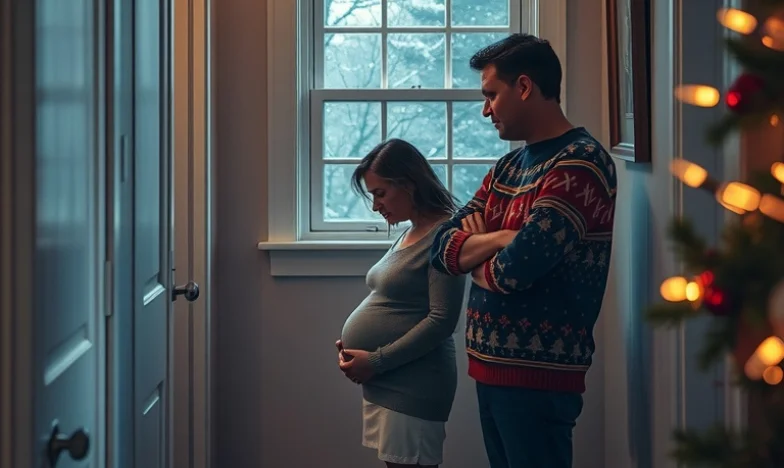
I heard my husband’s voice echoing down the hallway, muffled by the closed bedroom door. The December wind rattled the windowpanes, and I pulled the blanket tighter around my swollen belly. My due date was just after Christmas, and the house was already strung with twinkling lights and the scent of cinnamon candles. But inside me, a storm was brewing that no holiday cheer could calm.
I pressed my ear closer to the door, heart pounding. “But Michael, it’s tradition! Your father was named after his grandfather. It’s only right your son carries on the name.” My mother-in-law’s voice was sharp, insistent—the same tone she used when she told me how to baste a turkey or fold laundry “the American way.”
I wanted to scream. For years, I’d kept my head down, smiled politely at her comments about how I should dress, how I should cook, how I should raise her future grandchildren. I’d let Michael handle it, let him be the buffer. But now, as they debated my baby’s name—my son’s name—without me, something inside me snapped.
I opened the door. The hallway was bathed in the soft glow of Christmas lights. Michael stood at the foot of the stairs, his hands shoved deep in his jeans pockets. His mother—Barbara—stood beside him, arms crossed over her Christmas sweater.
“Good morning,” I said, my voice trembling but clear.
Barbara turned to me with a tight smile. “Oh honey, we didn’t mean to wake you.”
“I wasn’t asleep,” I said. “I heard you talking about the baby’s name.”
Michael looked at his shoes. Barbara pressed on. “We were just saying—it would mean so much to your father-in-law if you named him after him. You know how important family is to us.”
I felt my cheeks flush. “Family is important to me too,” I said quietly. “But shouldn’t I have a say in what we call our son?”
Barbara’s smile faded. “Of course you do, dear. But this is tradition.”
I looked at Michael. He wouldn’t meet my eyes.
That day passed in a blur of silent tension. I decorated cookies with my daughter Emma while Barbara hovered nearby, offering unsolicited advice about royal icing and sprinkles. Michael retreated to the garage to “fix the snowblower.” No one mentioned the baby’s name again—but it hung in the air like a storm cloud.
That night, as we lay in bed, I turned to Michael. “Do you want to name him after your dad?”
He sighed. “I don’t know. It would make Mom happy.”
“What about what would make us happy?”
He hesitated. “I just don’t want to fight with her right now. She’s been so stressed since Dad’s surgery.”
I stared at the ceiling, feeling invisible. For years, I’d put everyone else first—my parents when they needed help with bills, Michael when he wanted to move closer to his job, Barbara when she insisted on hosting every Thanksgiving at her house even though it meant hours in traffic with two kids.
But this was different. This was my child.
The next morning, I called my mom in Ohio. She listened quietly as I poured out everything—the arguments, the pressure, the way I felt erased from my own life.
“Honey,” she said gently, “you have every right to name your son. Don’t let anyone take that from you.”
Her words gave me strength. That afternoon, while Barbara was out shopping for more Christmas decorations and Michael was at work, I sat at the kitchen table with a notebook and wrote down every name I’d ever loved: Ethan, Lucas, Benjamin, Noah. Names that felt like hope and new beginnings.
When Michael came home that night, I handed him the list.
“I want us to choose together,” I said. “Not because of tradition or pressure or anyone else’s expectations. Because this is our son.”
He looked at me for a long moment—really looked at me—and nodded.
The days ticked by in a haze of last-minute shopping and holiday parties. Barbara kept dropping hints—”Have you decided yet? Your father-in-law would be so proud…”—but Michael stood by me now. We told her we hadn’t chosen yet.
On Christmas Eve, as snow fell softly outside and Emma hung her stocking by the fireplace, Barbara cornered me in the kitchen.
“I know you think I’m being pushy,” she said quietly. “But this family has been through so much this year. We need something to hold onto.”
I looked at her—really looked at her—for the first time in months. She wasn’t just a meddling mother-in-law; she was a woman who’d nearly lost her husband that fall, who clung to tradition because it made her feel safe.
“I understand,” I said softly. “But this baby is part of both our families. He deserves his own story.”
She nodded slowly, tears glistening in her eyes.
Two days later—December 26th—I went into labor. The hospital was quiet except for distant carols playing over the speakers. Michael held my hand through every contraction; Barbara waited anxiously in the lobby.
When our son finally arrived—a healthy baby boy with a shock of dark hair—I held him close and whispered his name: “Lucas Benjamin Carter.” Not after anyone in particular—just names we both loved.
Michael kissed my forehead. “He’s perfect,” he said.
Barbara came in an hour later, her eyes red from crying.
“Lucas Benjamin,” she repeated softly, cradling him in her arms. “It’s a beautiful name.” She looked at me then—really looked at me—and for the first time, I felt seen.
We took Lucas home on New Year’s Eve. As fireworks lit up the sky and neighbors cheered in the street, I rocked him by the window and thought about everything that had led us here—the arguments, the tears, the courage it took to finally speak up for myself.
In America, we talk so much about freedom and choice—but sometimes those battles are fought quietly, around kitchen tables and hospital beds.
Now, every time I say my son’s name, I remember: My voice matters.
Do you think mothers should always have the final say in naming their children? Or is family tradition more important? What would you have done if you were in my shoes?