Tears Behind Closed Doors: ‘I Can’t Live in This Chaos Anymore. You Said I Run This House!’

“I can’t live in this chaos anymore. You said I run this house!”
My voice echoed off the kitchen tiles, trembling with a mix of anger and exhaustion. My mother stood across from me, arms crossed, her lips pressed into a thin, disapproving line. The smell of burnt coffee lingered in the air, mingling with the sharp scent of bleach from her morning cleaning spree. Outside, the Chicago wind rattled the windows, but inside, the storm was all ours.
She didn’t answer right away. Instead, she picked up a dish towel and began scrubbing an already spotless counter. “You’re being dramatic, Emily. This house is a mess. You never listen. You never appreciate what I do.”
I felt the old ache in my chest, the one that started when I was a little girl and never really left. I wanted to scream, to run, to disappear. But I stayed, rooted to the linoleum, my hands balled into fists at my sides.
—
Growing up in our two-bedroom apartment on the North Side, everything had a place. My mother, Mira, made sure of it. She’d grown up in a world where chaos meant danger, where the only way to survive was to control what you could. She brought that world with her when she came to America, and she built it around us, brick by brick, rule by rule.
“Emily, your grades are slipping. What’s more important than school?”
“Emily, look at your room. How can you think in this mess?”
“Emily, you’re so ungrateful. I do everything for you.”
I learned early that love was conditional. An A on a math test meant a smile and a rare hug. A B meant silence, or worse, disappointment. I tried to be perfect, to keep the peace, to earn her approval. But no matter how hard I tried, it was never enough.
When I was twelve, I won the regional spelling bee. My mother clapped politely, then whispered, “Next time, try for nationals.”
When I was sixteen, I got into Northwestern. She nodded, then asked, “Did you apply to Harvard?”
I told myself I didn’t care. I told myself I was strong. But every time she looked at me with that mixture of pride and dissatisfaction, I felt myself shrinking.
—
Now, at twenty-eight, I was back in her house, my own life on hold after a messy breakup and a layoff from my marketing job. I told myself it was temporary, just until I got back on my feet. But weeks turned into months, and the walls began to close in.
Every morning, she woke up at six, vacuumed the living room, wiped down the kitchen, and made a list of chores for me to do. Every night, she inspected my work, finding fault in the smallest details.
“Emily, you missed a spot.”
“Emily, why is your laundry still in the dryer?”
“Emily, you’re not a child anymore. Act like it.”
I tried to help, to please her, but it always ended the same way: with me feeling like a failure, and her feeling like a martyr.
One evening, after another silent dinner, I found her in the living room, staring at an old photo of us from my high school graduation. I sat beside her, unsure of what to say.
“Do you remember this day?” I asked softly.
She nodded, her eyes never leaving the photo. “You were so happy. I was proud of you.”
I swallowed hard. “I wish you’d tell me that more often.”
She looked at me then, her face softening for just a moment. “I show you. I keep this house for you. I want you to have better.”
I wanted to believe her. I wanted to feel it. But all I felt was tired.
—
The days blurred together. Job applications, interviews, rejection emails. My friends texted, inviting me out, but I always found an excuse to stay home. I told myself I was saving money, but the truth was, I didn’t want to answer their questions. I didn’t want to admit that I was stuck.
One afternoon, I overheard my mother on the phone with her sister. “Emily is back home. She’s lost. I don’t know what to do with her.”
I pressed my ear to the door, my heart pounding. “She’s smart, but she doesn’t try. She’s always been like this. Never satisfied.”
I bit my lip until I tasted blood. Was that really how she saw me? Was that all I was?
That night, I lay in bed, staring at the ceiling, replaying her words over and over. I thought about leaving, about packing my bags and disappearing. But where would I go? What would I do?
—
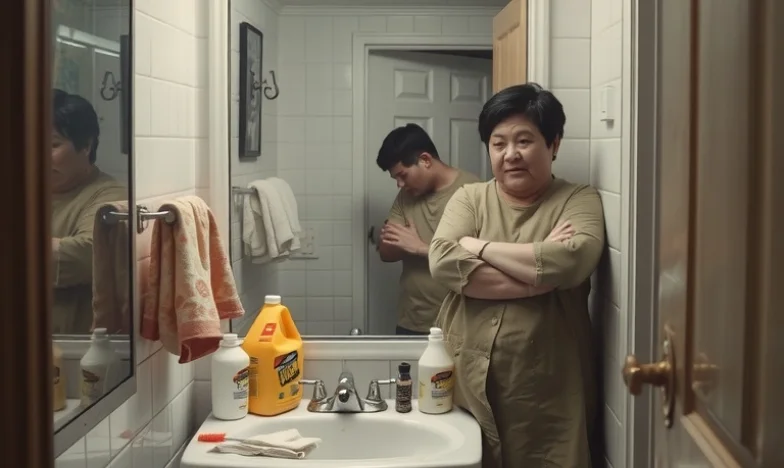
The breaking point came on a rainy Saturday. I was cleaning the bathroom, scrubbing the tiles until my hands were raw. My mother stood in the doorway, arms crossed.
“You missed a spot,” she said, pointing to a tiny patch of grout.
I snapped. “I can’t do this anymore! I’m trying, Mom. I’m really trying. But nothing I do is ever good enough for you!”
She recoiled as if I’d slapped her. “Don’t raise your voice at me. I do everything for you. You’re so ungrateful.”
Tears streamed down my face. “I’m not ungrateful. I just want you to see me. To love me for who I am, not for how clean the house is or how perfect my life looks.”
For a moment, we just stared at each other, the silence heavy and sharp.
She turned away, her shoulders shaking. “You don’t understand. You never will.”
I watched her walk down the hall, feeling both guilty and relieved. I’d said the words I’d been holding in for years, but instead of freedom, I felt empty.
—
The next morning, I found her in the kitchen, making coffee. She didn’t look at me as I poured myself a cup.
“I’m sorry,” I said quietly. “I didn’t mean to hurt you.”
She sighed, her hands trembling. “I just want you to be happy. I want you to have what I never did.”
I nodded, tears prickling my eyes. “But I need to find my own way. I can’t live like this anymore.”
She looked at me then, really looked at me, and for the first time, I saw fear in her eyes. “What will you do?”
“I don’t know,” I admitted. “But I have to try.”
—
A week later, I packed my bags and moved into a tiny studio apartment on the other side of the city. It wasn’t much, but it was mine. The first night, I sat on the floor, surrounded by boxes, and cried. I cried for the years I’d lost trying to be perfect, for the love I’d never felt, for the mother I wished I’d had.
But I also cried for hope. For the chance to start over, to build a life on my own terms.
My mother called every day at first, her voice tight with worry. “Are you eating? Are you safe? Do you need anything?”
I reassured her, even when I wasn’t sure myself. Slowly, the calls became less frequent, but warmer. She started asking about my job search, about my new friends, about my life.
One evening, she surprised me. “Emily, I’m proud of you. I know it’s hard. But you’re strong.”
I smiled through my tears. “Thanks, Mom. That means everything.”
—
It’s been a year now. I have a job I love, friends who feel like family, and a home that’s messy and imperfect and completely mine. My mother and I are still learning how to love each other, how to let go of old hurts and build something new.
Sometimes, I visit her, and we sit together in the kitchen, drinking coffee and talking about nothing and everything. The house is still spotless, but I don’t mind. I know now that her love is real, even if it doesn’t always look the way I want it to.
And I’m learning to love myself, flaws and all.
Based on a true story.