“Mom, That’s Enough!” — When Patience Runs Out and Boundaries Must Be Set in the Family

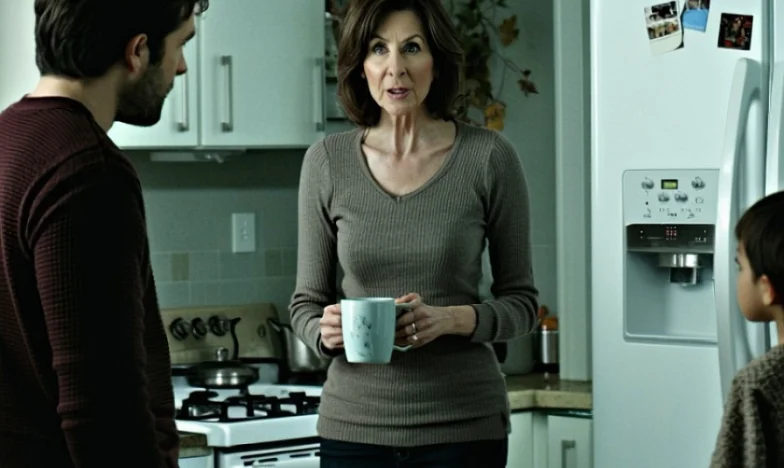
“You can’t just barge in here whenever you want, Mom!” My voice echoed off the kitchen tiles, sharp and trembling. The smell of burnt toast hung in the air, mingling with the tension that had been simmering for months. My husband, Mike, stood frozen by the fridge, clutching his coffee mug like a lifeline. My mother-in-law, Linda, didn’t flinch. She set her purse on the counter with a thud and fixed me with that look—the one that said she was right and I was just being dramatic.
It was a Saturday morning in late November, the kind where the Indiana wind rattled the windows and the world felt gray. Thanksgiving was less than a week away, and our house was already a battlefield of expectations. Linda had let herself in again—her third unannounced visit this week—just as I was trying to coax our six-year-old daughter, Emily, into eating her cereal. Emily’s eyes darted between us, sensing the storm.
“I’m just trying to help,” Linda said, her voice syrupy sweet but edged with steel. “You know how much Mike loves my stuffing at Thanksgiving. And Emily needs a proper breakfast.”
I clenched my fists under the table. “I appreciate your help, but we need some space. We’re trying to build our own traditions.”
Mike cleared his throat. “Mom, maybe you could call before coming over?”
Linda’s lips tightened. “This is my family too. I just want what’s best for all of you.”
But it wasn’t about stuffing or cereal. It was about control—about Linda’s need to be needed, to insert herself into every corner of our lives. She’d always been like this: showing up with bags of groceries we didn’t ask for, rearranging my kitchen cabinets, criticizing my parenting in subtle jabs. At first, I told myself it was love. But love shouldn’t feel like suffocation.
The final straw came that afternoon. I found Linda in our bedroom, folding my laundry. She held up one of my shirts—my favorite one—and shook her head. “You really should use fabric softener.”
Something inside me snapped. “Linda, please leave.”
She blinked, surprised. “Excuse me?”
“I need you to leave. And I need you to give back the house keys.”
The silence was deafening. Mike appeared in the doorway, his face pale.
“Are you serious?” Linda asked.
“Yes,” I said, my voice barely above a whisper but steady. “I can’t do this anymore.”
She stared at me for a long moment before dropping the keys on the dresser and walking out without another word.
That night, after Emily was asleep and the house felt emptier than ever, Mike and I sat on the couch in silence. The TV flickered with some forgettable sitcom, but neither of us laughed.
“I didn’t want it to come to this,” I said finally.
Mike rubbed his eyes. “She means well.”
“I know,” I whispered. “But it’s our life. Our home.”
He nodded slowly, but I could see the hurt in his eyes—the tug-of-war between loyalty to his mother and his new family.
The days leading up to Thanksgiving were tense. Linda didn’t call or text. Emily asked where Grandma was, and I fumbled for answers. The house felt quieter, but also lighter—like I could finally breathe.
On Thanksgiving morning, as I basted the turkey and tried not to burn the pies, Mike hovered nearby.
“Should we invite her?” he asked.
I hesitated. “Do you want to?”
He shrugged. “It doesn’t feel right without her.”
So we called. Linda answered on the third ring.
“Hi Mom,” Mike said awkwardly. “We’d like you to come for dinner.”
There was a pause. “Is it okay with Sarah?”
I took the phone. “Yes, Linda. We want you here—as our guest.”
She arrived an hour later with her famous stuffing and a tentative smile. She rang the doorbell this time.
Dinner was awkward at first—polite conversation about weather and football—but as the meal went on, something shifted. Emily told jokes she’d learned at school; Mike teased me about my lumpy mashed potatoes; Linda laughed—a real laugh—and for a moment, we felt like a family again.
After dessert, Linda pulled me aside in the hallway.
“I’m sorry,” she said quietly. “I didn’t realize how much I was overstepping.”
I nodded, tears stinging my eyes. “I know you love us. But we need boundaries.”
She squeezed my hand. “Thank you for telling me.”
That night, as I tucked Emily into bed and listened to her soft breathing, I thought about how hard it is to stand up for yourself—especially with family. It’s easier to keep the peace, to swallow your needs for the sake of harmony. But sometimes love means drawing lines.
Weeks later, Linda still visits—but she calls first now. She brings cookies instead of criticism and listens more than she talks. Our relationship isn’t perfect—it never will be—but it’s real.
Sometimes I wonder: Was I selfish for asking for space? Or did I finally do what every woman in America deserves—to claim her own home and her own happiness? What would you have done if you were in my shoes?