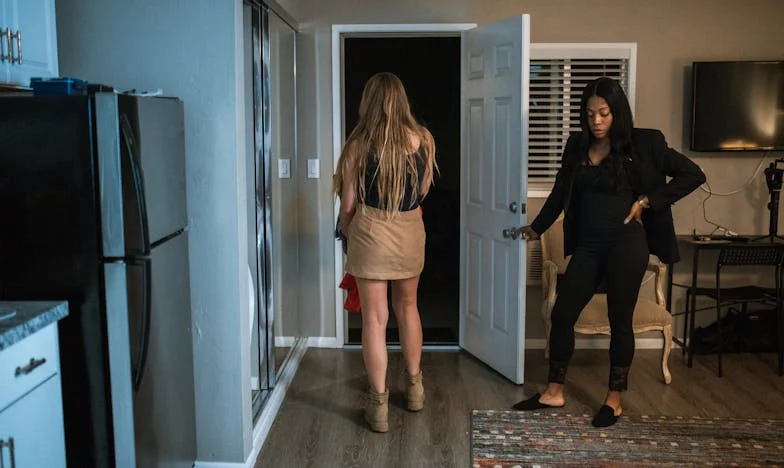
“You Have One Month to Leave My House!” — The Day My Mother-in-Law Changed Everything

“You have one month to leave my house!” Carol’s voice sliced through the kitchen like a cold wind. My hands trembled as I gripped the chipped coffee mug, the one with the faded American flag that had been in her family for decades. I looked at David, my husband of just thirty-two days, hoping for a spark of defiance or even a word of comfort. But he just stared at the floor, his jaw clenched, his silence louder than any argument.
I wanted to scream. Instead, I whispered, “Carol, we don’t have anywhere else to go.”
She didn’t even look at me. She just kept wiping the spotless counter, her movements sharp and angry. “That’s not my problem, Emily. I told you both before the wedding — this was temporary. I won’t have two grown adults freeloading in my house.”
Freeloading. The word stung. I’d been working double shifts at the diner down on Main Street, saving every penny for our own place. David had lost his job at the auto shop two weeks before the wedding — bad luck, he said — but he promised things would get better. We just needed a little time.
But Carol didn’t care about promises or bad luck. She cared about appearances. About what her friends at church would say if they knew her son and his new wife were still living under her roof.
After she left the room, David finally spoke. “She’s right, Em. We can’t stay here forever.”
I stared at him in disbelief. “Are you kidding me? We have nothing saved! You said you’d talk to her—”
He cut me off, his voice barely above a whisper. “I did. She won’t change her mind.”
That night, I lay awake on the lumpy pull-out couch in Carol’s basement, listening to the hum of the old refrigerator and the creak of footsteps above us. My mind raced with questions: Where would we go? How would we afford rent? Why wasn’t David fighting for us?
The next morning, I called my mom in Ohio. She offered sympathy but no solutions — her apartment was too small, and she was barely scraping by herself. “Maybe David can find work soon,” she said gently. “Just hang in there.”
But hanging in there felt impossible when every day brought new tension. Carol stopped talking to me unless it was to remind me of how much water I was using or how late I got home from work. She left job listings on the kitchen table for David — jobs he never seemed to call about.
One evening, after another silent dinner, I found David in the garage, staring at his old high school trophies.
“Why aren’t you looking for work?” I demanded.
He shrugged. “It’s not that easy, Em. No one’s hiring.”
I wanted to shake him. “We have three weeks left! Are you just going to wait until we’re on the street?”
He looked at me then, really looked at me, and I saw something in his eyes I hadn’t seen before: fear.
“I don’t know what to do,” he admitted. “I thought things would be different after we got married.”
“So did I,” I whispered.
The days blurred together — job applications, tense silences, whispered arguments behind closed doors. Carol grew colder by the day; she started locking her bedroom door at night and hiding snacks in her closet so we wouldn’t eat them.
One night, after a particularly brutal argument with David about money, I found myself sitting on the front steps in my pajamas, tears streaming down my face. The neighbor across the street — Mrs. Jenkins — came over with a mug of chamomile tea.
“Rough night?” she asked gently.
I nodded, unable to speak.
She sat beside me and patted my hand. “Carol means well, but she’s always been… tough. Don’t let her break you.”
Her words gave me a strange kind of strength. The next morning, I woke up early and started calling every apartment complex within a ten-mile radius. Most were too expensive or had waiting lists months long. But finally, I found a tiny studio above a laundromat on Maple Avenue — $700 a month, utilities included.
I ran to tell David.
“We can’t afford that,” he said immediately.
“We can if you get a job,” I shot back.
He glared at me. “Stop pushing me!”
“I’m not pushing you! I’m trying to save us!”
He stormed out of the house and didn’t come back until after midnight.
The next day, Carol cornered me in the hallway.
“I know this is hard,” she said quietly, “but sometimes life doesn’t go the way you planned.”
I looked at her — really looked at her — and saw a flicker of something like regret in her eyes.
“I just want what’s best for David,” she continued.
“And what about what’s best for me?” I asked softly.
She didn’t answer.
With two weeks left before our deadline, I took a second job cleaning offices at night. My feet ached and my eyes burned from exhaustion, but every paycheck brought us closer to freedom.
David finally got an interview at a hardware store. He came home that night with a glimmer of hope in his eyes.
“I think they’ll hire me,” he said.
I hugged him tightly, relief flooding through me.
But then he pulled away. “Em… what if we just stayed here? Saved more money?”
I stared at him in disbelief. “After everything? After how she’s treated us?”
He shrugged helplessly. “It’s just… easier.”
That was the moment something inside me snapped.
“I’m moving out,” I said quietly. “With or without you.”
He stared at me like I’d slapped him.
“Don’t do this,” he pleaded.
“I have to,” I replied. “I can’t keep living like this.”
The next week was a blur of packing boxes and whispered arguments. In the end, David chose to come with me — but things between us were never quite the same.
Our new apartment was small and noisy and smelled like detergent from the laundromat downstairs. But it was ours.
Some nights, lying awake on our mattress on the floor, I wondered if we’d made a terrible mistake. Other nights, I felt proud — proud that I’d fought for something better, even when it meant standing up to everyone around me.
Carol never visited us. She sent a Christmas card that first year — no note inside, just her signature and a twenty-dollar bill tucked inside for David.
Sometimes I wonder if things could have been different if we’d all just listened to each other more — if David had stood up for us, if Carol had shown a little more kindness, if I’d been less afraid to speak my mind sooner.
But maybe that’s what growing up is: learning when to fight for yourself and when to let go of what’s holding you back.
Do you think it’s possible to rebuild trust after betrayal like this? Or are some family wounds just too deep to heal?