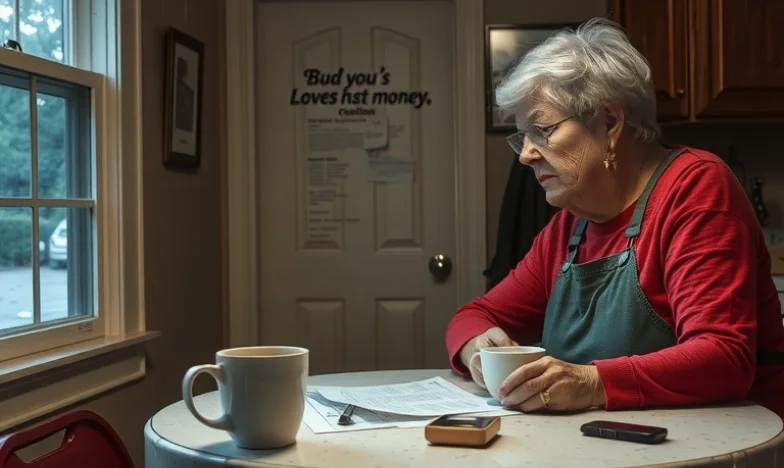
When Love Feels Conditional: A Grandmother’s Heartbreak in Suburbia

“Grandma, when you get your Social Security, I’ll stay with you. Promise.”
The words echoed in my kitchen, bouncing off the faded wallpaper and the chipped Formica table where I’d served a thousand meals. My hands trembled as I set down the mug of cocoa in front of my grandson, Tyler. He was fifteen, all lanky limbs and restless energy, his eyes glued to his phone. I wanted to believe his promise, but something in his tone—flat, transactional—made my heart ache.
I forced a smile. “You know, Ty, I’d love for you to stay with me. But you don’t have to wait for my check.”
He shrugged, barely looking up. “It’s just easier, Grandma. Mom says you’ll have more money then.”
The hook was set. I was caught between hope and a sinking dread I couldn’t name.
—
My name is Linda Parker. I’m seventy-two, and I’ve lived in the same split-level ranch in Cedar Falls, Ohio, for forty years. My husband, Bill, passed away a decade ago. My daughter, Emily, left for a tech job in San Diego three years back, chasing opportunity and sunshine. She left Tyler with me, promising it was temporary, but months turned into years.
I didn’t mind. Tyler was my world. I made his favorite pancakes every Saturday, drove him to soccer practice, and listened to his stories about school and friends. I thought I was giving him stability, love, a home.
But lately, things had changed. Tyler was distant, his laughter rare. He spent more time online, less time talking to me. Emily called once a week, her voice rushed and distracted. “Mom, you’re a lifesaver. I’ll send money for groceries. Just hang in there, okay?”
I hung in there. I always did.
—
One evening, as I folded laundry in the living room, I overheard Tyler on the phone with a friend.
“Yeah, I’ll get the new Xbox when Grandma gets her check. She said she’d help.”
My hands stilled. The soft hum of the dryer faded into the background. Was I just a wallet to him? Was all my care, my love, reduced to a monthly deposit?
I tried to brush it off. Teenagers are selfish, I told myself. They don’t mean it. But the doubt gnawed at me.
The next day, I asked Tyler to help me in the garden. He grumbled but followed. As we pulled weeds, I tried to reach him.
“Ty, do you ever miss your mom?”
He shrugged. “She’s busy. You’re here.”
I smiled, but it felt brittle. “I’m glad I can be here for you.”
He didn’t answer, just yanked a stubborn dandelion from the earth.
—
The weeks blurred together. I watched Tyler drift further away, his affection measured in requests for money or rides. Emily’s calls grew shorter. I started to wonder if I was just a placeholder, a convenience.
One night, after Tyler had gone to bed, I sat at the kitchen table, staring at the stack of bills and the letter from Social Security. Retirement was supposed to be a time of rest, of enjoying the fruits of a lifetime’s labor. Instead, I felt invisible, my worth tied to what I could provide.
I called Emily. She answered on the third ring, her voice muffled by city noise.
“Mom? Everything okay?”
I hesitated. “Emily, do you think Tyler’s happy here?”
She sighed. “Mom, he’s a teenager. He’s never happy. You’re doing great. I couldn’t do this without you.”
I wanted to say more, to tell her about the ache in my chest, the loneliness that crept in at night. But I swallowed the words. “Okay, honey. Love you.”
“Love you too, Mom. Gotta run.”
The line went dead.
—
The emotional turning point came on a rainy Thursday. Tyler stormed in after school, slamming the door.
“What’s wrong, sweetheart?” I asked, trying to keep my voice calm.
He threw his backpack on the floor. “I need money for a field trip. Everyone else is going. If I can’t, I’ll look like a loser.”
I reached for my purse, but something inside me snapped. “Tyler, do you ever think about what I need? Or is it always about money?”
He glared at me. “You don’t get it. You’re old. You don’t know what it’s like.”
Tears stung my eyes. “I know what it’s like to feel used. I know what it’s like to give everything and wonder if it’s enough.”
He looked away, jaw clenched. “Whatever. Just forget it.”
He stomped upstairs, leaving me alone with my thoughts.
—
That night, I sat on the porch, listening to the rain. I thought about my own grandmother, how she’d held me when I was scared, how her love had been a constant in my life. I wondered if she’d ever felt invisible, if she’d ever questioned her worth.
I realized I needed to talk to Tyler—not as his provider, but as his grandmother. I needed him to see me, not just what I could give.
The next morning, I made pancakes, just like always. When Tyler came down, I sat across from him.
“Ty, can we talk?”
He shrugged, but didn’t leave.
“I love you. I always will. But I need you to understand that love isn’t about money. It’s about respect, about being there for each other. I want us to be a family, not just roommates.”
He stared at his plate. “I’m sorry, Grandma. I just… I miss Mom. I don’t know how to talk about it.”
My heart softened. “It’s okay to miss her. It’s okay to be angry. But we have each other. That matters.”
He nodded, wiping his eyes. “I’ll try, Grandma. I promise.”
—
Things didn’t change overnight. Tyler still asked for things, still got moody. But he started helping more around the house. He sat with me during dinner, told me about his day. Emily called more often, sensing the shift.
I still worry about the future, about what will happen when Tyler grows up, when I’m truly alone. But I know now that my worth isn’t measured by what I can give, but by the love I share.
Sometimes, late at night, I wonder if Tyler will remember these years, if he’ll look back and see more than just a source of money. I hope he’ll remember the pancakes, the garden, the quiet talks on the porch.
I hope he’ll remember love.
Based on a true story.