When Family Turns Away: The Day My Son Forgot Who I Was

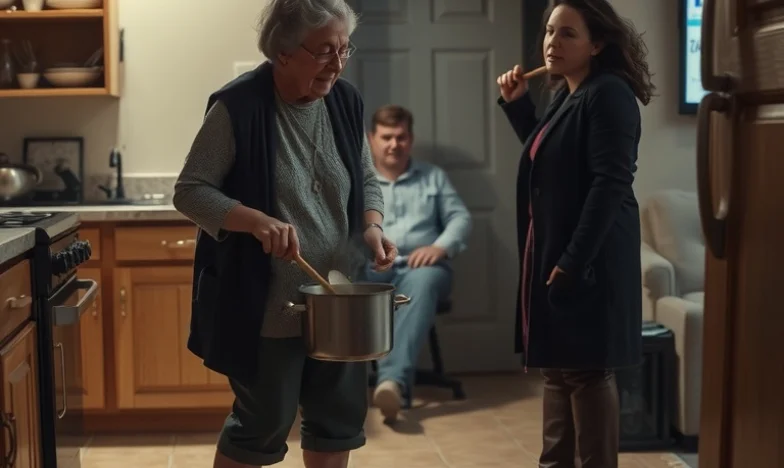
The metal spoon clattered to the floor, echoing through the silent kitchen. My hand shook as I pressed it to my cheek, the sting of Karina’s blow still fresh.
“Are you deaf or just useless?” she spat, her voice sharp as broken glass. “I told you not to touch the soup! You can’t even follow simple instructions.”
I looked past her, hoping for a sign of support from Daniel. My son sat on the couch, eyes glued to the television, the blue glow flickering across his face. He didn’t even flinch.
I swallowed hard, my heart pounding. I was sixty-eight years old, standing in my own son’s kitchen, holding a pot of chicken soup I’d made with trembling hands. All I wanted was to help, to feel useful, to be part of their lives. But now, I felt like an intruder in the only place I had left to call home.
—
Two months ago, I moved in with Daniel and Karina. My heart medication had become too expensive, and my Social Security check barely covered groceries. Daniel said, “Of course, Mom, you can stay with us as long as you need.”
I believed him. I wanted to believe that family meant something, that my son would never let me fall. But things changed quickly. Karina’s smiles faded. Daniel worked longer hours. The house felt colder.
I tried to help—folding laundry, cooking, cleaning. But every effort was met with criticism. “You’re doing it wrong, Martha,” Karina would say, snatching towels from my hands. “Just let me do it.”
I started to feel invisible. Or worse, a burden.
—
That morning, I woke up early to make chicken soup. It was Daniel’s favorite when he was a boy. I hoped the familiar smell would bring back memories, maybe even a smile.
Instead, Karina stormed in, furious that I’d used the last of the carrots. “You can’t just do whatever you want! This is my kitchen!”
I apologized, but she wouldn’t listen. The argument escalated. She grabbed the wooden spoon from my hand and struck me across the face. I gasped, more from shock than pain.
Daniel didn’t move. He didn’t even look up.
Minutes later, Karina shoved a crumpled twenty-dollar bill into my palm. “You need to leave. Now.”
I stared at her, then at Daniel. He finally looked at me, his eyes empty. “Maybe it’s for the best, Mom.”
I gathered my purse and coat, my hands shaking. I stepped out onto the porch, the cold air biting my skin. I had nowhere to go. No one to call. Just two crumpled bills and a heart full of hurt.
—
I wandered the streets, replaying the scene over and over. How did it come to this? I raised Daniel alone after his father died. I worked two jobs, skipped meals so he could eat, stayed up late sewing his Halloween costumes. I never imagined he’d turn his back on me.
But as I walked, I remembered something my late husband, Frank, told me before he passed. “If things ever get bad, Martha, check the old safety deposit box. There’s something in there for you.”
I’d almost forgotten. I’d never needed it—until now.
—
The next morning, I took a bus downtown. The bank was quiet, the marble floors gleaming. I handed the key to the teller, my hands trembling.
Inside the box was a letter and a stack of documents. Frank’s handwriting was shaky but clear:
“Martha, if you’re reading this, I’m sorry. I wanted to protect you. The house is yours. I put it in your name before I got sick. Daniel doesn’t know. If you ever need it, it’s yours. Don’t let anyone take it from you.”
Tears blurred my vision. The house. The one Daniel and Karina lived in. My house.
—
I sat in the bank lobby for a long time, the letter pressed to my chest. I could go back, demand they leave. I could call the police, show them the deed. I could make them feel the fear and uncertainty I felt.
But as the hours passed, my anger faded. I thought about Daniel as a little boy, his hand in mine as we crossed the street. I thought about Karina, how she must feel, caring for a mother-in-law she never wanted.
I didn’t want revenge. I wanted peace.
—
Instead of going back, I found a small motel and paid for a week. I called an old friend from church, someone I hadn’t seen in years. She picked me up, hugged me tight, and listened as I cried.
“I have a place to stay,” I told her. “And I have options. More than I thought.”
She smiled. “You always did, Martha. You just forgot.”
—
A week later, Daniel called. His voice was shaky. “Mom, I’m sorry. I didn’t know what to do. Karina… she’s been stressed. I should have stood up for you.”
I listened, my heart aching. “I know, Daniel. But I need to take care of myself now.”
He started to cry. “Can you forgive me?”
I closed my eyes, remembering the boy he once was. “I already have.”
—
I never went back to that house. I sold it and used the money to rent a small apartment near my friend. I joined a book club, started volunteering at the library, and found a new doctor who helped me manage my medication.
Sometimes, Daniel visits. We talk, slowly rebuilding trust. Karina never comes. That’s okay.
I learned that family isn’t always who you live with. Sometimes, it’s who stands by you when you have nothing left.
And sometimes, the greatest strength comes from letting go.
Based on a true story.