When Family Traditions Hurt More Than They Heal: My Battle for Justice in Small-Town America

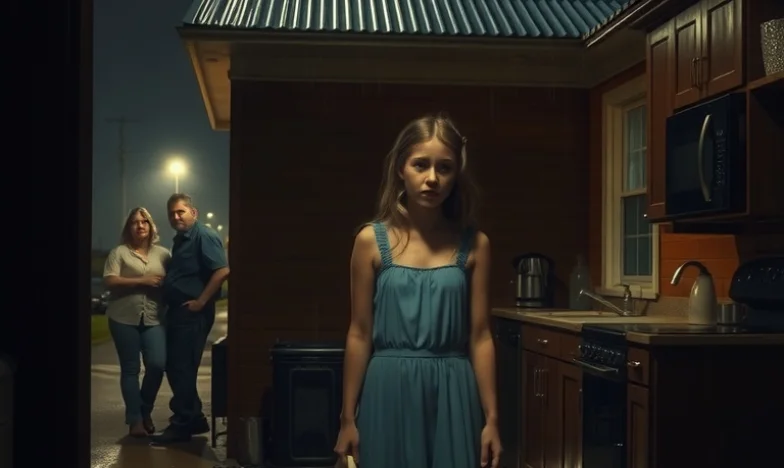
The rain hammered against the tin roof as I pressed my forehead to the cold windowpane, watching the muddy street outside. My mother’s voice cut through the storm, sharp and unyielding.
“Emily, you’re not going out tonight. You know what your father said.”
I clenched my fists, feeling the weight of her words settle on my chest. In our town of Willow Creek, nestled between two rolling hills and endless fields of corn, tradition was law. And tonight, tradition meant I was supposed to meet the man my parents had chosen for me to marry.
I was nineteen, with a wild heart and dreams bigger than the county line. But none of that mattered here. Not when the Johnsons and the Millers had been neighbors for generations, and a marriage between their children was as good as signed in blood.
“Mom, please,” I whispered, my voice trembling. “I don’t love him. I barely know him.”
She sighed, her eyes softening for a moment. “Love comes later, Emily. This is how it’s always been.”
I wanted to scream. Instead, I turned away, pressing my back to the wall, feeling the old wallpaper scratch my skin. My brother, Jake, poked his head in, his face a mix of sympathy and helplessness.
“You okay?” he asked, voice low.
I shook my head. “I can’t do this, Jake. I can’t marry someone just because it’s what’s expected.”
He looked away, jaw tight. “You know how Dad gets. Just… be careful.”
The clock ticked louder as the evening wore on. I could hear my father’s heavy boots on the porch, the scrape of his chair as he sat down to wait. My heart pounded in my chest, a caged bird desperate to escape.
When the Johnsons’ pickup pulled into the driveway, my mother pressed a dress into my hands. “Put this on. You’ll look beautiful.”
I stared at the pale blue fabric, feeling like I was drowning. I wanted to run, to scream, to disappear into the night. But I swallowed my fear and slipped into the dress, my hands shaking.
Downstairs, the living room was filled with the scent of roast chicken and the low murmur of polite conversation. Mr. Johnson smiled at me, his son, Mark, standing awkwardly by his side. Mark was kind, in a quiet way, but he wasn’t the boy I dreamed about when I stared up at the stars.
My father’s eyes bored into me. “Emily, why don’t you show Mark the garden?”
I nodded, leading Mark outside. The rain had stopped, leaving the air thick and heavy. We walked in silence, the only sound the squelch of our shoes in the wet grass.
Finally, Mark spoke. “You don’t want this, do you?”
I looked at him, surprised. “No. Do you?”
He shook his head. “My dad thinks it’ll fix everything. The farm, the money problems. But I want to go to college. Study engineering.”
A laugh bubbled up, half relief, half despair. “I want to be a writer. Leave this town. See the world.”
We stood there, two strangers bound by the chains of expectation. For a moment, I felt less alone.
Back inside, the adults talked about wedding dates and dowries, as if we were livestock being traded. My mother caught my eye, her face pale. I wondered if she’d ever wanted something different, once.
That night, I lay awake, staring at the cracks in the ceiling. I thought about running away, but where would I go? I had no money, no plan. Just a burning need to be free.
The days blurred together, each one heavier than the last. My father grew more insistent, my mother more withdrawn. Jake tried to help, but he was just a kid, powerless against the tide.
One afternoon, I found my mother crying in the kitchen. She wiped her eyes when she saw me, but I could see the pain etched into her face.
“Why are you doing this to me?” I asked, voice breaking.
She looked at me, her eyes haunted. “Because I don’t know how to do anything else.”
I realized then that she was as trapped as I was, a prisoner of the same traditions.
The wedding date was set for June. Invitations went out, and the whole town buzzed with excitement. I felt like I was suffocating, each day a little harder to breathe.
One night, Jake slipped me a letter. “From Mark,” he whispered.
I opened it, hands trembling.
Emily,
I’m leaving for Chicago tomorrow. I can’t do this. I hope you find your way out, too.
Mark
My heart pounded. If Mark could leave, maybe I could, too.
I packed a small bag, stuffing it with clothes, my journal, and the little money I’d saved from babysitting. I waited until the house was quiet, then crept downstairs. Jake met me at the door, tears in his eyes.
“Promise you’ll write?” he whispered.
“I promise.”
I slipped out into the night, the air cool against my skin. I walked to the bus station, heart racing, and bought a ticket to Chicago. As the bus pulled away, I watched the town fade into the distance, my past shrinking with every mile.
Chicago was loud and bright and terrifying. I found a job at a diner, rented a tiny room, and wrote every night, pouring my heart onto the page. It wasn’t easy. I missed Jake, my mother, even the hills of Willow Creek. But I was free.
Months passed. I sent letters home, but only Jake wrote back. My parents’ silence was a wound that never quite healed.
One day, I got a call from Jake. “Mom’s sick. You should come home.”
I hesitated, fear and guilt warring inside me. But I bought a ticket and went back.
The house was smaller than I remembered. My mother was frail, her hair gray. She smiled when she saw me, tears in her eyes.
“I’m proud of you,” she whispered. “You did what I never could.”
My father wouldn’t look at me, but I saw the pain in his eyes. Maybe, one day, he’d understand.
I stayed until my mother passed, then returned to Chicago. I published my first story a year later, dedicated to her.
Sometimes, I wonder what my life would have been if I’d stayed. But then I remember the girl at the window, desperate for freedom, and I know I made the right choice.
Tradition can be a comfort, but it can also be a cage. I chose to break free, and in doing so, I found myself.
Based on a true story.