The Night I Realized I Couldn’t Protect My Daughter

The phone rang at 3:17 AM, slicing through the silence of our suburban home in Maplewood, New Jersey. I jolted awake, heart pounding, the kind of dread that only parents know flooding my veins. My wife, Linda, stirred beside me, her hand instinctively reaching for mine. The caller ID glowed: EMILY. My sixteen-year-old daughter.
“Dad?” Her voice was barely a whisper, shaky, like she was holding back tears. “Can you come get me? Please?”
I was already out of bed, pulling on jeans, grabbing my keys. “Where are you, Em? What happened?”
A pause. “I’m at a party. I… I shouldn’t have come. There’s some guys here, they’re drunk, and I’m scared. I locked myself in the bathroom. Please, Dad.”
I could hear the muffled thump of music, laughter, someone banging on a door in the background. My mind raced with images I didn’t want to see. “Text me the address. I’m on my way. Stay on the phone with me.”
Linda was up now, eyes wide, fear etched into every line of her face. “What’s going on?”
“Emily’s in trouble. I have to go.”
She nodded, silent, trusting me to bring our daughter home safe. I sped through the empty streets, every red light a personal affront, every minute an eternity. Emily’s voice was my lifeline, her breathing ragged, her words clipped. “They’re still out there, Dad. I can hear them.”
“Don’t open the door for anyone but me. I’m almost there.”
The house was a sprawling colonial, lights blazing, cars lining the curb. I parked haphazardly, not caring if I blocked a driveway. Kids spilled onto the lawn, red Solo cups in hand, laughter and shouts echoing into the night. I pushed through the crowd, ignoring the stares, the whispered “Who’s that old guy?”
Inside, the air was thick with sweat, beer, and something sour. I found the bathroom at the end of the hall, pounded on the door. “Emily, it’s Dad. Open up.”
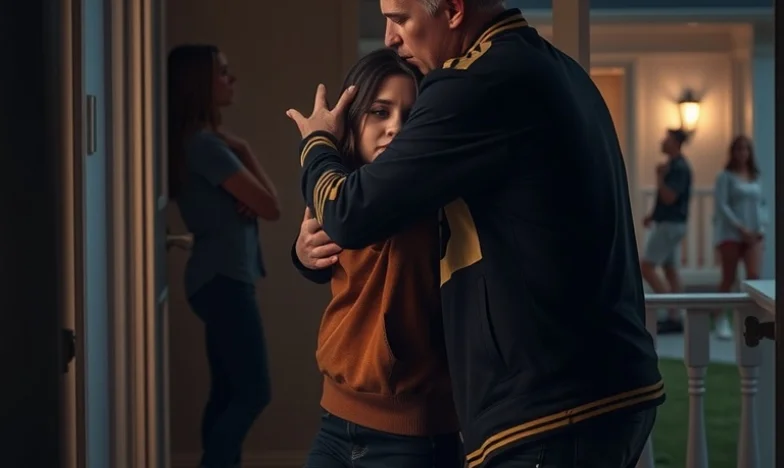
The door cracked open, and there she was—my little girl, mascara streaked down her cheeks, hands trembling. I pulled her into my arms, feeling her whole body shake. “Let’s go, sweetheart.”
We walked out together, my arm around her shoulders, daring anyone to stop us. A boy—tall, football jacket, eyes glazed—stepped in our path. “Hey, man, she’s fine. We were just having fun.”
I stared him down, voice low and cold. “Get out of my way.”
He backed off, muttering something I didn’t catch. Emily clung to me, silent until we were in the car, doors locked, engine running. Only then did she break down, sobbing into her hands.
“I’m sorry, Dad. I shouldn’t have gone. I thought it would be fun. I didn’t know…”
I reached over, squeezing her hand. “It’s not your fault. You did the right thing calling me.”
But as I drove us home, the adrenaline fading, a new fear took hold. I realized I couldn’t protect her from everything. Not from the world, not from her own choices, not from the pain that comes with growing up. I wanted to wrap her in bubble wrap, keep her safe forever, but I knew that wasn’t possible. She was sixteen, testing boundaries, learning who she was. All I could do was be there when she needed me, hope she’d keep calling when things got scary.
The next morning, the house was quiet. Emily slept late, her door closed. Linda and I sat at the kitchen table, coffee growing cold between us. “Do you think we’re doing enough?” she asked, voice barely above a whisper.
I didn’t have an answer. We’d given Emily rules, curfews, lectures about drinking and parties. We’d tried to teach her right from wrong, to trust her instincts. But the world was bigger and scarier than any lesson we could teach. I thought about my own teenage years—sneaking out, making mistakes, somehow surviving. Was it different now, or was it just my fear talking?
Emily came downstairs around noon, eyes red but determined. She sat across from us, twisting her hands in her lap. “I’m sorry,” she said again. “I know I messed up.”
Linda reached for her hand. “You didn’t mess up, honey. You called us. That’s what matters.”
We talked for a long time—about trust, about being safe, about how sometimes the people you think are your friends can turn on you in a heartbeat. Emily listened, nodding, tears slipping down her cheeks. I wanted to believe she understood, that she’d be more careful next time. But I also knew there would be more parties, more risks, more nights spent staring at the ceiling, waiting for the phone to ring.
A week later, it was Thanksgiving. Family crowded our house, laughter and the smell of turkey filling every room. Emily helped set the table, quieter than usual, but smiling. My brother Mike pulled me aside, beer in hand. “Heard about the party. You okay?”
I shrugged, not trusting myself to speak. He clapped me on the shoulder. “You did good, man. Kids gotta learn, but they need to know we’re there for them. That’s all we can do.”
That night, after everyone left, Emily hugged me tight. “Thanks for coming to get me, Dad. I was really scared.”
I hugged her back, fighting tears. “Always, Em. No matter what.”
But as I lay in bed, listening to the quiet hum of our home, I couldn’t shake the feeling of helplessness. I’d saved her this time, but what about next time? How do you let go, trust that you’ve done enough, when the world feels so dangerous?
Maybe that’s what being a parent is—loving them enough to let them make their own mistakes, being there to pick up the pieces, even when it breaks your heart. I don’t know if I’ll ever stop worrying. But I do know this: I’ll always answer the phone, no matter what time it rings.
Do we ever really stop being afraid for our kids? Or is that just the price we pay for loving them so much? What would you have done in my place?