The Day My Son Whispered to the Wall: A Father’s Journey Through Grief and Hope

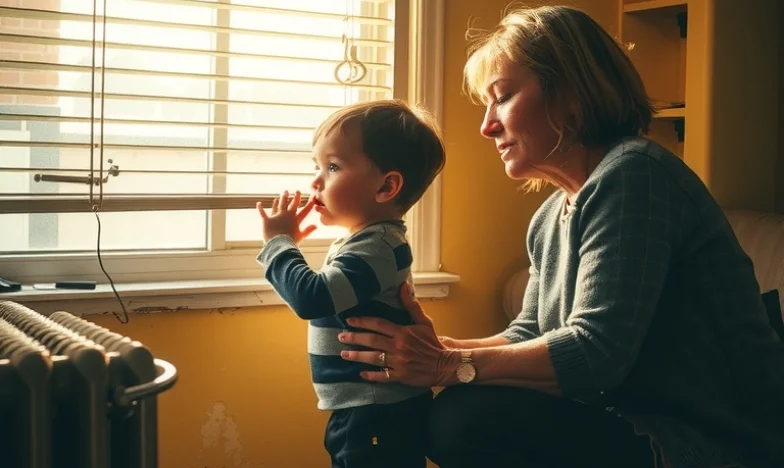
“Ethan, honey, what are you doing?” My voice trembled as I watched my son, barely a year old, stand motionless in front of the faded yellow wall of our cramped Chicago apartment. The late afternoon sun slanted through the blinds, painting stripes across the peeling paint and the back of his tiny head. I’d seen him do this before—stand there, silent, as if listening for something I couldn’t hear. But today, something was different. Today, I felt the hairs on my arms rise, a cold draft snaking through the room despite the radiator’s steady hum.
I knelt beside him, my knees popping. “Ethan?”
He didn’t turn. Instead, he pressed his chubby hand against the wall, his breath fogging the surface. Then, in a voice that was barely more than a whisper, he said, “Come back, Mommy.”
My heart stopped. I stared at him, my mind racing. He’d never strung three words together before. And those words—those words—were the ones I’d whispered to the ceiling every night since Sarah died.
Sarah. My wife. My best friend. The love of my life. She’d been gone for a year now, lost to complications during Ethan’s birth. I’d been left alone, a thirty-four-year-old civil engineer with a baby I barely knew how to hold, let alone raise. My parents called every Sunday from Ohio, their voices brittle with worry. Sarah’s mother, Linda, visited on holidays, her eyes always red, her hugs too tight. But most days, it was just me and Ethan, two lost souls in a city that never slept.
I scooped Ethan up, his body warm and soft against my chest. He squirmed, reaching back toward the wall. “No, Daddy. Mommy.”
I pressed my lips to his hair, fighting tears. “Mommy’s not here, buddy. It’s just us.”
But he kept reaching, his little fingers grasping at the air.
That night, after Ethan finally drifted off in his crib, I sat at the kitchen table with a mug of cold coffee, staring at the wall. The apartment was silent except for the distant wail of sirens and the occasional thump from the upstairs neighbors. I traced the cracks in the plaster with my eyes, remembering how Sarah used to laugh about the building’s quirks. “It’s got character,” she’d say, running her hand along the uneven molding. “Just like us.”
I missed her so much it hurt. Every day was a battle—getting Ethan dressed, making sure he ate, dragging myself to work and back. The holidays were the worst. Last Christmas, I’d tried to hang stockings, but I couldn’t bring myself to write Sarah’s name. I left her stocking in the box, buried under old ornaments and broken lights.
The next morning, Ethan was at the wall again. This time, he was humming—a tune I recognized as Sarah’s favorite lullaby. My hands shook as I called my mom. “He keeps talking to the wall,” I said, my voice cracking. “He said… he said ‘Come back, Mommy.’”
She was quiet for a moment. “Maybe he remembers her, John. Babies remember more than we think.”
I wanted to believe her. But the way Ethan stared at that wall, the way he whispered, it felt like something more. Something I couldn’t explain.
Days passed. Ethan grew more insistent, spending hours in front of the wall, babbling and laughing as if someone were there with him. I started sleeping on the couch, afraid to leave him alone. One night, I woke to the sound of his giggles echoing down the hallway. I rushed to his room, heart pounding, and found him standing in his crib, arms outstretched toward the wall.
“Mommy’s here,” he said, his eyes shining.
I broke. I sank to the floor, sobbing, my grief crashing over me like a wave. I wanted to believe. God, I wanted to believe Sarah was still with us, watching over our son. But I was scared, too. Scared that I was losing my mind, that my grief was poisoning Ethan’s world.
I called Linda. She came over the next day, bringing cookies and a box of Sarah’s things. We sat in the living room, watching Ethan play with his blocks.
“He talks to her,” I said quietly. “He says she’s here.”
Linda’s eyes filled with tears. “Maybe she is. Maybe she’s watching over him.”
We sat in silence, the weight of our loss pressing down on us. Finally, Linda reached over and squeezed my hand. “You’re doing your best, John. Sarah would be proud.”
But was I? Was I really doing my best? Or was I letting my grief swallow me whole, dragging Ethan down with me?
That night, I made a decision. I pulled out Sarah’s old photo albums, the ones I’d hidden away after the funeral. I sat with Ethan on the floor, flipping through pictures of our wedding, our vacations, the day we brought him home from the hospital.
“That’s Mommy,” I said, pointing to a picture of Sarah holding newborn Ethan, her face glowing with love.
Ethan touched the photo, his eyes wide. “Mommy.”
I nodded, tears streaming down my face. “She loves you, buddy. She always will.”
We started a new routine. Every night, before bed, we’d look at Sarah’s pictures and talk about her. I told Ethan stories—how she loved to dance in the kitchen, how she sang off-key in the shower, how she dreamed of taking him to Disney World. Slowly, the wall lost its power. Ethan still stood there sometimes, but now he’d turn and smile at me, as if sharing a secret.
Spring came, and with it, hope. I started taking Ethan to the park, letting him run through the grass and chase pigeons. We made new friends—other single parents, neighbors who’d lost loved ones. I joined a support group, sharing my story with strangers who understood my pain.
On Ethan’s second birthday, I hung Sarah’s stocking on the wall, filling it with notes and drawings from both of us. We sang her favorite song, our voices trembling but strong. For the first time in a long time, I felt her presence—not as a ghost haunting our apartment, but as a memory woven into the fabric of our lives.
Life wasn’t perfect. There were still hard days, nights when the loneliness crept in, mornings when I woke up reaching for someone who wasn’t there. But I was learning to live again, to find joy in the small moments—Ethan’s laughter, the warmth of the sun on my face, the kindness of friends and family.
Sometimes, late at night, I’d catch Ethan standing by the wall, his hand pressed against the plaster. He’d turn to me, his eyes bright, and say, “Mommy loves us.”
And I’d smile, my heart full of gratitude and sorrow and hope.
Maybe the wall was just a wall. Or maybe, just maybe, it was a doorway—a reminder that love never really leaves us, that the people we’ve lost are always with us, in the laughter of our children, in the stories we tell, in the memories we cherish.
Do you ever feel like someone you’ve lost is still with you? How do you keep their memory alive in your family? I’d love to hear your stories.