The Day My Daughter’s Pain Was Ignored: A Father’s Fight for Dignity in an Unjust System

“Get this man out of my office. I don’t treat people who can’t pay.”
The words sliced through the sterile air of St. Mary’s Hospital, echoing down the corridor. I stood frozen, clutching my daughter’s trembling hand, her brown eyes wide with fear and pain. My heart pounded so loudly I could barely hear the nurse’s gasp or the shuffle of feet as people turned to stare.
I wanted to scream, to shout that my daughter was more than a number, more than the color of our skin or the balance in my bank account. But all I could do was hold her tighter, feeling the heat of humiliation burn my cheeks.
—
**Hook**
It was supposed to be a normal Saturday. I’d promised my daughter, Maya, pancakes at her favorite diner after her soccer game. Instead, we ended up in the ER, her ankle swollen and purple after a bad fall.
I’d never felt so helpless as I did watching her bite her lip to keep from crying, trying to be brave for me. The waiting room was packed, but I kept telling her, “We’ll see a doctor soon. They’ll help you, baby.”
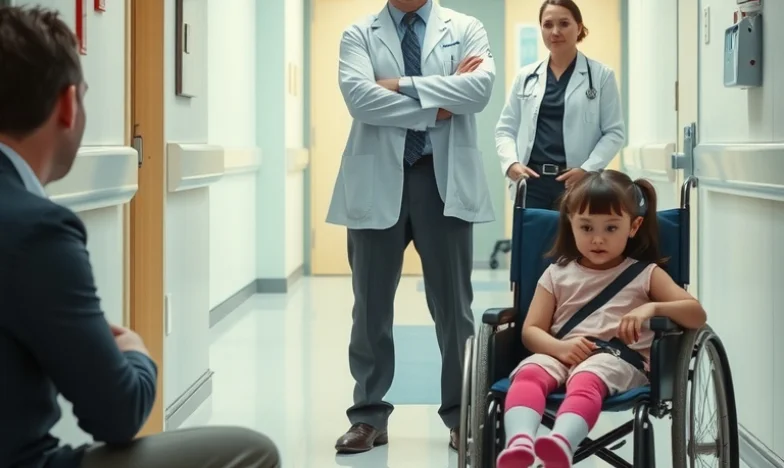
When they finally called our name, relief washed over me. That relief shattered the moment Dr. Richard Hayes looked us up and down, his lips curling in a sneer.
—
**Development**
He didn’t even glance at Maya’s ankle. Instead, he looked straight at me. “Do you have insurance?” he asked, voice clipped.
“Yes, I do,” I replied, pulling out my wallet. But he didn’t look at my card. He just shook his head, muttering something under his breath.
The nurse, a young woman named Emily, tried to intervene. “Doctor, she’s in a lot of pain—”
He cut her off. “If you can’t pay up front, you can’t be seen. That’s the policy.”
I stared at him, disbelief and anger warring inside me. “My daughter is hurt. She needs help. Isn’t that your job?”
He crossed his arms, eyes cold. “I don’t have time for charity cases. Security!”
Maya whimpered, tears finally spilling down her cheeks. I knelt beside her, whispering, “It’s going to be okay. Daddy’s here.”
Security arrived, their faces apologetic but firm. “Sir, we need you to leave.”
I wanted to fight, to demand justice, but Maya’s pain was more important. I scooped her up and carried her out, my pride in tatters.
Outside, I called my wife, Lisa, voice shaking. “They wouldn’t see her. They said we couldn’t pay.”
Lisa was furious. “That’s illegal. I’m coming down there.”
We drove to another hospital across town. There, a kind doctor named Dr. Patel treated Maya immediately, casting her ankle and giving her a sticker for bravery. But the wound inside me festered.
That night, as Maya slept, Lisa and I sat at the kitchen table. “We can’t let this go,” she said. “How many other families has he turned away?”
I nodded, rage simmering beneath my exhaustion. “He looked at us like we were nothing.”
Lisa squeezed my hand. “We’re not nothing. And neither is Maya.”
—
**Emotional Turning Point**
The next morning, I called the hospital administrator. My voice shook as I recounted every detail, from the doctor’s words to the way he refused to even look at Maya. I could hear the shock in her silence.
“We take these allegations very seriously, Mr. Johnson,” she said. “Can you come in and make a formal statement?”
I did. I brought Maya’s medical records, the bill from the other hospital, and even a recording I’d made on my phone when things started to escalate. The administrator listened, her face growing grimmer by the minute.
Within hours, the story spread. Emily, the nurse, backed up my account. Other families came forward, sharing their own stories of being turned away or treated with contempt. The hospital launched an investigation.
That evening, I got a call. “Dr. Hayes has been terminated, effective immediately. We are deeply sorry for what happened to your family.”
I hung up, feeling a strange mix of relief and sorrow. Relief that justice had been served. Sorrow that it had taken so much pain to get there.
—
**Soft Ending**
Maya healed, her cast covered in signatures from friends and teachers. But the scar on my heart lingered. I found myself watching the news, reading stories of others who’d been dismissed, ignored, or mistreated because of how they looked or what someone assumed about their lives.
One night, Maya crawled into my lap. “Daddy, why was that doctor so mean?”
I hugged her close. “Sometimes people forget that everyone deserves kindness. But we can remind them, by standing up for what’s right.”
She nodded, her small hand in mine. “I’m glad you’re my dad.”
I smiled, tears stinging my eyes. “Me too, baby. Me too.”
Sometimes, the fight for dignity is quiet. Sometimes, it’s loud. But it always matters.
Based on a true story.