My Daughter Called: “We’re Leaving Tomorrow. Your Beach House and Car Are Sold. Goodbye.”

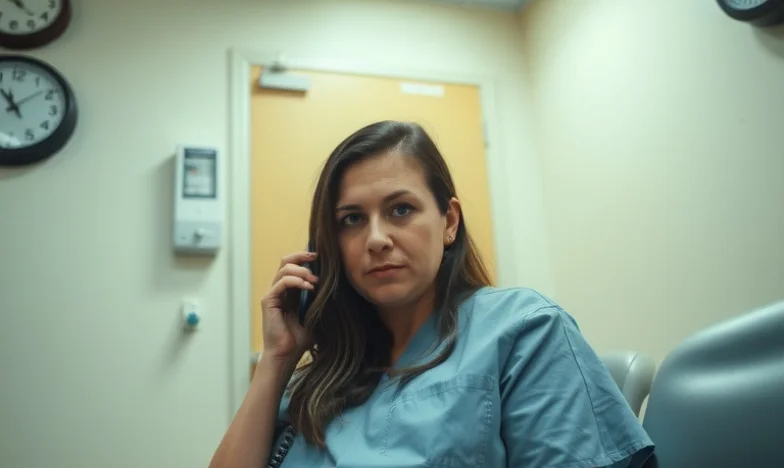
The fluorescent lights in Dr. Miller’s waiting room flickered above me, humming in the silence. I glanced at the clock—2:17 p.m.—and tried to steady my breathing. My hands trembled as I fumbled for my phone, startled by its sudden ring.
“Angela?” I answered, relief flooding me at the sound of my daughter’s name on the screen.
But her voice was clipped, distant. “Mom, listen. We’re leaving for Europe tomorrow. Your beach house and your car—well, I sold them. We needed the money. Goodbye.”
The line went dead. I stared at the phone, my heart pounding so loudly I thought the other patients could hear it. My beach house—the one in Cape May, where Angela learned to swim, where we watched fireworks every Fourth of July. My car—the old blue Subaru, the one I’d driven to every school play, every doctor’s appointment, every late-night ice cream run.
I felt the world tilt beneath me. Forty-five years of working double shifts as a nurse, saving every penny, sacrificing vacations and new clothes, all for Angela. And now, with a single phone call, it was gone.
—
I stumbled out of the doctor’s office, barely noticing the nurse calling my name. The drive home was a blur. I kept replaying Angela’s words, searching for some sign of warmth, some hint that this was all a misunderstanding.
When I got home, the mailbox was stuffed with bills. I dropped them on the kitchen table, my hands numb. The house felt emptier than ever. I wandered into Angela’s old room—her trophies still lined the shelves, her prom dress hung in the closet. I sat on her bed and let the tears come.
I called her back. Straight to voicemail. I texted: “Angela, please call me. I don’t understand.”
No reply.
That night, I barely slept. I kept thinking about the sacrifices I’d made—how I’d worked nights so Angela could go to college, how I’d skipped meals so she could have piano lessons. I remembered the promises she’d made: “I’ll always take care of you, Mom. We’re a team.”
—
The next morning, I called my sister, Linda, in Ohio.
“Linda, she sold everything. She didn’t even ask.”
Linda’s voice was sharp with anger. “That’s not right, Mary. You need to talk to a lawyer. You can’t just let her do this.”
But I couldn’t. Angela was all I had left. After my husband died, it was just the two of us. I’d poured everything into her, hoping she’d have the life I never did.
I tried calling Angela again. Still nothing.
—
Days passed. I found out through a neighbor that a moving truck had come while I was at the doctor’s. My car was gone from the driveway. The beach house keys were missing from the hook by the door.
I called the real estate agent who’d helped me buy the beach house years ago. “I’m sorry, Mary,” she said gently. “Angela had power of attorney. She said you were moving to Europe with her.”
I felt sick. I remembered signing those papers after my surgery last year, when Angela said it was just in case something happened to me. I never thought she’d use them like this.
—
A week later, I got a postcard from Paris. Angela’s handwriting was rushed, almost illegible.
“Mom, I know you’re upset. But we needed the money. Europe is beautiful. You’ll love it here. I’ll call soon.”
But she didn’t call.
—
I started seeing a therapist, Dr. Patel. She listened as I poured out my story, my anger, my grief.
“Mary, you’ve been betrayed. It’s okay to feel hurt. But you need to protect yourself now.”
I nodded, but the words felt hollow. How do you protect yourself from your own child?
—
One evening, Linda called again. “You can come stay with us, Mary. You don’t have to go through this alone.”
I thought about it. About leaving the house where I’d raised Angela, where every corner held a memory. But what was left for me here?
I packed a suitcase. I left the trophies, the prom dress, the faded family photos. I took only what I needed.
—
Linda’s house was warm and noisy, filled with the laughter of her grandchildren. For the first time in months, I felt a glimmer of hope.
But at night, I lay awake, haunted by questions. How could Angela do this? Was it my fault? Did I love her too much? Did I make her feel entitled, or did she simply stop caring?
—
Months passed. I started volunteering at the local library, helping children with their reading. I made new friends. I even joined a book club.
But every time the phone rang, my heart leapt, hoping it was Angela. It never was.
—
Then, one day, I got an email. The subject line: “I’m sorry.”
It was from Angela.
“Mom, I know you hate me. I’m sorry for what I did. I was desperate. I lost my job, I owed money. I thought if we started over in Europe, things would be better. But I was wrong. I miss you. Please forgive me.”
I stared at the screen, tears streaming down my face. I wanted to forgive her. I wanted to hold her and tell her everything would be okay. But I couldn’t forget the betrayal, the loneliness, the pain.
I wrote back: “Angela, I love you. But trust, once broken, is hard to rebuild. I hope you find what you’re looking for. I’ll always be your mother.”
—
Now, I sit by Linda’s window, watching the sunset. I think about the life I built, the sacrifices I made, the love I gave. I wonder if Angela will ever come home, if we’ll ever be a family again.
But I also know I have to live for myself now. I have to find happiness, even in the ruins of what was.
Maybe one day, Angela and I will sit together on a beach again, watching the fireworks. Maybe we’ll find our way back to each other.
Until then, I hold on to hope.
Based on a true story.