I Stayed With Dad While My Brother Lived His Life—But Dad’s Will Broke My Heart

The smell of burnt coffee lingered in the kitchen as I stared at the old oak table, my hands trembling around a mug I couldn’t bring myself to drink from. The morning after Dad’s funeral, the house felt emptier than ever, even with Michael’s suitcase by the door and his voice echoing from the hallway. “You okay, Sarah?” he called, his tone too casual for the weight in my chest. I wanted to scream at him, to ask how he could sound so normal when everything was falling apart. But I just nodded, not trusting my voice.
For years, it was just Dad and me in this house on Maple Street. After Mom died, Michael left for college in California, chasing big dreams and bigger cities, while I stayed behind in our small Ohio town. I put my own plans on hold—nursing school, travel, even dating—because Dad needed me. His health was never great, and after his first heart attack, he needed someone to help with groceries, doctor’s appointments, and the endless parade of medications. I became his caretaker, his confidante, and, sometimes, his only friend. Holidays were just the two of us, watching reruns of old sitcoms, while Michael sent postcards from places I’d only seen on TV.
I never resented Michael, not really. He was always the golden boy—charming, ambitious, the one Dad bragged about to the neighbors. I told myself I was happy here, that I belonged in this house, that Dad needed me more than I needed the world outside. But sometimes, late at night, I’d wonder what my life could have been if I’d left, too.
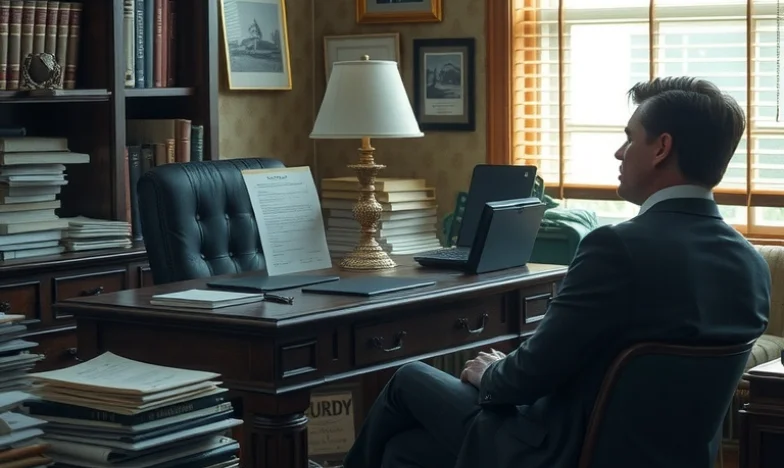
The day after the funeral, Michael and I sat across from Mr. Thompson, Dad’s lawyer, in his cramped office. The air was thick with the scent of old paper and stale coffee. Mr. Thompson cleared his throat and unfolded the will. “Your father wanted me to read this with both of you present.”
I squeezed my hands together, my heart pounding. I’d always assumed the house would be mine. After all, I’d lived here my whole life, cared for Dad, kept the place running. Michael had his own life, his own apartment in San Francisco. What would he want with this old house?
Mr. Thompson’s voice was steady as he read: “To my son, Michael, I leave the house and all its contents. To my daughter, Sarah, I leave my car and a savings account.”
The words hit me like a punch. I stared at the lawyer, then at Michael, who looked just as shocked as I felt. “There must be some mistake,” I whispered. “I took care of him. I was here.”
Mr. Thompson shook his head gently. “This is what your father wanted.”
I couldn’t breathe. The room spun. Michael reached for my hand, but I pulled away. “Why?” I choked out. “Why would he do this?”
Michael’s voice was soft. “Sarah, I had no idea. I thought—”
“You thought what?” I snapped. “That you could just waltz back in and take everything?”
He flinched, and for a moment, I saw the little boy he used to be, scared and unsure. But the anger burned hotter than my sympathy. I stormed out of the office, tears streaming down my face, the world outside blurring into gray.
The days that followed were a haze of grief and disbelief. I wandered the house, touching the worn banister, the faded photographs, the dented coffee table where Dad used to rest his feet. Every corner held a memory—Christmas mornings, birthday cakes, the night Dad taught me to dance in the living room while the radio played old country songs. How could he give all this away to Michael, who barely called, who never came home except for holidays?
Michael tried to talk to me, but I avoided him, locking myself in my room or disappearing into the backyard. He stayed for a week, sorting through Dad’s things, making phone calls, talking to realtors. I hated him for it, even though I knew it wasn’t his fault. The real betrayal was Dad’s, and that hurt more than anything.
One night, as I sat on the porch, Michael joined me, a beer in his hand. The summer air was thick with the scent of cut grass and honeysuckle. “Sarah,” he said quietly, “I don’t want the house. I never did. I thought Dad would leave it to you. Maybe he thought you’d want to start fresh somewhere else.”
I shook my head. “This is my home. It’s all I have.”
He sighed. “I can sign it over to you. Or we can sell it and split the money. Whatever you want.”
But it wasn’t about the money. It was about the years I’d given up, the life I’d built around Dad, the sacrifices I’d made. I wanted Dad to acknowledge that, to see me, to thank me. Instead, he’d handed everything to Michael, as if my devotion meant nothing.
The weeks passed, and the house grew emptier. Michael left, promising to call, but I knew he wouldn’t. I packed up Dad’s things, donated his clothes, boxed up the photographs. The realtor put a sign in the yard, and neighbors stopped by to offer condolences and casseroles. I smiled and thanked them, but inside, I was hollow.
On the Fourth of July, I sat alone on the porch, watching fireworks explode over the town. Families laughed and cheered in the distance, but I felt like a ghost, haunting a house that was no longer mine. I thought about leaving, about starting over somewhere new, but the thought terrified me. Who was I without Dad, without this house, without the role I’d played for so long?
A month later, the house sold. I packed my car with what little I had and drove away, tears streaming down my face as I watched the only home I’d ever known disappear in the rearview mirror. I ended up in a small apartment on the other side of town, working at the local clinic, trying to build a life from the ashes of the old one.
Sometimes, I see Michael’s name pop up on my phone, but I can’t bring myself to answer. The wound is still too raw. Maybe one day I’ll forgive him, or Dad, or myself. But for now, I’m just trying to figure out who I am, and what I want, in a world that suddenly feels so much bigger and lonelier than before.
Did I waste my life caring for someone who couldn’t see me? Or is there something more waiting for me out there, beyond the walls of that old house? What would you have done in my place?