A Father’s Last Will: The Gold That Broke Us

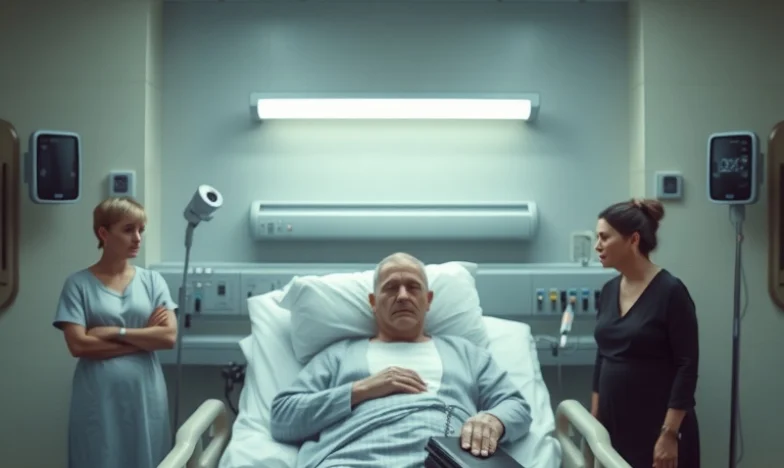
The fluorescent lights in St. Mary’s Hospital in Chicago were so bright they made my eyes ache. I stood at the foot of my father’s bed, clutching my purse so tightly my knuckles turned white. The room was crowded with my siblings—my brother David, always the golden child, and my older sister, Lisa, who hadn’t spoken to me in months. My father, Maurice Devereux, was a shadow of the man who used to tower over us at Thanksgiving, carving the turkey with a flourish and a joke. Now, at seventy, he was gaunt, his skin almost translucent, his breathing ragged from the stroke that had left him half-paralyzed two months ago.
The machines beeped steadily, a cruel reminder that time was running out. My mother, stoic as ever, sat by his side, her hand resting on his. She looked at me, her eyes unreadable. I felt like a child again, waiting for permission to speak. But it was my father who broke the silence, his voice a hoarse whisper, barely more than a rasp. “Camille,” he said, and I stepped forward, my heart pounding. “You know what they say—give a girl too much, and she’ll take it all to her husband’s house.”
I flinched. The words stung, sharper than I expected. My father had always been old-fashioned, but I never thought he’d use that as a reason to cut me out. I glanced at David, who looked away, his jaw clenched. Lisa’s lips were pressed into a thin line. I wanted to scream, to ask him why he was doing this, but the words caught in my throat.
He continued, his eyes fixed on the ceiling. “In my will, Camille, you’ll get two grams of gold. That’s all.”
The room went silent. I felt the blood drain from my face. Two grams of gold? After everything I’d done—moving back home when Mom got sick, helping with the bills, putting my own life on hold? I looked at my siblings, searching for some sign of support, but Lisa just stared at the floor, and David’s face was unreadable.
Tears burned in my eyes, but I refused to let them fall. I wanted to shout, to demand an explanation, but all I could do was whisper, “Why, Dad?”
He didn’t answer. The machines kept beeping, and the smell of disinfectant seemed to grow stronger. My mother squeezed his hand, her own eyes shining with unshed tears. I felt like I was drowning.
It was David who finally broke the silence. He stepped forward, his voice trembling. “Dad, you can’t do this. Camille’s done more for this family than any of us. She gave up her job, her apartment, her life. She’s the reason Mom’s still here. If you leave her with nothing, you’ll break this family apart.”
For the first time, my father looked at David, really looked at him. His eyes filled with something I hadn’t seen in years—regret, maybe, or sorrow. His hand trembled as he reached for David’s. “I thought I was doing what was right,” he whispered. “I thought I was protecting the family.”
David shook his head, tears streaming down his face. “You’re not protecting anyone. You’re hurting us. You’re hurting Camille.”
The room was thick with emotion. Lisa finally spoke, her voice barely audible. “Dad, please. Don’t do this.”
My father closed his eyes, a single tear slipping down his cheek. For a moment, I saw the man he used to be—the father who took us to Cubs games, who danced with Mom in the kitchen, who told us stories by the fire on Christmas Eve. I wanted to reach out, to forgive him, but the hurt was too fresh.
The next day, my father slipped into a coma. He never woke up. The funeral was a blur of black suits and whispered condolences. The will was read a week later, and just as he’d said, I was left with two grams of gold—a pair of earrings my mother had worn on her wedding day. David and Lisa split the rest.
The house felt empty after that. Mom moved in with Lisa, and David went back to New York. I stayed behind, sorting through Dad’s things, trying to make sense of it all. Every holiday felt hollow. Thanksgiving was just me and a frozen dinner, the TV flickering in the background. Christmas came and went, the tree in the living room shedding needles onto the carpet.
One night, I found myself sitting at the kitchen table, the gold earrings in my hand. I turned them over and over, remembering the way Mom used to laugh when Dad spun her around the living room, the way he’d wink at me when he thought no one was looking. I wondered if he’d ever really seen me, or if I’d always been just the youngest, the one who’d eventually leave.
David called on New Year’s Eve. “Camille,” he said, his voice soft, “I’m sorry. I should have done more.”
I swallowed hard. “It’s not your fault, David. Dad made his choice.”
He was quiet for a moment. “I miss you. We all do.”
I wanted to believe him, but the hurt was still there, a dull ache in my chest. “I miss you too.”
After we hung up, I sat in the dark, listening to the fireworks outside. I thought about forgiveness, about what it meant to let go. I thought about Dad, about the choices he’d made, about the legacy he’d left behind. I wondered if I could ever move on, if I could ever forgive him—or myself.
The next spring, I packed up the house and moved to Seattle, starting over in a city where no one knew my name. I found a job at a bookstore, made new friends, built a life that was mine alone. But every now and then, I’d take out the earrings, hold them in my hand, and remember the family I’d lost.
Sometimes I wonder—are we ever really free from the past, or do we carry it with us, like two grams of gold, heavy and bright, a reminder of everything we’ve loved and lost? What would you do if you were in my place? Would you forgive, or would you walk away?