Humiliated for Saving a Stranger: The Day My Life Collided with Power

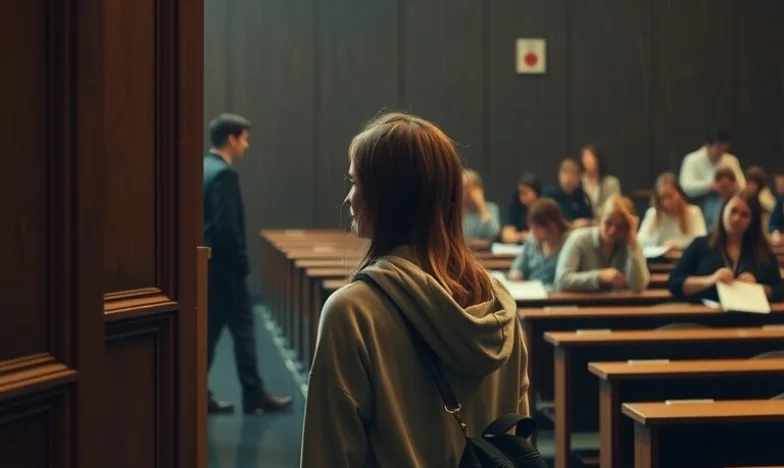
The sound of the exam paper tearing echoed like a gunshot in the silent lecture hall. My heart hammered in my chest as Professor Whitaker’s voice cut through the tension: “Miss Carter, you’re twenty minutes late. There are rules.”
I stood frozen in the doorway, soaked from the rain, my hands trembling. The eyes of my classmates burned into me—some with pity, most with judgment. I tried to speak, but my voice caught in my throat.
“Please, Professor, I—”
He didn’t let me finish. “You know the policy. No exceptions. You’re dismissed.”
The humiliation stung more than the cold. I clutched my backpack, feeling the weight of every sacrifice I’d made to get here. My mother’s double shifts at the diner. My own sleepless nights. All for this moment—gone.
I stumbled out into the hallway, blinking back tears. My phone buzzed in my pocket. I ignored it. What could I say to Mom? That I’d failed her? That I’d failed myself?
But the memory of what happened just an hour earlier wouldn’t let me go. The screech of tires. The woman’s scream. The way I’d dropped my coffee and sprinted across the crosswalk, grabbing her arm and yanking her back just as the delivery van barreled through the red light.
She’d collapsed in my arms, shaking. “Thank you,” she whispered, her accent clipped and elegant. “You saved my life.”
I’d barely had time to check her for injuries before the paramedics arrived. I gave my name, but she was whisked away before I could say more. I’d run the last six blocks to campus, soaked and breathless, desperate to make it in time.
And now, none of it mattered.
—
I spent the next week in a fog. My academic advisor told me there was nothing to be done. “Rules are rules, Emily. I’m sorry.”
My mother tried to comfort me, but I could see the worry in her eyes. “We’ll figure something out, honey. We always do.”
But I knew what this meant. No final exam, no graduation. No scholarship. No way forward.
The whispers started almost immediately. “Did you hear about Emily Carter? She just didn’t show up for her final.”
I wanted to scream the truth, but who would believe me? Who would care?
—
A week later, I was working my shift at the campus coffee shop when a black SUV pulled up outside. Two men in suits stepped out, scanning the room. My stomach dropped.
“Emily Carter?” one of them asked, his voice low but commanding.
I nodded, my hands shaking as I wiped them on my apron.
“We’d like you to come with us. Mrs. Davenport would like to see you.”
The name meant nothing to me. But the way everyone in the café stared made it clear: this was not a request.
—
The ride was silent. My mind raced with possibilities—none of them good. When we pulled up to the Davenport estate, my breath caught. The mansion loomed over the manicured lawns like something out of a movie.
Inside, I was led to a sunlit sitting room. There she was—the woman from the crosswalk. She looked different now: poised, radiant, but her eyes softened when she saw me.
“Emily,” she said, rising to greet me. “I’ve been looking for you.”
I stammered, “I’m glad you’re okay, ma’am.”
She smiled. “You saved my life. I owe you more than I can say.”
I shook my head. “Anyone would have done the same.”
She studied me for a long moment. “You’re too modest. I know what happened at your school. I know what you lost.”
My cheeks burned. “It’s fine. I’ll figure something out.”
She reached for my hand. “No, Emily. You shouldn’t have to. My husband and I have some influence. We’d like to help.”
—
The next day, the dean called me into his office. He was pale, sweating. “Miss Carter, there’s been a… reconsideration. You’ll be allowed to retake your exam.”
I stared at him, stunned. “Why?”
He cleared his throat. “Let’s just say… it’s been brought to our attention that your actions were… exemplary.”
Word spread like wildfire. Suddenly, I was a hero. The same classmates who’d whispered about my failure now wanted to sit with me at lunch. Professors who’d barely noticed me before offered extra help.
But not everyone was happy. Professor Whitaker avoided my gaze. I overheard him muttering in the faculty lounge, “Special treatment. It’s not right.”
—
I passed my exam. I graduated with honors. Mrs. Davenport and her husband attended the ceremony, sitting in the front row. My mother cried tears of joy.
But the story didn’t end there.
A month later, an exposé broke in the local paper. Corruption at the university. Favoritism, bribes, discrimination against students from low-income backgrounds. Professor Whitaker’s name was front and center.
I was called to testify. My hands shook as I told my story—about the rules, the humiliation, the way I’d been dismissed without a second thought.
The investigation rocked the campus. Protests erupted. Students demanded change. Whitaker resigned in disgrace. New policies were put in place to protect students in crisis.
—
One night, I got a call from Mrs. Davenport. “Emily, I want you to know—you didn’t just save my life. You changed it. My husband and I are starting a scholarship in your name. For students like you.”
I broke down in tears. “Thank you. I just… I just wanted to do the right thing.”
She laughed softly. “Sometimes, that’s all it takes to change the world.”
—
Now, years later, I walk past the campus coffee shop and see a plaque with my name on it. I think about the girl I was—the one who thought her life was over because of one act of kindness.
I think about the power of standing up, even when it costs you everything. About how the smallest choices can ripple out and shake the foundations of the world.
And I wonder: if you were in my shoes, what would you have done?
Based on a true story.