I’m the only one working full-time while supporting four adults

I was standing at the kitchen counter with a stack of bills in one hand and my phone in the other, checking our bank balance for the third time that morning. We were overdrawn again. Not by much, but enough that I’d have to move money from the little savings account I’d been trying to build. My husband, Dan, was in the living room watching a baseball game with his dad. His mom was in the guest room, which wasn’t really a guest room anymore because she’d been living in it for six years.
I walked into the living room and muted the TV. Dan looked up, annoyed. His dad kept staring at the screen like the sound would come back on if he concentrated hard enough.
“We need to talk,” I said.
Dan sighed and followed me into the kitchen. I spread the bills out on the counter. Mortgage, electric, water, cable, his parents’ car insurance, his mom’s prescriptions, the credit card we’d used to fix the roof last spring. I pointed at the bank balance on my phone.
“This is every month,” I said. “I make good money, but it’s not enough for four adults when I’m the only one working full-time.”
Dan leaned against the fridge and crossed his arms. “My dad’s been looking for work.”
“He’s been looking for two years,” I said. “And your mom hasn’t worked since before we got married. I’m not saying they’re bad people. I’m saying I can’t keep doing this.”
He didn’t say anything. That was the thing about Dan. He wasn’t mean. He just went quiet when things got hard. I used to think that was patience. Now I knew it was avoidance.
We’d bought the house eight years ago, right after we got married. His parents moved in six months later. It was supposed to be temporary. His dad had lost his job at the warehouse, and his mom had some health issues. I understood. Family helps family. But somewhere along the way, temporary became permanent, and I became the one paying for everything.
I worked as a respiratory therapist at a hospital about twenty minutes away. I picked up extra shifts when I could. Dan worked part-time at a hardware store. He said he was trying to find something better, but he never updated his resume. He never followed up on applications. He just watched baseball and told me I worried too much.
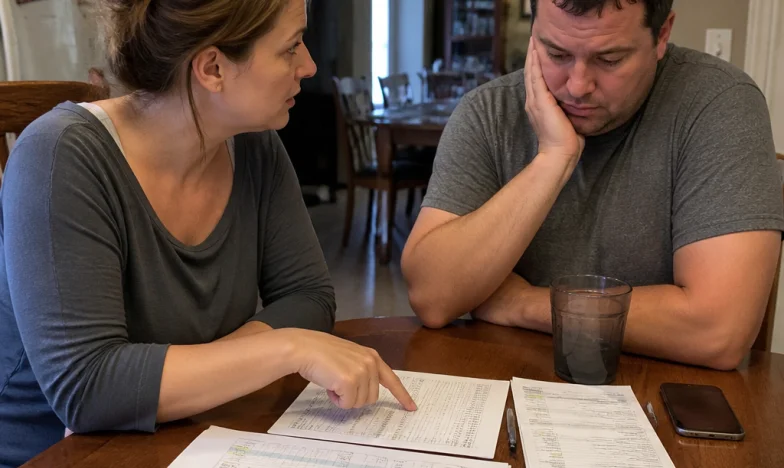
That night, after his parents went to bed, I sat Dan down at the dining table. I had printed out a spreadsheet. I’m not a numbers person, but I’d stayed up late the night before putting it together. Every bill, every expense, every source of income. The numbers didn’t lie.
“Look at this,” I said. “Your parents’ expenses are almost as much as ours. And they’re not contributing anything. Not even groceries.”
Dan rubbed his eyes. “What do you want me to do? Kick them out?”
“I want you to set some boundaries,” I said. “They need to apply for assistance. Food stamps, Medicaid, whatever they qualify for. Your dad needs to take any job, even part-time. And we need to stop paying for their car insurance and cable.”
He stared at the spreadsheet for a long time. I could see him getting defensive, but then something shifted. Maybe it was the total at the bottom of the page. Maybe it was the fact that I looked exhausted. I don’t know.
“I’ll talk to them,” he said quietly.
The next evening, Dan sat down with his parents in the living room. I stayed in the kitchen, listening. His mom cried. His dad got defensive and said I was being selfish. Dan didn’t back down. He told them we loved them, but we couldn’t afford to support them anymore. He said they had thirty days to apply for benefits and start contributing something, even if it was just a hundred dollars a month.
It was awkward for weeks. His mom barely spoke to me. His dad started working part-time at a gas station. They applied for food stamps and got approved. We cut the cable and switched to a cheaper phone plan. It wasn’t perfect, but it was something.
A few months later, I checked our bank balance and saw we had over two thousand dollars in savings. It wasn’t a fortune, but it was the first time in years I didn’t feel like I was drowning. Dan started picking up more hours at the hardware store. He even talked about going back to school for a trade.
I still get tired thinking about how long I carried everything alone. But at least now, when I look at the bills on the counter, I don’t feel like I’m the only one who sees them.