My in-laws owe us $22k and won’t pay us back

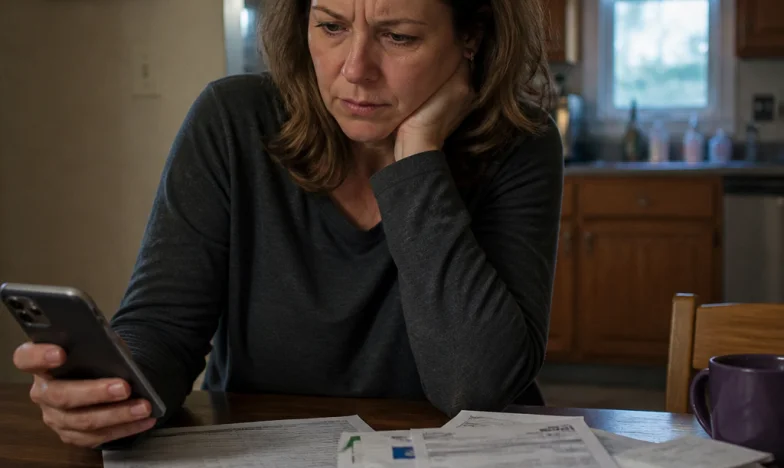
The phone rang while I was sitting at the kitchen table with a stack of bills, and I knew before I even looked that it was the orthodontist’s office calling about the payment plan for Megan’s braces. I let it go to voicemail. I couldn’t have that conversation again, not when I’d just been staring at the mortgage statement and doing the math in my head for the tenth time that week.
Five years. That’s how long it had been since Tom wrote his parents a check for twenty-two thousand dollars. I remember the day because it was the same week we found out the transmission in my car was shot, and I’d told him we needed to be careful with money. He’d nodded, said he understood, and then two days later he came home and told me his parents were about to lose their house. They’d gotten behind on property taxes and some medical bills after his dad’s knee surgery. The bank was threatening foreclosure. What was he supposed to do, let his own parents end up on the street?
I understood. I really did. They’re his parents. They raised him. They helped us out when we were first married and couldn’t afford a washer and dryer. But the agreement was a loan. His mother even said it at the time, sitting right there on our couch, dabbing her eyes with a tissue. “We’ll pay you back, honey. Every penny. As soon as your father gets back on his feet.”
His father got back on his feet about three years ago. He went back to work part-time at the hardware store, and they took a cruise to Alaska last summer. I saw the pictures on Facebook. They looked happy. They looked like people who weren’t thinking about the twenty-two thousand dollars they owed their son and his wife.
Meanwhile, I was sitting at the kitchen table trying to figure out if we could afford for both kids to play travel soccer in the spring, and whether we should refinance the house, and how we were going to pay for Megan’s braces if the orthodontist wouldn’t extend the payment plan. Tom kept saying we’d figure it out, but every time I brought up the loan, he’d get quiet and change the subject.
“Let it go, Karen,” he’d say. “They’re my parents. I’m not going to hound them.”
“I’m not asking you to hound them. I’m asking you to have a conversation.”
“We’ve had conversations.”
“No, you’ve had conversations where you ask how they’re doing and they tell you about their cruise and then you hang up and tell me they didn’t mention the money.”
He’d sigh and rub the back of his neck and say something about how it was complicated, how his dad had pride, how his mom got defensive. And then he’d go out to the garage to work on some project and I’d be left at the table with the bills.
The thing is, Tom’s a good man. He works hard. He’s a project manager at a construction company, and he’s been there for fifteen years. He coaches our son’s basketball team. He never complains about my mother staying with us for three weeks every Christmas. But when it comes to his parents, he just shuts down. He can’t say no to them, and he can’t ask them for anything, and I was starting to feel like I was the only one who cared whether we could pay our own bills.
Last month, I finally hit my limit. I was at the grocery store, and I put back a bag of apples because they were six dollars, and I stood there in the produce section thinking about how my in-laws were probably eating dinner at a restaurant that night, and I started crying right next to the bagged lettuce. A stock boy asked if I was okay. I told him I had allergies.
That night, I told Tom we needed to talk. Not in passing, not while he was watching the game, but a real conversation. He looked at me like I’d asked him to donate a kidney, but he sat down at the table.
“I can’t keep doing this,” I said. “We’re falling behind. Not because we’re irresponsible, but because we’re carrying a debt that isn’t ours.”
“It’s not a debt,” he said. “It’s family.”
“It’s both. And it’s been five years. They haven’t paid a single dollar. Not one. They haven’t even offered.”
He didn’t say anything for a long time. Then he said, “What do you want me to do, Karen? Take them to court? Ruin Christmas?”
“I want you to talk to them. With me there. And I want us to agree on a plan. Even if it’s fifty dollars a month. Something.”
He agreed, but I could tell he hated it. He called his parents the next day and asked if we could come over that weekend. His mom said sure, she’d make a pot roast. I told Tom not to let her make a pot roast. He didn’t understand why.
We drove over on Saturday afternoon. The kids stayed with my sister. I wore jeans and a sweater, nothing that made me look like I was there to start a fight. Tom was quiet in the car, and I could see his jaw tightening every time we got close to their street.
His parents live in a nice little ranch house in a suburb about forty minutes from us. The lawn is always mowed. There’s a bird feeder in the front yard and a flag on the porch. It’s the kind of house that looks like everything is fine.
His mom answered the door with a big smile and hugged us both. His dad was in the living room watching a golf tournament. The pot roast was already in the oven, and the whole house smelled like onions and gravy. I felt sick.
We made small talk for about twenty minutes. His mom told us about their cruise, about the glaciers and the buffet and how his dad had won three hundred dollars in the ship’s casino. His dad laughed and said it was the only gambling he’d ever done in his life. Tom laughed too. I sat there with my hands folded in my lap, waiting.
Finally, Tom cleared his throat. “Mom, Dad, we need to talk about the money.”
His mom’s smile faded just a little. “What money, honey?”
“The twenty-two thousand. From five years ago.”
The room went quiet. His dad muted the TV. His mom looked at her hands.
“We haven’t forgotten,” she said. “We think about it all the time.”
“Okay,” Tom said. “But we need to figure out a way to start paying it back. Even a little at a time.”
His dad shifted in his recliner. “Things have been tight, son. You know how it is. The cruise was a gift from your aunt, and the house needed a new water heater, and—”
“I’m not asking for all of it at once,” Tom said. “But it’s been five years. Karen and I are struggling. We’ve got the kids, the mortgage, braces, soccer. We need to start seeing some effort.”
His mom’s eyes filled with tears. “We never meant to put you in this position. We were going to pay you back, but then your father’s hours got cut, and then the car needed repairs, and it just kept piling up.”
I wanted to say something. I wanted to point out that they’d managed to find money for a cruise and a new water heater and dinners out, but I bit my tongue. This was Tom’s conversation. He needed to lead it.
“I understand things come up,” Tom said. “But we need a plan. Even if it’s a hundred dollars a month. Something we can count on.”
His dad looked at his mom, then back at Tom. “We can do a hundred a month. Starting next month.”
I felt a tiny flicker of relief. It wasn’t much. At that rate, it would take over eighteen years to pay back the full amount, and that didn’t include interest. But it was something. It was an acknowledgment.
Tom nodded. “Okay. We’ll write it down. Just so we’re all clear.”
His mom went to the kitchen and came back with a notepad and a pen. She wrote out the terms in her neat, careful handwriting: one hundred dollars per month, starting the first of next month, until the full amount is repaid. She signed it. His dad signed it. Tom signed it. Then she handed the pen to me.
I hesitated. It felt strange, signing a piece of paper like we were in a business meeting instead of a family living room. But I signed it.
We stayed for dinner. The pot roast was good. We talked about the kids and the weather and Tom’s job. Nobody mentioned the money again. When we left, his mom hugged me a little longer than usual, and I could feel her trembling.
In the car, Tom reached over and squeezed my hand. “I’m sorry it took so long,” he said.
I didn’t say anything. I just looked out the window at the dark streets and thought about the stack of bills on the kitchen table, and the orthodontist’s voicemail I still hadn’t listened to, and the fact that one hundred dollars a month wasn’t going to fix any of it. But it was a start. And after five years of silence, a start felt like something.
The first payment came on the first of the month, just like she promised. It was a check for one hundred dollars, with a little note in the memo line that said “with love.” I deposited it and put the receipt in a folder with the signed agreement. I didn’t feel triumphant. I just felt tired. But I also felt like maybe, finally, we could stop pretending everything was fine and start dealing with what was actually true.