My sister thinks calling every Sunday is the same as showing up

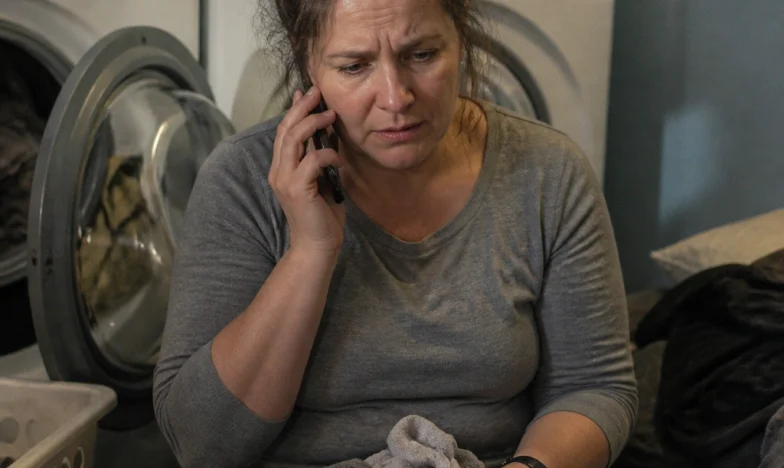
The phone rang while I was in the middle of separating laundry. My sister Karen’s name lit up the screen. I almost let it go to voicemail because I already knew what it was about. She’d been calling every few days, always with some new crisis about our mother’s care, and I was tired. But I answered, because that’s what I always did.
“She fell again,” Karen said. No hello. “The aide found her on the bathroom floor.”
I sat down on the edge of the bed, a pile of my husband’s socks in my lap. “Is she hurt?”
“Bruised. Scared. The usual.” Karen’s voice had that tight, put-upon quality I’d come to recognize. “I can’t keep doing this from two states away, Deb. I have a job. I have the kids.”
I wanted to say, I have a job too. I have kids too. But I didn’t. I just asked what the doctor said.
That was the beginning of the year everything shifted. Our mother, widowed for six years, had been declining slowly. Nothing dramatic at first. Forgetting words. Missing a bill. Then the falls started. Karen and I had always split things fairly evenly, at least in my memory. She handled the finances, I handled the local stuff because I lived forty minutes from Mom’s house in Ohio. But somewhere along the way, the local stuff became everything. The doctor’s appointments. The grocery runs. The calls from neighbors. The middle-of-the-night drives when Mom got confused and called me crying.
Karen would call and say things like, “You’re so strong, Deb. I don’t know how you do it.” And for a long time, that felt like enough. Like being seen. But after a while, it started to feel like a pat on the head before she hung up and went back to her life.
The resentment didn’t come all at once. It built in small moments. The time I asked Karen to come for a long weekend so I could take my daughter to a volleyball tournament, and she said she couldn’t get away. The time I asked her to call the insurance company about a denied claim, and she said she’d try, but then never did. The time she sent me a text that said, “You’re better at that stuff than I am,” and I realized she’d been saying some version of that for years.
I started keeping a mental list. Not on purpose, exactly. But every time I drove to Mom’s house to fix the thermostat or sit through another physical therapy appointment, I’d think, Karen doesn’t know how much this costs me. Not money. Energy. Time. The slow erosion of my own life.
One night in March, I called her after a particularly bad day. Mom had accused me of stealing her checkbook, then cried and apologized, then accused me again. I was sitting in my car in Mom’s driveway, too tired to drive home.
“I need you to come,” I said. “I need a break.”
Karen sighed. “I know. I really do. But it’s just not a good time. Marcus has his state testing, and Lily has that recital.”
“There’s never a good time,” I said.
“That’s not fair.”
“No,” I said. “It’s not.”
She was quiet for a second. Then she said, “Maybe we should look into assisted living.”
I laughed, but it wasn’t funny. “You’ve been saying that for a year. Have you looked into anything?”
“I thought you were handling that.”
“I’m handling everything,” I said. “That’s the problem.”
She got defensive. She said she contributed in other ways. She paid for the grocery delivery service. She called Mom every Sunday. She sent flowers on her birthday. As if those things balanced out the daily grind of keeping another human being alive.
I hung up feeling worse than before. Not because I’d been cruel, but because I’d finally said the quiet part out loud, and she still didn’t hear it.
A few weeks later, I stopped calling her for help. I just stopped. I hired a part-time aide out of my own savings. I arranged for a neighbor to check in on Tuesdays and Thursdays. I told myself I was doing it for Mom, but really I was doing it because I couldn’t stand the sound of Karen’s excuses anymore.
The strange thing was, Karen didn’t seem to notice. She’d call and ask how Mom was doing, and I’d say fine, and she’d say good, and then she’d talk about her book club or her new patio furniture. It was like we’d silently agreed to pretend the whole conversation in March had never happened.
Then, in June, Mom had a stroke. A small one, but it changed things. She needed more help than I could give, even with the aide. The doctor said she couldn’t live alone anymore. And suddenly, the decision Karen had been pushing off for a year was right in front of us.
Karen flew in for the first time in eight months. She looked tired, but put together. She hugged me in the hospital hallway and said, “We’ll figure this out together.”
I wanted to believe her. I really did. But all I could think was, Where have you been?
We found a place. A small assisted living facility about twenty minutes from my house. It was clean and warm, and the staff seemed kind. Mom cried when we told her, but she also seemed relieved. Like she’d been waiting for someone else to make the decision.
Karen stayed for four days. She helped pack some boxes and made a lot of phone calls. Then she flew home, and I was left to handle the rest. The paperwork. The move. The selling of the house. The sorting through forty years of accumulated life.
I called her one night in July, after spending six hours cleaning out Mom’s basement. My back ached. My hands were cracked from the dust. I was sitting on the floor of my own kitchen, eating cold pizza over the sink.
“I can’t do this alone,” I said.
“I know,” Karen said. “I’m sorry.”
“Sorry isn’t helping.”
She was quiet. Then she said, “I’ll come back next month. I’ll take a week off.”
I wanted to believe her. But I didn’t. And I was right. She came for three days, spent most of it visiting with old friends, and left early because her son had a baseball tournament.
I stopped expecting anything after that. Not because I forgave her, but because I was too tired to be angry. The anger had burned itself out, leaving something quieter and harder underneath.
Mom settled into the facility. She made a friend named Ruth. She complained about the food. She asked about her house sometimes, then forgot she’d asked. I visited three times a week, then twice, then once. The guilt never went away, but it got easier to carry.
Karen called every Sunday. She still does. She asks how Mom is, and I say fine. She asks how I am, and I say fine. We don’t talk about the year I spent drowning while she watched from a distance. We don’t talk about the fact that I stopped asking for help because asking hurt more than doing it alone.
Last month, I was sitting with Mom in the activity room. She was working on a puzzle, her hands slow but steady. She looked up at me and said, “You’re a good daughter, Deb. The best.”
I smiled. But what I thought was, I’m the only one who stayed.
I don’t know if that’s fair. Karen would say she stayed in her own way. And maybe she did. But there’s a difference between staying and showing up. I learned that difference in my bones this year.
I still love my sister. I don’t know if I like her anymore. And I don’t know if that will ever change.