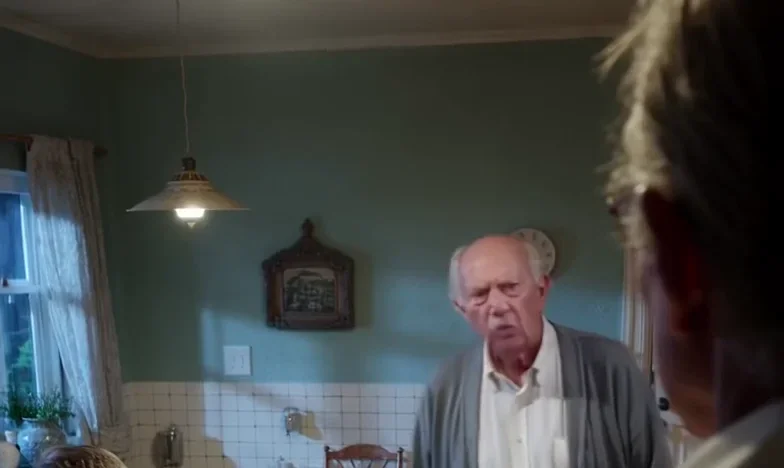
He Moved Back Home to Help His Dad—Then Realized Every Choice Was Being Made for Him

I knew something was off when I started sitting in my car for ten minutes after work, even on days I had nowhere else to go.
I’d park at my dad’s house, turn off the engine, and just sit there with my hands on the steering wheel. Sometimes I’d scroll through grocery store coupons or read work emails I’d already read. Anything to delay walking inside.
I’m 38. I work IT support for a regional hospital outside Columbus, Ohio. Nothing glamorous, but it pays decently, and until last year I had a small apartment, a decent routine, and a girlfriend named Marissa who was patient enough to put up with my habit of falling asleep during movies.
Then my dad had a bad fall in his garage.
He didn’t break a hip, thankfully, but he cracked a couple ribs and messed up his shoulder. He was 71 then, widowed for six years, stubborn as a fence post, and suddenly unable to drive for a while or lift much of anything.
I moved into his spare bedroom “for a few weeks.” That was what I told work, Marissa, and myself.
At first, it honestly felt good to be useful. I drove him to physical therapy. I picked up prescriptions. I learned that he liked his eggs nearly burned and that he’d apparently been living on frozen burritos, canned soup, and whatever neighbors dropped off since Mom died.
He’d thank me in this quiet way that made me feel about twelve years old again.
Then he got stronger.
But the questions didn’t stop.
Where are you going?
Who’s that on the phone?
Why are you spending money on takeout when there’s food here?
You going to be home for dinner?
At first I answered because it seemed harmless. We lived in the same house. He worried. That was normal.
Except it didn’t feel like worry after a while. It felt like I needed permission.
One Friday, Marissa invited me to her sister’s birthday dinner. I was already dressed when Dad came into the kitchen and saw me putting on my shoes.
“You’re leaving?” he asked.
“Yeah. I told you earlier this week. Marissa’s sister’s birthday thing.”
He looked at the microwave clock. “You’ll be gone all night?”
“It’s dinner, Dad.”
He didn’t say anything for a second. Then he opened the fridge, moved around a few containers, and said, “I guess I’ll figure something out.”
That was it. Not yelling. Not a big scene. Just that sentence.
I stood there with one shoe on and one shoe off, feeling like I was abandoning him in the wilderness instead of leaving a fully stocked house where he had a phone, a car again, and enough strength to mow half the yard if I didn’t stop him.
I still went, but I was distracted the whole night. Marissa noticed.
“You keep checking your phone,” she said.
“I’m just making sure he’s okay.”
“He’s okay, Daniel.”
I got defensive. I said she didn’t understand because her parents were healthy and still married and had friends and hobbies. It was a cheap thing to say, and I knew it as soon as it came out.
She went quiet. I went quiet. We drove home separately.
A month later, she ended things.
She didn’t blame my dad exactly. She said she felt like there was no room for a relationship where every decision had to pass through someone else first.
I told her that wasn’t fair.
Now I think part of me said it because I needed it not to be fair. If she was right, then I had helped create the situation I was blaming on Dad.
The worst fight happened over a job interview.
A former coworker had recommended me for a systems administrator job in Cincinnati. It would have been more money and a better title. I wasn’t even sure I wanted it, but I had an interview scheduled over Zoom on a Tuesday morning.
Dad overheard me mention it on the phone.
That night, while I was loading the dishwasher, he said, “So you’re planning on moving away now?”
“I’m interviewing. That’s all.”
“You moved in here because I needed help.”
“I know.”
“And now that things are getting settled, you’re looking for a way out.”
I remember keeping my back to him because I was afraid if I turned around, I’d either yell or cry. Probably both.
“Things have been settled for a while,” I said.
He made that little scoffing sound he makes when he thinks someone is being ridiculous. “You don’t know what it’s like being alone.”
That landed because he was right. I didn’t know exactly what it was like to lose a spouse after forty years. I didn’t know what it was like to wake up in the same house and hear nothing but the refrigerator running.
But I also knew that I had started lying about working late just so I could get a burger by myself and not explain why I wanted an hour outside the house.
I knew I’d stopped making plans on weekends because he’d get distant if I did. I knew I felt a knot in my stomach every time my phone buzzed while I was out.
So I turned around and said, “I can love you and still not live my whole life around whether you’re having a bad day.”
His face changed. Not angry, exactly. More like I had slapped him.
He said, “That’s a hell of a thing to say to your father.”
And I immediately hated myself for saying it that way.
The interview went badly, mostly because I barely slept the night before. I kept thinking about Dad in the next room, probably awake too. I withdrew from the process the next day. I told myself Cincinnati was too far and the timing was wrong.
Maybe both were true. I honestly don’t know.
A few weeks after that, my younger sister came over from Indianapolis. She and Dad have a different relationship. She visits every couple months, brings fancy coffee, stays two hours, then gets back on the highway before traffic builds up.
I finally told her I was thinking of moving out.
She looked relieved for half a second, which annoyed me more than it should have.
Then she said, “Dan, you can’t be the only thing keeping him from feeling lonely.”
I snapped at her that it was easy to say from three hours away. She nodded and said, “You’re right.” No argument. That somehow made me feel worse.
I found a studio apartment about fifteen minutes from Dad’s place. It isn’t fancy. The kitchen is tiny, and the laundry room smells like somebody’s wet dog. I signed a six-month lease anyway.
When I told Dad, he barely spoke to me for two days.
On the third day, he asked, “So when am I supposed to see you?”
I said, “We can have dinner once a week. I can still take you to appointments if you need me to. But I’m not disappearing. I just can’t keep living like I’m on call every minute.”
He stared down at his coffee. “I didn’t ask you to do all that.”
That was the part that made me angry again, because technically he was right. He hadn’t always asked. I had offered, assumed, stepped in, and then resented him for accepting it.
But he also knew how to make leaving feel like betrayal.
I moved last Saturday. Dad helped carry one box before his shoulder started bothering him, and I told him to stop. We stood in the parking lot next to my truck, both pretending the box was the important thing.
He asked if I had enough towels.
I said yes.
He said he had extra if I needed them.
I told him I’d call on Sunday.
It’s Wednesday now. We’ve talked twice. Both calls were awkward, but shorter than usual. Tonight I’m supposed to go over there for dinner. He said he’s making pork chops, which probably means he’ll overcook them.
I’m still going.
I just don’t know yet whether he can know me as his son without needing me to be his whole safety net.