When Inheritance Became a Curse: The House That Was Never Truly Mine

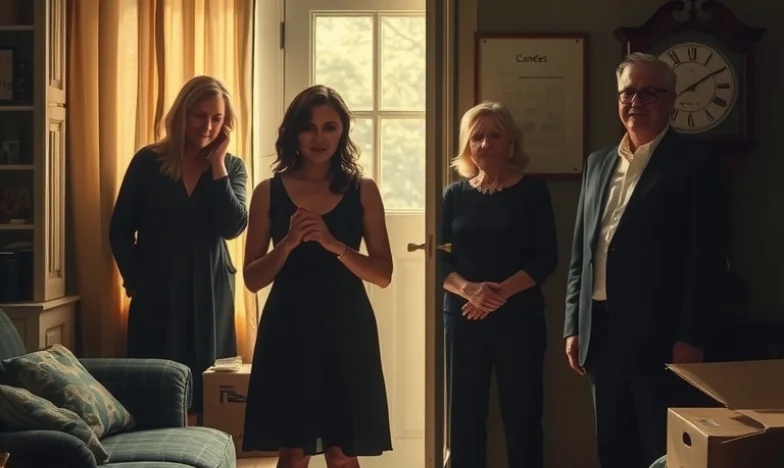
The first thing I remember after the funeral is the sound of my Aunt Linda’s voice slicing through the quiet like a knife. “So, Emily, what are you planning to do with the house?” she asked, her tone too casual, her eyes darting around the living room as if she was already measuring for new curtains. I was still in my black dress, my hands shaking from holding back tears, and all I could think was: Mom’s not even cold in the ground, and already they’re circling.
I grew up in this house in Cedar Rapids, Iowa. Every Thanksgiving, the kitchen would fill with the smell of pumpkin pie and roasted turkey, and my mom would hum along to Patsy Cline while she basted the bird. Dad died when I was twelve, and Mom did her best to keep the house warm, to keep the world from feeling so empty. But now she was gone, and the house felt like a mausoleum, every corner haunted by memories I wasn’t ready to face.
The day after the funeral, my cousin Jake showed up with a six-pack and a forced smile. “Hey, Em, you know, if you ever wanna sell, I got a buddy who flips houses. Could get you a good deal.” I stared at him, wondering if he even remembered the time we built a fort in the backyard and swore we’d never let anything tear us apart. Now he was just another vulture, picking at the bones of my grief.
It wasn’t just Jake and Aunt Linda. My brother, Mark, who hadn’t set foot in Iowa in five years, suddenly started calling every day. “You can’t handle all that space on your own,” he said. “You should sell. Split the money. It’s only fair.” Fair. As if fairness had anything to do with it. Mark left after high school, chasing a job in Seattle and never looking back. I was the one who stayed, who took care of Mom when the cancer got bad, who held her hand through the worst nights. But now, to everyone else, the house was just a prize to be divided.
Christmas came, and I tried to keep up the traditions. I hung Mom’s old ornaments on the tree, baked her sugar cookies, even played her favorite carols. But the house was too quiet, the laughter gone. I sat alone on Christmas Eve, staring at the empty chair by the fireplace, and wondered if I was holding onto a ghost.
The calls and visits didn’t stop. Aunt Linda started dropping by unannounced, bringing casseroles and not-so-subtle hints. “You know, Emily, a house this size is a lot for a single woman. Maybe you should think about moving somewhere smaller. Safer.” Her eyes lingered on the antique clock in the hallway, the one Mom inherited from her own mother. I could see her mentally cataloging everything she wanted.
One night, after another argument with Mark over the phone, I broke down. “Why does everyone care more about the house than about Mom?” I sobbed. “Why can’t they just let me grieve?”
I started having nightmares—Mom calling out for me, the house crumbling around us, my family’s voices echoing through the empty rooms. I’d wake up drenched in sweat, heart pounding, feeling more alone than ever.
Spring came, and with it, the annual neighborhood block party. I forced myself to go, hoping for some sense of normalcy. Mrs. Patterson from next door hugged me tight. “Your mom was the heart of this street, honey. Don’t let anyone push you out.” Her words made me cry, but they also gave me strength.
But the pressure kept building. Mark threatened to get lawyers involved. “It’s not just your house, Em. I have rights, too.” The words stung, but I knew he was right. Legally, the house was split between us. But morally? I was the one who stayed, who sacrificed, who watched our mother fade away.
I started to resent the house. Every creak of the floorboards, every faded photograph on the wall, felt like a weight pressing down on me. Was I honoring Mom by staying, or was I just torturing myself? Was this house even mine, or just a battleground for everyone else’s greed?
One night, after a particularly nasty fight with Mark over Zoom, I packed a bag and drove out to the lake where Mom used to take me fishing. I sat on the dock, watching the sunrise, and tried to remember what it felt like to be happy here. I realized I’d been holding onto the house because I was afraid to let go of her. But the house wasn’t her. It was just wood and plaster and memories—some good, some unbearable.
When I got back, I found Aunt Linda in the living room, showing the house to a realtor. “What the hell are you doing?” I shouted, my voice shaking with rage. She had the nerve to look offended. “Emily, you need to move on. This house is too much for you.”
I kicked them both out, slamming the door so hard the windows rattled. I called Mark and told him if he wanted his half, he could have it. “I’m done fighting. You want the house? Take it. But you’ll have to come back and deal with everything yourself.”
He hesitated. “I… I can’t. My job, the kids—”
“Exactly,” I said. “You don’t want the house. You just want the money. Well, I’m done letting this place tear us apart.”
In the end, we agreed to sell. It hurt, but it was a relief, too. I packed up Mom’s things, kept the photos and the clock, and let the rest go. On the last night, I walked through every room, saying goodbye to the life I’d known. I stood in the kitchen, remembering Mom’s laughter, and whispered, “I love you. But I have to let you go.”
I moved to a small apartment downtown, started volunteering at the local animal shelter, and slowly built a new life. The pain didn’t disappear, but it got easier to carry. Sometimes I drive past the old house and wonder if the new owners feel the warmth I once did, or if they sense the ghosts I left behind.
Now, when people ask if I regret selling, I tell them the truth: I miss my mom, not the house. Family should be about love, not property. But sometimes, letting go is the only way to heal.
Do we ever really own the places we call home, or do they end up owning us? What would you have done in my place?