Fired for Kindness: The Day I Lost My Job but Found My Voice

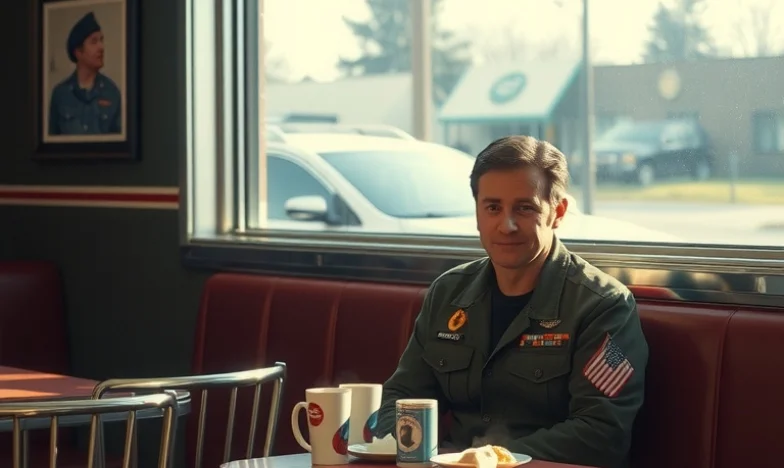
The bell above the café door jingled as I poured another cup of coffee, my hands trembling just enough to spill a few drops onto the saucer. It was 8:15 a.m., and the breakfast rush at Mel’s Diner was in full swing. Plates clattered, silverware chimed, and the scent of bacon hung thick in the air. I wiped my hands on my apron and glanced up to see a man in a faded Army jacket step inside, his eyes scanning the room with a mixture of hope and exhaustion.
“Morning, sir,” I greeted him, forcing a smile. He nodded, his gaze dropping to the floor. I could see the lines on his face, the way his hands shook as he clutched his backpack. He slid into a booth by the window, away from the chatter and laughter.
I grabbed a menu and walked over. “Coffee?” I asked.
He hesitated. “Just water, please. I… I’m not sure I can afford more.”
My heart squeezed. I’d seen men like him before—veterans who’d given everything, now invisible to most. I glanced at my boss, Mr. Carter, who was busy counting receipts behind the counter. I knew the rules: no freebies, no exceptions. But something in the veteran’s eyes made me pause.
I leaned in, lowering my voice. “Don’t worry about it. Breakfast is on me today.”
He looked up, startled. “You sure?”
I nodded. “Absolutely.”
I brought him eggs, toast, and coffee. He ate slowly, savoring every bite. As I refilled his cup, he whispered, “Thank you. You have no idea what this means.”
But kindness, I learned, sometimes comes at a price.
—
The café was still buzzing when Mr. Carter called me over. His face was red, jaw clenched. “Rosa, can I see you in the back?”
I followed him, heart pounding. The kitchen was hot and cramped, the hum of the fridge the only sound.
He didn’t waste time. “Did you just give away a meal?”
I swallowed. “He’s a veteran, sir. He was hungry. I—”
He cut me off. “We have rules for a reason. You can’t just hand out food. That comes out of our bottom line. I’m sorry, Rosa, but I have to let you go.”
My world tilted. “Please, Mr. Carter. I need this job. My kids—”
He shook his head. “I’m sorry. It’s not personal.”
But it felt personal. I grabbed my purse, blinking back tears as I walked through the dining room. The veteran watched me go, confusion and guilt etched on his face.
Outside, the morning sun was blinding. I sat on the curb, head in my hands, wondering how I’d tell my daughters that I’d lost my job. Rent was due in a week. My ex-husband, Dave, would use this as another reason why the girls should live with him. I felt like I’d failed everyone.
My phone buzzed. It was my sister, Linda.
“Hey, Rosie. How’s work?”
I tried to keep my voice steady. “I got fired.”
“What? Why?”
I told her everything. She sighed. “You did the right thing. Don’t let anyone tell you otherwise.”
But right didn’t pay the bills.
—
An hour later, I heard the bell above the café door ring again. I was still sitting outside, staring at the sidewalk, when a black SUV pulled up. Four men in crisp Marine uniforms stepped out, their medals gleaming in the sunlight. They walked into the café, heads held high.
Curiosity got the better of me. I stood and peeked through the window.
Inside, the Marines approached Mr. Carter. One of them, a tall man with a scar above his eyebrow, spoke loud enough for everyone to hear.
“We heard what happened here this morning. We’d like to speak to the waitress who helped our brother.”
Mr. Carter stammered, glancing around. “She’s… she’s not here anymore.”
The Marine’s voice was calm but firm. “That’s a shame. Because we were planning to bring our entire unit here for breakfast every Sunday. But if kindness isn’t welcome, we’ll take our business elsewhere.”
The café fell silent. Customers stared. Mr. Carter’s face turned pale.
I felt a strange mix of vindication and sadness. I wanted to run inside, to stand tall and say, “I did what was right.” But fear held me back.
—
That night, I sat at the kitchen table with my daughters, Emily and Grace. Emily, twelve, was old enough to sense something was wrong.
“Mom, are you okay?” she asked, her voice small.
I forced a smile. “I’m fine, honey. Just a tough day at work.”
Grace, only eight, hugged me. “We love you, Mommy.”
I hugged them back, tears slipping down my cheeks. “I love you too. More than anything.”
After they went to bed, I called Dave. He didn’t waste time.
“So you lost your job. Again.”
“It wasn’t my fault, Dave. I was helping someone.”
He sighed. “You always put others first, Rosa. But you have to think about the girls. Maybe they’d be better off with me for a while.”
His words cut deep. I hung up, feeling more alone than ever.
—
The next morning, my phone rang. It was Linda again.
“Rosie, check Facebook. You’re all over the news!”
I opened my laptop. There it was—a video of the Marines confronting Mr. Carter, posted by a customer. The comments were pouring in:
“She did the right thing!”
“Support our veterans!”
“Shame on that café!”
My inbox was flooded with messages—job offers, words of encouragement, even donations from strangers who wanted to help. A local news station wanted to interview me.
I sat back, stunned. For the first time in days, hope flickered in my chest.
—
A week later, I started a new job at a different café—one that prided itself on serving everyone, no questions asked. The owner, Mrs. Jenkins, hugged me on my first day.
“We need more people like you, Rosa,” she said.
I smiled, feeling lighter than I had in months.
Emily and Grace were proud. “You’re famous, Mom!” Emily grinned.
I laughed. “I’m just me.”
But I’d learned something important: sometimes, doing the right thing means losing everything. But it also means finding your voice—and sometimes, the world listens.
—
Now, every Sunday, a group of veterans comes in for breakfast. I greet them with a smile, remembering that morning when kindness cost me my job—but gave me so much more.
Would I do it again? In a heartbeat.
Because sometimes, the smallest act of kindness can change everything.
Based on a true story.