The Letter That Changed Everything: When My Own Mother Asked Me for Support

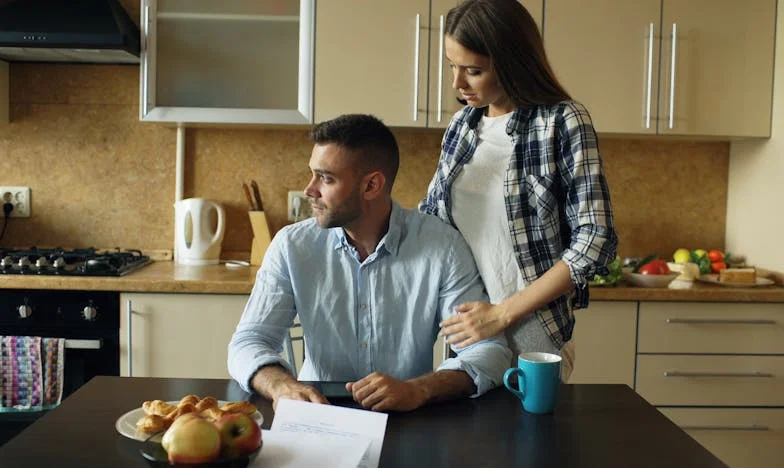
The rain was coming down in sheets, drumming against the kitchen window as I stood at the sink, hands submerged in soapy water. My husband, Peter, came in quietly, his shoes squeaking on the linoleum. He held a letter in his hand, the envelope already torn open. I could see the concern etched on his face, the way his brow furrowed as he handed it to me. “It’s from your mom,” he said softly, as if saying it any louder would break me.
I dried my hands on a dish towel, my heart thudding in my chest. My mother and I hadn’t spoken in months—not since our last argument, when I’d begged her to come to my daughter’s birthday party and she’d made some excuse about her back pain. I took the letter, feeling the weight of it, the familiar handwriting on the front. I hesitated before opening it, a thousand memories flashing through my mind: the Christmas mornings she spent in her room, the way she’d dismiss my tears as childish, the cold silences that stretched for days.
I unfolded the letter and began to read. Her words were formal, almost legalistic. She wrote that she was struggling, that her social security wasn’t enough, that she needed help. She asked me, her only child, to send her money every month. She even referenced the law, reminding me that in some states, adult children are required to support their parents. I felt my hands start to shake. Peter reached out, touching my arm. “Are you okay?”
I wanted to scream. How could she ask this of me? After everything? I remembered the nights I’d called her from college, desperate for advice, only to be told she was too busy. The time I lost my job and needed a place to stay, and she told me she didn’t have room. The way she’d always seemed to resent me, as if my very existence was a burden she never wanted to bear. And now, after years of silence, she wanted my help?
I sat down at the kitchen table, the letter trembling in my hands. Peter sat across from me, his eyes searching mine. “What are you going to do?” he asked.
“I don’t know,” I whispered. “I honestly don’t know.”
That night, I lay awake, staring at the ceiling. The rain had stopped, but the storm inside me raged on. I thought about my own daughter, Emily, asleep in the next room. I thought about what it meant to be a mother, to be a daughter. Was I obligated to help the woman who had never really been there for me? Was blood enough to erase years of neglect?
The next morning, I called my best friend, Lisa. She listened as I poured out the whole story, my voice cracking with anger and confusion. “You don’t owe her anything,” Lisa said firmly. “She made her choices. You have your own family now.”
But it wasn’t that simple. I kept thinking about the times I’d tried to reach out, the times I’d hoped for a different kind of mother. I remembered the way she’d brush my hair when I was little, the rare moments of tenderness that felt like sunlight breaking through clouds. Was it possible she’d loved me, in her own broken way?
I decided to call her. My hands shook as I dialed her number. She answered on the third ring, her voice wary. “Hello?”
“Hi, Mom. It’s me.”
There was a pause. “I didn’t think you’d call.”
“I got your letter.”
Another pause. “I wouldn’t have asked if I wasn’t desperate.”
I swallowed hard. “Why now? After all these years?”
She sighed, and for the first time, I heard something raw in her voice. “I know I wasn’t a good mother. I know I let you down. But I’m alone, and I don’t have anyone else.”
I felt tears prick my eyes. “You could have had me. You could have had a relationship with Emily. But you always pushed me away.”
“I know,” she whispered. “I was angry. At your father, at myself. I took it out on you. I’m sorry.”
The words hung in the air, fragile and uncertain. I wanted to believe her, but the hurt was too deep. “I need time to think,” I said finally.
After I hung up, I sat in silence, the phone still warm in my hand. Peter came in, his face full of questions. “How did it go?”
“She apologized,” I said, my voice hollow. “But I don’t know if it’s enough.”
The days passed, and the letter sat on the kitchen table, a constant reminder of everything unresolved between us. I watched Emily play in the backyard, her laughter ringing out, and I wondered what kind of mother I was becoming. Was I repeating my mother’s mistakes, or was I breaking the cycle?
One evening, as I tucked Emily into bed, she looked up at me with wide eyes. “Mommy, why are you sad?”
I brushed her hair back, my heart aching. “Sometimes grown-ups have problems with their parents, too.”
She nodded, as if she understood. “I love you, Mommy.”
Tears slipped down my cheeks as I kissed her goodnight. I realized then that I had a choice. I could let the past define me, or I could choose compassion. Maybe helping my mother wouldn’t heal old wounds, but maybe it would help me move forward.
The next day, I wrote my mother a letter. I told her I would help, but I also told her how much she’d hurt me. I asked for honesty, for effort, for some kind of relationship. I mailed the letter, my hands steady for the first time in days.
Weeks went by before she replied. Her letter was short, but it was honest. She thanked me, and she apologized again. She said she wanted to try, if I was willing.
It’s been months now. We talk on the phone every week. It’s awkward, sometimes painful, but it’s something. I send her a check every month, and she sends Emily little gifts—nothing big, but enough to show she’s trying.
I don’t know if we’ll ever be close. I don’t know if I’ll ever fully forgive her. But I do know this: family isn’t just about blood. It’s about choice, about effort, about trying even when it hurts.
Sometimes I wonder—can we ever really heal from the wounds our parents give us? Or do we just learn to live with the scars?