When the Rain Fell Hardest: How Losing My Farm Changed Everything

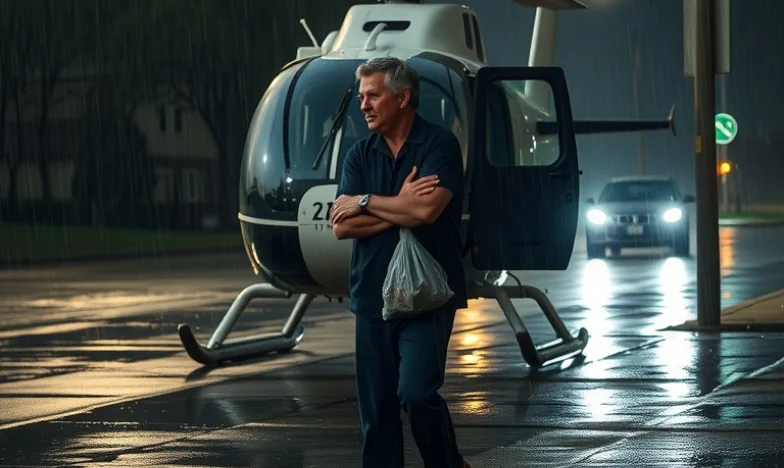
The rain was coming down in sheets, soaking through my jacket and chilling me to the bone. I stood at the edge of my daughter’s porch, clutching a plastic bag with the only things I’d managed to save from the fire. My hands shook—not just from the cold, but from the shock of losing my home, my animals, my life as I knew it.
I knocked, desperate. The porch light flickered on. My daughter, Emily, opened the door just enough to peer out. Her eyes widened when she saw me, her gaze dropping to my muddy shoes.
“Mom?” she whispered, her voice tight. “What happened?”
“My farm… it’s gone. Burned to the ground. I have nowhere else to go.”
She bit her lip, glancing over her shoulder. I could hear the TV in the background, her husband’s laughter, the clink of wine glasses. She stepped outside, pulling the door nearly closed behind her.
“Mom, I’m so sorry. We just… we don’t have space. And I just got that Persian rug. I can’t have mud tracked in. Maybe you could try Aunt Linda?”
Her words hit me harder than the rain. I stared at her, searching for the daughter I’d raised, the little girl who used to run barefoot through my fields. But she was gone, replaced by a woman I barely recognized.
I turned away, my heart pounding in my ears. I walked back into the storm, the bag growing heavier with every step.
I wandered for hours, the rain never letting up. I thought about sleeping in my truck, but the fire had taken that too. My mind raced through the names of friends and family, but everyone was too far, too busy, too estranged.
Then, through the haze of exhaustion, I remembered someone I hadn’t thought of in years: Michael. I’d babysat him when he was a boy, back when his mother was working double shifts at the diner. He’d always been a sweet kid, full of questions and wild dreams. I’d heard he’d made it big—something about tech, or finance, or both.
I found his number in my old address book, the ink smudged but legible. My hands trembled as I dialed.
“Hello?”
“Michael? It’s Valerie. I… I’m sorry to call so late. I’m in trouble.”
There was a pause, then a rush of concern. “Valerie? Are you okay? Where are you?”
I told him everything—the fire, Emily, the rain. He didn’t hesitate. “Stay where you are. I’ll come get you.”
I gave him the address, not expecting much. But twenty minutes later, the roar of helicopter blades shattered the night. I looked up, shielding my eyes from the wind and rain as the chopper landed in the empty lot across the street. Michael himself jumped out, running toward me with an umbrella.
“Valerie! Are you hurt?”
I shook my head, tears streaming down my face. He wrapped me in a hug, and for the first time that night, I felt safe.
He led me to the helicopter, helping me inside. The warmth, the soft leather seats, the gentle hum of the engine—it all felt surreal. Michael sat beside me, holding my hand as we lifted off, leaving the ruined past behind.
“Where are we going?” I asked, my voice barely above a whisper.
“Home,” he said simply. “My home is your home now.”
The next few days passed in a blur. Michael’s house was everything my old farmhouse wasn’t—modern, sleek, filled with light. He gave me a room with a view of the city, a closet full of new clothes, and a kitchen stocked with food. But more than that, he gave me kindness. He listened to my stories, laughed at my jokes, and never once made me feel like a burden.
Still, the pain lingered. I missed my farm, my animals, the life I’d built with my own hands. I missed Emily, too, even though her rejection still stung. I replayed that moment on her porch over and over, wondering what I could have done differently.
One afternoon, as I sat by the window watching the rain, Michael joined me.
“You know,” he said, “when I was a kid, you were the only one who believed in me. My mom was always working, and my dad… well, you know. But you always made me feel special. I never forgot that.”
I smiled, tears welling up again. “You were a good kid. I’m proud of the man you’ve become.”
He squeezed my hand. “You’re not alone, Valerie. Not ever.”
His words warmed me, but the ache in my chest remained. I wanted to forgive Emily, to understand her, but I couldn’t shake the image of her closing the door in my face.
A week later, my phone buzzed. It was Emily. I hesitated, then answered.
“Mom? Are you okay?”
“I’m safe,” I replied, my voice steady. “Michael took me in.”
There was a long pause. “I’m sorry, Mom. I panicked. I didn’t know what to do. I just… I was scared.”
I closed my eyes, letting her words sink in. “I understand, Emily. But it hurt.”
“I know. Can we talk? Maybe… maybe you could come over for dinner?”
I agreed, unsure of what to expect. When I arrived, Emily hugged me tightly, tears in her eyes. Her husband apologized, and we sat down to a simple meal—no Persian rug in sight. We talked for hours, about the fire, about the past, about forgiveness.
It wasn’t perfect. The wounds were still fresh. But it was a start.
Now, months later, I’m rebuilding. Michael helped me find a new place—a small house with a garden. Emily visits every week, bringing her kids and stories of her own struggles. We’re learning to be a family again, one day at a time.
Sometimes, when the rain falls, I remember that night—the cold, the fear, the feeling of being utterly lost. But I also remember the warmth of Michael’s embrace, the sound of his helicopter, the hope that bloomed in the darkest moment.
Life can change in an instant. Sometimes, the people you expect to catch you let you fall. But sometimes, help comes from the most unexpected places.
If you’re reading this, tell me where you’re from. I want to know how far my story has traveled, and maybe, just maybe, remind someone out there that hope is never truly lost.
Based on a true story.