Between Love and Loyalty: My Struggle as a Mother-in-Law in America

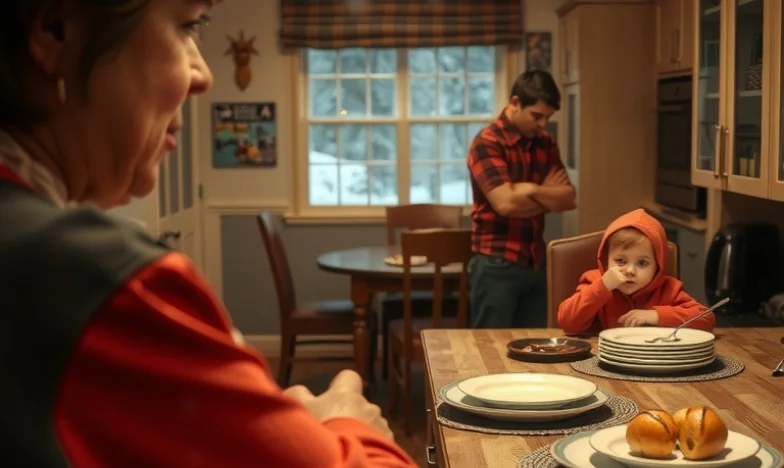
“You never listen, Mom! This isn’t about you!” Mark’s voice echoed through our kitchen, sharp and trembling. The smell of burnt turkey lingered in the air, a cruel reminder of the Thanksgiving dinner that had gone off the rails. My hands shook as I clutched the edge of the counter, trying to steady myself. I could see Sarah—my daughter-in-law—standing in the hallway, her arms crossed, eyes red from crying. My heart ached for both of them, but mostly for Mark, my only son.
It hadn’t always been like this. When Mark brought Sarah home for the first time, I tried so hard to welcome her. I baked her favorite cookies, asked about her job at the hospital, even let her win at Scrabble. But as the months went by, I started to notice things. The way she dismissed his jokes, the way she rolled her eyes when he talked about his dreams of opening his own auto shop. I worried she didn’t appreciate him, didn’t see how special he was. I told myself I was just being protective, but deep down, I knew I was interfering.
The real trouble started last Christmas. Mark and Sarah had been married for two years, and they’d just bought a little house in the suburbs of Cleveland. I was so proud of them, but I couldn’t help noticing the tension between them. At Christmas dinner, Sarah barely spoke. Mark looked tired, worn down. After dessert, I pulled him aside. “Is everything okay, honey?” I asked, keeping my voice low. He shrugged, avoiding my eyes. “We’re just stressed, Mom. It’s nothing.”
But I couldn’t let it go. I started calling Mark more often, inviting him over for dinner, offering to help with their mortgage. I thought I was helping, but Sarah saw it differently. One night, she called me. Her voice was cold. “Elsie, I appreciate your concern, but Mark and I need space. Please stop interfering.”
I was stunned. I hung up the phone and cried for hours. Was I really making things worse? I tried to back off, but every time I saw Mark, I saw the sadness in his eyes. I couldn’t help myself. I started giving him advice—unsolicited, of course. “Maybe you should talk to Sarah about counseling,” I suggested one afternoon. Mark snapped. “Mom, please. Just let us figure this out.”
The breaking point came on Thanksgiving. I’d spent days preparing, hoping to bring everyone together. But as soon as they walked in, I could feel the tension. Sarah barely looked at me. Mark was quiet. Halfway through dinner, Sarah put down her fork. “I can’t do this anymore,” she said, her voice shaking. “I feel like I’m competing with your mother for your attention.”
Mark stood up, his chair scraping loudly. “That’s not fair, Sarah. She’s just trying to help.”
Sarah’s eyes filled with tears. “I need you to stand up for us, Mark. For our marriage.”
That’s when Mark turned to me, his face flushed with anger and pain. “You never listen, Mom! This isn’t about you!”
The room went silent. My husband, Tom, stared at his plate. My daughter, Emily, looked away. I felt like I’d been punched in the gut. I wanted to scream, to defend myself, to say I was only trying to help. But I couldn’t find the words.
After they left, the house felt emptier than ever. Tom tried to comfort me, but I pushed him away. I replayed the evening over and over in my mind, wondering where I’d gone wrong. Was it wrong to love my son so much? Was it wrong to want to protect him?
The days that followed were a blur. Mark didn’t call. Sarah blocked my number. Emily tried to mediate, but nothing worked. I sank into a depression, barely leaving the house. I stopped baking, stopped gardening, stopped caring.
One afternoon, Emily came over. She found me sitting in the dark, staring at old family photos. “Mom, you need to talk to them,” she said gently. “You need to apologize.”
I bristled. “I was just trying to help. Why can’t they see that?”
Emily sighed. “Sometimes love means letting go, Mom. You have to trust Mark to live his own life.”
Her words stung, but they were true. That night, I wrote a letter to Mark and Sarah. I poured my heart out, admitting my mistakes, my fears, my love. I told them I was sorry for interfering, that I wanted nothing more than their happiness. I left the letter on their porch, not expecting a response.
Weeks passed. Christmas came and went. The house was quiet, the tree bare. I tried to keep busy, volunteering at the local food bank, knitting scarves for the homeless. But my heart ached for my family.
Then, one snowy afternoon in January, there was a knock at the door. I opened it to find Mark standing on the porch, his face pale and drawn. He didn’t say anything at first—just pulled me into a hug. I sobbed into his shoulder, relief and regret washing over me.
“I’m sorry, Mom,” he whispered. “I know you meant well. But Sarah and I need to figure things out on our own.”
I nodded, tears streaming down my face. “I know, honey. I just love you so much.”
He smiled sadly. “We love you too. But you have to let us grow up.”
It wasn’t a perfect ending. Things with Sarah were still tense, and I knew it would take time to rebuild trust. But for the first time, I understood that loving someone sometimes means stepping back, even when it hurts.
Now, as I sit by the window watching the snow fall, I think about all the ways I tried to protect Mark—and all the ways I failed. I wonder if I’ll ever truly forgive myself for the pain I caused. But I also know that families are messy, complicated, and full of second chances.
Maybe that’s what being a mother is all about: learning to let go, even when your heart wants to hold on. I ask myself, “Can love ever be too much? Or is it just a matter of learning when to step back?”
What do you think? Have you ever struggled to let go of someone you love?