A Child Alone on the Freeway: The Night That Changed My Life Forever

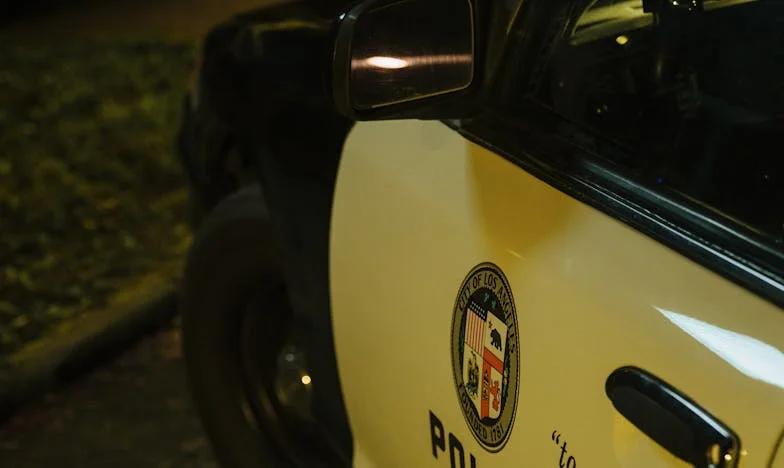
The red and blue lights flickered across the empty lanes of the 405, painting the night in frantic color. My hands gripped the steering wheel, knuckles white, as the radio crackled with static. “Unit 17, routine patrol. All clear.” I should have been bored, but something in the air felt off—like the city was holding its breath.
Then I saw him. A tiny figure, barely visible in the glare of my headlights, walking right down the center lane. My heart slammed against my ribs. I slammed the brakes, tires screeching, and jumped out, shouting, “Hey! Kid! What are you doing?!”
He didn’t flinch. He just kept walking, head down, arms wrapped around himself. The wind whipped his hair across his face. I jogged toward him, adrenaline surging. “Buddy, you can’t be out here! It’s not safe!”
He finally stopped, turning to look at me with wide, hollow eyes. He couldn’t have been more than six. His clothes were dirty, his sneakers untied. He didn’t say a word. I knelt down, trying to meet his gaze. “Are you hurt? Where’s your mom or dad?”
He just shook his head, lips pressed tight. I glanced around—no cars, no adults, just the endless stretch of freeway and the distant hum of the city. My mind raced. Was he lost? Abandoned? Running from something?
I radioed in. “Dispatch, I’ve got a child, male, about six, walking alone on the 405 near Mulholland. Requesting backup and EMT.”
The dispatcher’s voice was tense. “Copy that, Unit 17. Stay with the child.”
I took off my jacket and draped it over his shoulders. “What’s your name, buddy?”
He hesitated, then whispered, “Eli.”
“Eli, I’m Officer Carter. You’re safe now, okay? Can you tell me what happened?”
He shook his head again, but this time, tears welled up in his eyes. He wiped them away with a dirty sleeve, trying to be brave. I recognized that look. I’d seen it in the mirror as a kid, after my dad left and my mom started drinking. The look of a child trying to hold the world together with nothing but hope.
The EMTs arrived, sirens wailing, and I helped Eli into the back of the ambulance. He clung to my hand, refusing to let go. “Don’t leave me,” he whispered.
“I’m not going anywhere,” I promised, even though I knew I’d have to eventually. But in that moment, I was all he had.
At the hospital, the doctors checked him over. No broken bones, just a few scrapes and bruises. The social worker, Ms. Ramirez, arrived, clipboard in hand. “Do we know where he came from?”
I shook my head. “He hasn’t said much. I think he’s scared.”
She nodded, her eyes softening. “Most kids in his situation are.”
I sat with Eli while they ran tests. He finally spoke, voice barely above a whisper. “I was trying to find my mom.”
“Where is she?”
He looked down. “She left. She said she’d be right back, but she never came.”
My chest tightened. I remembered nights waiting for my own mom to come home, the hours ticking by, the fear growing with every minute. “Do you know where you live?”
He nodded. “An apartment. With the blue door.”
Ms. Ramirez and I drove him back, following his directions. The building was run-down, graffiti scrawled across the walls. Eli led us to the third floor, to a door with peeling blue paint. He hesitated before knocking.
No answer. Ms. Ramirez tried the handle—it was unlocked. Inside, the apartment was a mess. Dirty dishes piled in the sink, clothes strewn everywhere. No sign of anyone else.
Eli wandered to a corner, picking up a battered stuffed bear. He hugged it tight. “She’s not here.”
Ms. Ramirez sighed. “We’ll have to take him to foster care for now.”
I felt a surge of anger—at his mother, at the world, at myself for not being able to do more. “Can I stay with him? Just until he falls asleep?”
She nodded. “Of course.”
I sat on the edge of the bed while Eli curled up, clutching his bear. “Will you come back?” he asked, eyes pleading.
I swallowed hard. “I’ll try, Eli. I promise.”
That night, I drove home in silence, the city lights blurring past. My wife, Sarah, was waiting up. “Rough shift?”
I nodded, sinking onto the couch. “Found a kid on the freeway. Alone. His mom just… left him.”
Sarah’s face softened. “That’s awful.”
I stared at the ceiling, memories flooding back. “I keep thinking about my own mom. How she’d disappear for days. How scared I was.”
Sarah took my hand. “You’re not your mother, Jake.”
“But what if I am?” I whispered. “What if I can’t save anyone?”
She squeezed my hand. “You saved that boy tonight. That matters.”
The next day, I visited Eli at the foster home. He ran to me, arms outstretched. “You came back!”
I hugged him, feeling the weight of his trust. “Of course I did.”
We played with Legos, built a spaceship. He smiled for the first time. But when I had to leave, he clung to me, tears streaming down his face. “Don’t go.”
My heart broke. “I’ll see you soon, Eli. I promise.”
Days turned into weeks. The police searched for his mother, but she was gone. No relatives came forward. The system moved slowly, grinding through paperwork and bureaucracy. I visited Eli as often as I could, bringing him books and toys. He started to open up, telling me about his favorite cartoons, his dreams of being an astronaut.
One night, Sarah and I sat at the kitchen table, the adoption papers spread out between us. “Are we really ready for this?” she asked, voice trembling.
I looked at her, at the woman who had stood by me through every storm. “I don’t know. But I can’t let him go back to the darkness.”
She nodded, tears in her eyes. “Then let’s bring him home.”
The day we brought Eli home was the happiest of my life. He ran through the house, laughing, his fear finally melting away. At bedtime, he hugged me tight. “You’re my dad now, right?”
I choked back tears. “Yeah, buddy. I’m your dad.”
But the scars didn’t fade overnight. Some nights, Eli woke up screaming, haunted by nightmares. I sat with him, holding him until he calmed down. “You’re safe,” I whispered. “I’m here.”
Sometimes, I wondered if I was doing enough. If I could ever heal the wounds left by his mother’s abandonment—or my own. But every time Eli smiled, every time he called me “Dad,” I felt hope flicker inside me.
Now, years later, I watch him play in the backyard, sunlight dancing in his hair. He’s happy. He’s safe. And I realize that maybe, just maybe, I’ve broken the cycle.
But I still wonder: How many other kids are out there, walking alone in the dark, waiting for someone to notice? And what would you do if you found one?