My Husband’s Wallet, My Prison Walls: My Fight for Freedom in a Frozen Marriage

“Emily, where’s my wallet?”
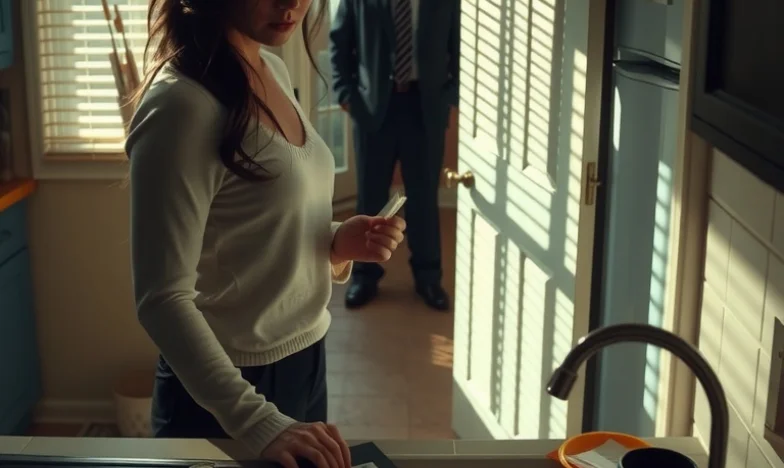
The words cut through the silence of our kitchen like a knife. I stood by the sink, hands trembling, the morning sun casting long shadows across the tile. My husband, Mark, stood in the doorway, his eyes cold and sharp, scanning the room as if I’d hidden his precious leather wallet on purpose.
I swallowed hard. “It’s on the counter, where you left it last night.”
He grunted, snatched it up, and left without another word. The door slammed behind him, rattling the glass in the cabinets. I exhaled, shoulders sagging. Another day, another storm survived.
—
Twelve years ago, I thought I was marrying my best friend. Mark was charming, ambitious, and made me laugh until my sides hurt. We met at a Fourth of July barbecue in Ohio, fireworks bursting overhead as we shared stories and dreams. I was twenty-four, full of hope, and he was the man I thought would build a life with me.
But somewhere along the way, the laughter faded. The warmth in his eyes cooled, replaced by a calculating distance. It started small—comments about my spending, questions about my friends. Then, slowly, the walls closed in.
I stopped working after our son, Tyler, was born. Mark said it was best for the family, that I should focus on being a mom. At first, I agreed. But as the years passed, I realized I had no money of my own. Every purchase, every grocery run, every coffee with a friend had to be justified. Mark’s wallet became the gatekeeper of my freedom.
—
“Why do you need twenty dollars?” he’d ask, voice flat, eyes never leaving the TV.
“For Tyler’s school trip,” I’d reply, holding out my hand.
He’d sigh, pull out a bill, and place it on the table. “Don’t waste it.”
I learned to make do with less. I clipped coupons, shopped at thrift stores, and stopped asking for things I wanted. My world shrank to the size of our house, my days measured in chores and errands. Friends drifted away, tired of my excuses. I watched life pass by through frosted glass, always on the outside looking in.
Mark worked long hours at the bank, coming home late and tired. He barely spoke to me, except to criticize or demand. Our conversations were transactional—what’s for dinner, did you pay the bills, where’s my shirt? The man I married was gone, replaced by a stranger who controlled every aspect of my life.
—
One night, after Tyler had gone to bed, I tried to talk to Mark.
“I feel so alone,” I whispered, voice shaking. “We never talk anymore. I miss us.”
He looked at me, eyes hard. “You have everything you need. Stop complaining.”
I bit my lip, tears burning behind my eyes. “I just want to feel like I matter.”
He scoffed. “You’re being dramatic. Go to bed.”
I lay awake for hours, staring at the ceiling, wondering when I had become invisible.
—
The days blurred together. I woke up, made breakfast, packed Tyler’s lunch, cleaned the house, and waited for Mark to come home. I watched other women at the park, laughing with friends, living lives that seemed so far out of reach. I envied their freedom, their confidence, their joy.
Sometimes, I’d catch a glimpse of myself in the mirror—a tired woman with hollow eyes and a forced smile. I barely recognized her.
—
The turning point came on a bitter January morning. Tyler was sick with the flu, burning with fever. I called Mark at work, desperate for help.
“I need to take him to the doctor, but I don’t have any cash,” I said, voice trembling.
He sighed. “Can’t you wait until I get home?”
“He’s really sick, Mark. Please.”
He relented, grudgingly. “Fine. There’s a twenty in my wallet. Don’t take more.”
I hung up, heart pounding. I took the money, bundled Tyler into the car, and drove through the snow to the clinic. The doctor said he’d be okay, but as I sat in the waiting room, watching other parents comfort their children, something inside me snapped.
I realized I was living in a cage, and Mark held the key.
—
That night, after Tyler was asleep, I stood in the kitchen, staring at Mark’s wallet on the counter. My hands shook as I opened it, counting the bills inside. I wasn’t stealing—I was surviving. I took another twenty, tucking it into my pocket for emergencies.
The guilt gnawed at me, but so did the hunger for freedom.
—
I started hiding small amounts of money—change from groceries, birthday cards from my mom, the occasional five-dollar bill I found in the laundry. I kept it in an old coffee tin in the back of the pantry, my secret lifeline.
I began to dream again. Maybe I could take a class, get a part-time job, reconnect with friends. Maybe I could find myself again.
But every step forward was met with resistance.
—
One evening, Mark found the coffee tin.
“What’s this?” he demanded, shaking it in my face.
I froze, heart pounding. “It’s just some spare change. For emergencies.”
He glared at me, voice rising. “Are you hiding money from me? After everything I do for you?”
I shrank back, tears spilling down my cheeks. “I just wanted to feel safe.”
He slammed the tin on the counter, coins scattering across the floor. “You don’t need your own money. You have me.”
I picked up the coins in silence, shame burning in my chest.
—
After that night, something changed. I stopped trying to please him. I stopped apologizing for wanting more. I started making plans.
I reached out to an old friend, Sarah, who worked at the library. She offered me a part-time job shelving books. It wasn’t much, but it was mine.
I told Mark I was volunteering. He barely listened, too busy with work to care.
With each paycheck, I felt a little stronger. I opened a secret bank account, saving every dollar I could. I started reading again, rediscovering the woman I used to be.
—
Tyler noticed the change. “You seem happier, Mom,” he said one afternoon, hugging me tight.
I smiled, tears in my eyes. “I’m trying, sweetheart. I’m really trying.”
—
The final straw came on a rainy April night. Mark came home drunk, angry about something at work. He yelled, slammed doors, and accused me of being ungrateful. Tyler hid in his room, crying.
I stood my ground for the first time.
“I won’t let you treat us like this anymore,” I said, voice steady. “We deserve better.”
He sneered. “You’re nothing without me.”
I looked him in the eye, feeling a surge of courage. “Maybe. But I’d rather be nothing than live like this.”
—
The next morning, I packed a bag for Tyler and me. I called Sarah, who offered us her spare room. I left a note for Mark, explaining that I needed space to breathe, to heal, to find myself again.
As I closed the door behind me, I felt the weight of the world lift from my shoulders. The air was cold, but for the first time in years, I could breathe.
—
It’s been six months since we left. Life isn’t easy—I work two jobs, juggle bills, and worry about the future. But I’m free. Tyler is thriving, and I’m slowly rebuilding my confidence.
Sometimes, I still hear Mark’s voice in my head, telling me I’m not enough. But I remind myself that I am strong, I am worthy, and I am not alone.
If you’re reading this and feel trapped in your own home, know that you deserve better. There is hope, even in the darkest moments.
My husband’s wallet was my prison wall, but I found a way out. You can, too.
Based on a true story.