When My Stepmom Saved Me From the Orphanage: A True American Story

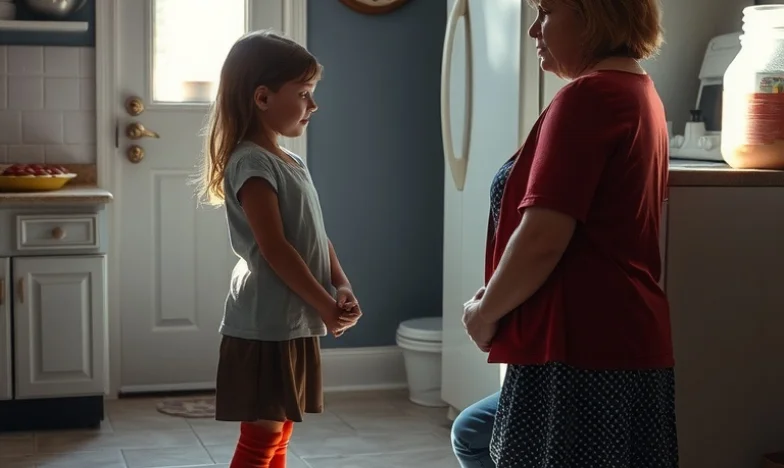
“You’re not my real mom!” I screamed, my voice echoing off the peeling linoleum walls of our tiny kitchen in Dayton, Ohio. My fists were balled so tight my knuckles turned white, and the tears streaming down my face felt hot, shameful. It was Thanksgiving morning, and the smell of burnt pumpkin pie lingered in the air, mixing with the sharp tang of Lysol. My stepmother, Linda, stood across from me, her face pale but determined, a spatula trembling in her hand.
She didn’t flinch. “I know I’m not, Emily. But I’m here. I’m not going anywhere.”
That was the first real conversation we ever had. Before that, Linda was just the woman who showed up at the orphanage one rainy April afternoon, her hair frizzed from the humidity, her eyes red-rimmed but kind. I was twelve, angry, and convinced I’d been abandoned for good. My father had left us for a woman in Texas, and my mother had died of cancer when I was eight. The state called it “temporary placement,” but the orphanage felt like a life sentence—gray cinderblock walls, the constant hum of fluorescent lights, and the endless shuffle of kids who never stayed long enough to become friends.
Linda was my father’s second wife, a woman I’d only met twice before everything fell apart. She wasn’t obligated to me, not by blood or law, but she came anyway. I remember the way she knelt in front of me, her voice barely above a whisper. “Emily, I know you don’t know me. But I want you to come home. I want you to have a home.”
I didn’t believe her. Not then. But she signed the papers, packed my few belongings—a battered copy of Charlotte’s Web, a faded photo of my mom, and a threadbare teddy bear—and drove me to her house on the edge of town. It was nothing like the home I remembered: no river, no wildflowers, just a sagging porch and a patchy lawn littered with plastic toys from her own two kids, Tyler and Maddie.
The first few months were hell. I refused to eat dinner with them, locking myself in the guest room and listening to the muffled sounds of laughter and clinking silverware. Linda would knock gently every night. “Emily, I made your favorite—mac and cheese. Come join us.” I never did. Tyler, who was nine, left notes under my door: “Wanna play Mario Kart?” Maddie, only six, drew me pictures of stick-figure families holding hands. I tore them up, hating myself for it.
School was worse. The other kids whispered about the “orphan girl” living with her stepmom. I got into fights, came home with bruised knees and a split lip. Linda never yelled. She’d sit beside me on the porch, a mug of coffee in her hands, and wait for me to talk. I never did. Not until that Thanksgiving morning, when the weight of everything finally cracked me open.
After my outburst, I expected her to send me back. Instead, Linda set down the spatula and crossed the kitchen, kneeling so we were eye to eye. “Emily, I know you’re hurting. I can’t replace your mom. But I can love you. If you’ll let me.”
I sobbed then, ugly and loud, and she held me until my breathing slowed. That night, we ate burnt pie and overcooked turkey, and for the first time, I felt something like hope.
Christmas came, and with it, the first real snow. Linda let me decorate the tree, even though I hung the ornaments all wrong. Tyler and Maddie dragged me outside for snowball fights, and I found myself laughing, really laughing, for the first time in years. On Christmas morning, there was a stocking with my name on it—hand-stitched, just like the ones for Tyler and Maddie. Inside was a silver locket with a picture of my mom on one side and Linda on the other. I cried again, but this time, it felt good.
But healing isn’t a straight line. My father called on New Year’s Eve, his voice slurred and distant. “Hey, kiddo. Sorry I haven’t been around. Life’s… complicated.” I hung up on him, my hands shaking. Linda found me on the porch, wrapped me in a blanket, and didn’t say a word. She just sat with me, letting the silence fill the space where words would have failed.
Spring brought new challenges. I joined the school choir, encouraged by Linda’s gentle prodding. At the spring concert, I froze on stage, panic rising in my chest. I scanned the crowd, searching for a familiar face. Linda was there, front row, her eyes shining with pride. She mouthed, “You can do it.” And somehow, I did.
We had our fights—over curfews, over grades, over my refusal to call her “Mom.” But Linda never gave up. She showed up to every parent-teacher conference, every soccer game, every scraped knee and broken heart. When I got my first period, I panicked, locking myself in the bathroom. Linda slid a box of pads under the door and sat outside, talking me through it, her voice calm and steady.
The years blurred together—birthday parties, summer barbecues, late-night talks on the porch. I watched Tyler and Maddie grow, their lives intertwined with mine in ways I never expected. We became a family, messy and imperfect, but real.
High school brought new wounds. I started dating a boy named Josh, and when he broke my heart, I sobbed in Linda’s arms, her hands stroking my hair. “You’re stronger than you think, Em,” she whispered. “You’ll get through this.”
College acceptance letters arrived, and I was terrified to leave. “What if you forget about me?” I asked Linda one night, my voice small. She laughed, pulling me into a hug. “You’re my daughter, Emily. Nothing will ever change that.”
Graduation day was a blur of caps and gowns, the air thick with the scent of cut grass and possibility. Linda cried, snapping photos as I walked across the stage. My father didn’t show. I thought I’d be angry, but all I felt was gratitude—for the woman who chose me, who fought for me, who loved me when I couldn’t love myself.
Now, as I sit in my own apartment in Columbus, unpacking boxes and hanging photos of my family—my real family—I think back to that Thanksgiving morning, to the girl I was and the woman I’ve become. I call Linda every Sunday, just to hear her voice, to remind her (and myself) that love isn’t about blood. It’s about showing up, again and again, even when it’s hard.
Sometimes I wonder: How many of us are waiting for someone to choose us, to save us from our own orphanages, whatever form they take? And how many of us are brave enough to be that person for someone else?