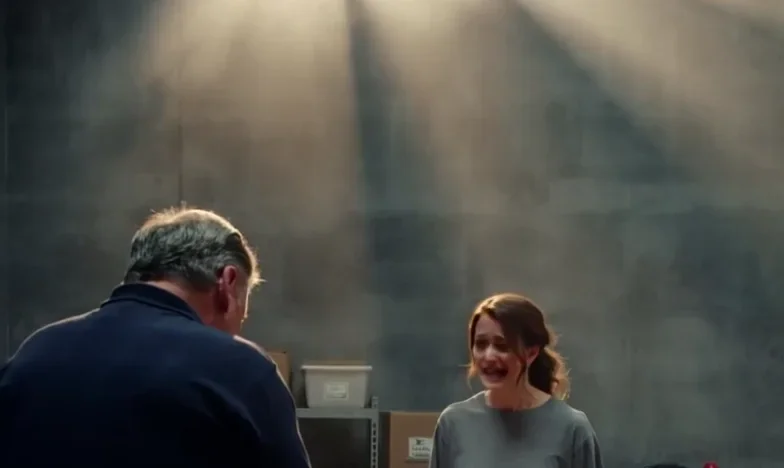
I found a secret bank account my husband kept for six years

The first time I saw the statement, I thought it was a mistake. It was a Thursday, and I was looking for the receipt for the water heater we’d replaced in March because the warranty place needed proof of purchase. I was going through the accordion folder in the hall closet, the one where we keep the house stuff, and there it was. A statement from a bank we don’t use, with my husband’s name on it, showing a balance of just over forty-one thousand dollars.
I sat on the floor with the folder in my lap and read it three times. The address was a P.O. box in a town twenty minutes away. The account had been open for six years. Six years of statements I’d never seen, for a bank I’d never heard of, in a town we never go to.
My first thought was that it was some kind of work thing. My husband, Dan, manages a small auto parts distribution warehouse. Maybe it was a business account. But the name on the statement was his full legal name, not the company’s. And the deposits listed were regular transfers from our joint checking account. Small ones, like a hundred and fifty dollars every two weeks, but they added up.
I didn’t say anything that night. I put the statement back in the folder and made dinner. Dan came home, we ate, we watched the news, we went to bed. But I didn’t sleep. I kept thinking about the water heater receipt and how I’d gone looking for one thing and found something else entirely.
The next morning, after Dan left for work, I went back to the folder. The statement was still there, tucked behind the warranty paperwork. I took a picture of it with my phone. Then I called my sister, Renee, who lives in Ohio and has been through two divorces.
“Don’t panic,” she said. “But don’t ignore it either. You need to ask him directly.”
“What if he lies?”
“Then you know something you didn’t know before.”
I waited until Saturday. We were in the garage, sorting through boxes from when we cleaned out his mother’s house two years ago. Dan was in a decent mood, humming along to some old rock station. I just came out with it.
“I found a bank statement in the hall closet. From a bank in Millbrook. It has your name on it.”
He stopped humming. He didn’t turn around. He kept his hand on a box of old Christmas lights.
“What were you doing in the hall closet?” he asked.
“Looking for the water heater receipt.”
He nodded slowly, like that made sense. Then he said, “It’s just a savings account.”
“For what?”
“For emergencies.”
“We have a joint savings account for emergencies.”
He turned around then. His face was calm, but his eyes were careful. “This is different.”
“Different how?”
“It’s just something I set up a while back. For a rainy day.”
I felt my chest get tight. “Dan, you’ve been moving money out of our joint account for six years. That’s not a rainy day fund. That’s a secret.”
He didn’t deny it. He just stood there with his arms crossed, like I was the one being unreasonable.
“Is this your exit strategy?” I asked. “Are you planning to leave?”
“No,” he said. “It’s not like that.”
“Then what is it like?”
He couldn’t answer. He just kept saying it was for security, for peace of mind, for things he couldn’t explain. But every answer made it worse. Because if he couldn’t explain it, then it wasn’t about money. It was about trust.
We didn’t speak much for the next few days. I moved into the guest room. Dan slept on the couch. We still went to work, still paid the bills, still fed the dog. But the house felt different. Quiet in a way that wasn’t peaceful.
I told Renee everything. She said, “You need a therapist. Not a lawyer. Not yet. If you want to save this, you both have to talk to someone who knows how to listen.”
I found a licensed marriage and family therapist named Dr. Elaine Whitfield. Her office was in a small brick building near the library. She had gray hair and a calm voice and didn’t let either of us interrupt the other.
In our third session, Dan finally said something real.
“I watched my dad lose everything,” he said. “The house, the car, the retirement. My mom had to move in with her sister. I told myself I’d never be in that position. So I started putting money aside. Just in case.”
“But you didn’t tell me,” I said.
“I know.”
“You let me think we were building something together. But you were building something separate.”
Dr. Whitfield asked, “What would it take for you to feel safe enough to share that account with your wife?”
Dan looked at his hands. “I don’t know. Maybe if I knew she wouldn’t leave.”
“I’m not the one with a secret bank account,” I said.
“I know,” he said again.
It took months. We kept going to therapy every Tuesday at six. We talked about money, but also about fear, and pride, and the way his father’s bankruptcy had shaped him more than he ever admitted. I learned things about Dan I hadn’t known in fifteen years of marriage. Not because he’d been hiding them, but because he’d never had the words.
In the end, he closed the secret account. He transferred the money into our joint savings, and we used part of it to pay off the home equity line. The rest went into a CD in both our names. He showed me every statement now. Not because I demanded it, but because he wanted me to see.
It wasn’t a perfect ending. I still felt a little sick when I thought about that first moment on the closet floor. But we stayed together. And for the first time in a long time, I felt like we were actually on the same side.